Riders and carriages on public roads
Riding is generally thought of as a sport practised on sand, or on grass at professional level. At the same time, though, riding also takes place on public roads, particularly where carriage driving is involved. To find out everything you need to know about riders and carriages on public roads, read on.
Riders on public roads
Riders are allowed to use public roads for their various activities. It is usually on the back of their horse, under a saddle of the kind shown on La Sellerie Française, that they take to the tarmac. This calls for good practice. Above all, there are important rules that must be followed to the letter.
To begin with, the rider must have control of their horse. On the road there are motor vehicles about. Your horse may not be used to this, and you need to prepare him for it. Every movement should be carried out properly in order to settle him, help him keep the same pace in any circumstances and, above all, deal with any resistance should something unexpected happen. You therefore need to establish your authority in the relationship between you and your horse. That way, he will do what is needed when you ask, for the safety of other road users.
In addition, to ride on public roads you must be at least 14 years old. You must also know the Highway Code and behave like a motorcyclist or a car driver. You should therefore keep as close as possible to the edge of the road. If you are at least 12 and an adult over 21 is available to accompany you, you may also use public roads as a rider.
Carriages on public roads
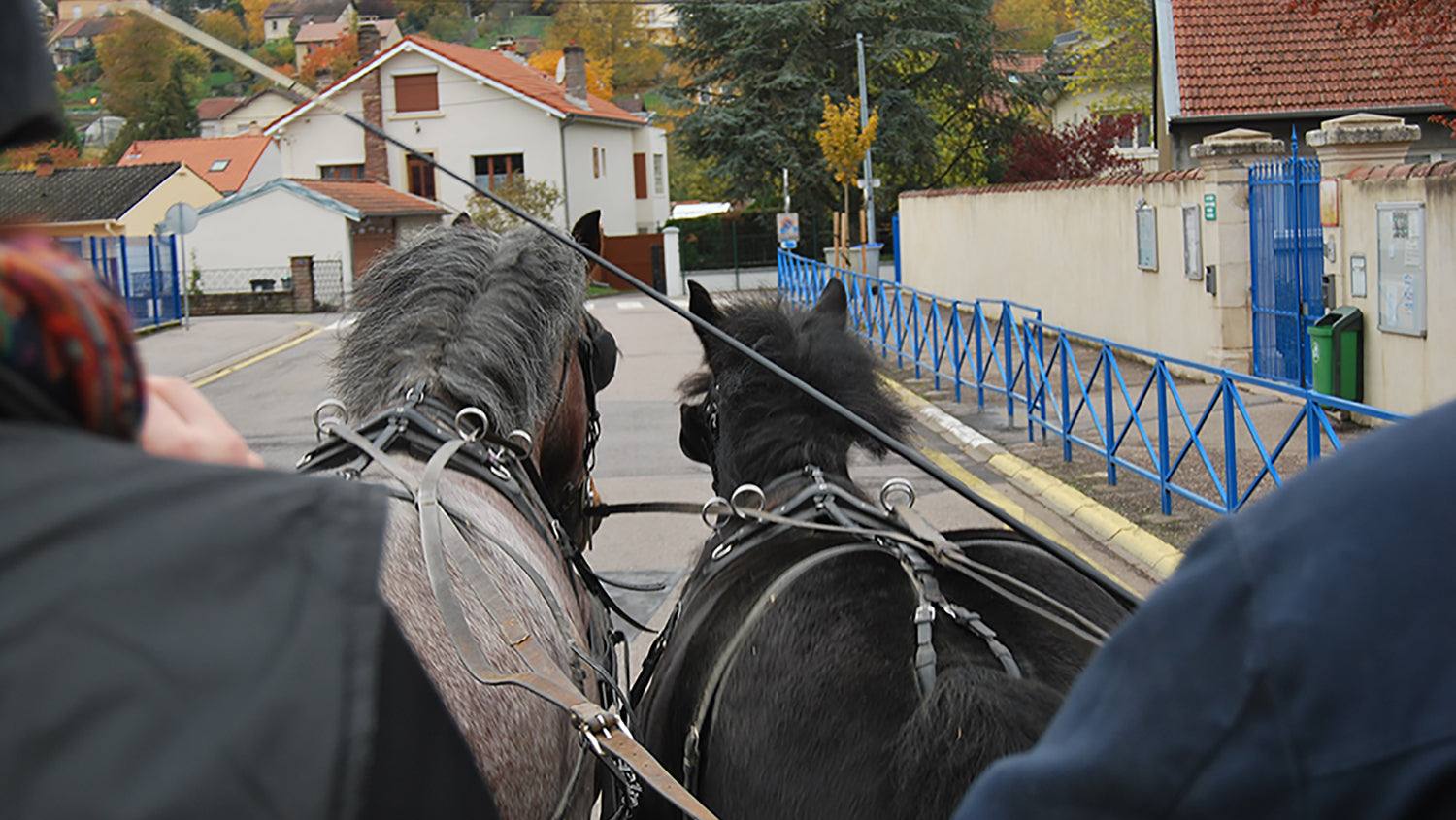
Before taking a carriage onto public roads, the first requirement is to be 16 years old. Above all, you need a minimum level of skill and knowledge in driving. The Highway Code is the law you must bear in mind at all times and in all places. Having an equine professional alongside you when moving a horse in harness, or for a convoy, is very important. They will bring their expertise to bear in any situation that calls for it. These are unforeseen events, and it is better to have someone on hand as a safeguard.
A carriage on the public road is considered a vehicle. It must therefore travel on the right, close to the edge of the road. It has no right to share the space with pedestrians. When turning one way or the other, you must signal using your arms and your eyes.
For a carriage on public roads, it is important not to exceed four horses in harness and three abreast. Above all, if the turnout is longer than 12 metres, someone must follow on foot to make the load safe. In built-up areas, carriages are not allowed to circulate because they present significant risks to residents.
===END===From the workshops
Pieces related to this guide



Also worth reading