Find out more about horse health
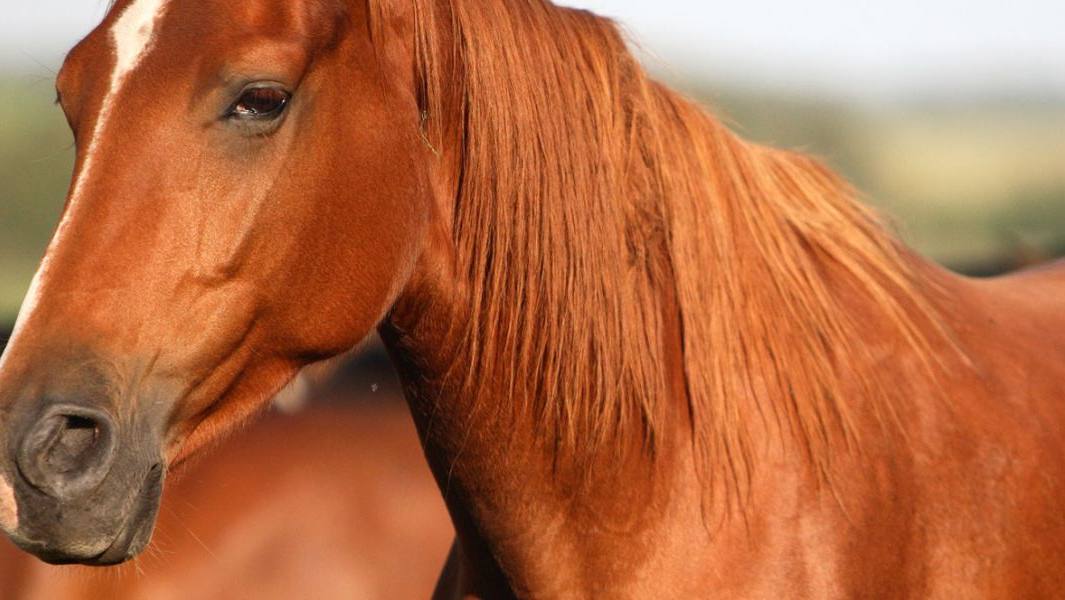
When you own a horse and take the decision to look after it yourself, you need a basic knowledge of that horse's health. This grounding in equine health will help you to better understand the signs of illness, the physiological warning signals… and to act as early as possible. In this article, find out more about your horse's health.
Basic identification
Sex
To identify your horse's sex, look at the genitals, which are located between the hind legs. A female has two teats in front of the hind legs and a vulva beneath the anus. A male has a sheath and penis between his hind legs, along with two testicles. A gelding has no testicles. Knowing your horse's sex will help you choose the right accessories and health care products. You will find these accessories at La Sellerie Française.
Coat colour
To identify the coat colour, work through four stages: first identify the base colour, then the mixtures of hairs, the additions and finally the markings (patches).
Compulsory routine care
Vaccination
Vaccination, just as for humans, protects the horse from serious diseases and prevents them from spreading. Every horse has either a vaccination record or an accompanying document in which the vet sticks the labels of all the vaccines given. Among the compulsory vaccines is the one against equine influenza. The horse must receive two injections between 21 and 92 days apart, then a booster between 150 and 215 days. There are also recommended vaccines, such as the one against rabies, which involves a single injection each year.
Worming
Wormers prevent the appearance of internal parasites, which most often settle in the intestine. These parasites are common in horses and ponies. Horses should therefore be treated with a wormer twice a year (in autumn and spring), by various means: mixed into pellets, by oral syringe, or by stomach tube. Wormers do, however, raise the problem of destroying the gut flora, which takes several months to rebuild properly. For horses that always live with the same companions, in healthy paddocks, a wormer need only be used for a newcomer or when there is a change of field, stable yard, etc.
Dental care
The horse's teeth should be checked regularly, so that any teeth growing without being worn down can be rasped, as in time they may injure the horse. It is also advisable to remove certain teeth, such as wolf teeth.
The horse's main physiological norms
Temperature
A horse's normal temperature ranges between 37 and 37.5 °C in an adult, and between 38 and 38.5 °C in a youngster. The outside temperature affects the horse's temperature, but at 38.5 °C an adult horse is considered to be ill. It is a good idea to take the horse's temperature if you have any doubts about its state of health, or after hard work.
Heart rate
The pulse is easy to check, by pressing a finger gently on the inner edge of the jawbone. The rate varies with the amount of work done and with the horse's age; it lies between 30 and 45 beats per minute and can rise to 180 after hard work.
Signs of illness
A horse that stays lying down too long, moves with difficulty, or seems weak should ring alarm bells. One fairly common problem in horses is colic. It is a sign of intestinal and digestive trouble. Colic is often caused by a blockage. A horse suffering from colic paws the ground, looks round at its flanks, lies down for unusually long periods, and gets up and down repeatedly. It loses its appetite and thirst, stops urinating and passing droppings. Colic can be very serious, so as soon as you notice the signs, walk the horse quietly in hand and call the vet.
From the workshops
Pieces related to this guide
Also worth reading