Riding and injury prevention: 7 tips for children and beginners
Riding is a fairly risky sport for a young child or an adult just starting out. They need to be prepared to avoid injury, or at the very least to limit the damage. Here are a few genuinely useful expert tips.
Looking after your kit
A good rider looks after their horse as well as their riding kit. Before and after every session, gear should be put away in its compartments or in the bags provided for it. Before that, it should be cleaned thoroughly. For instance, as soon as you have finished cleaning it, put your riding hat in a hat cover like the one available from La Sellerie Française . That will keep the dust off it.
Dressing properly
Getting dressed is a source of motivation and discipline for the rider. Yes, it is partly a matter of taste and style. But it is also a matter of safety. To avoid injuries, don't ride in shorts. Jeans made from a soft, stretchy fabric are more suitable. A gilet and gloves should also complete the look. Add a pair of jodhpurs">short boots and you'll be perfectly comfortable both on the horse and on the ground.
Wearing a riding hat
Of all the safety equipment available, the riding hat is the most important. It protects the rider from fatal falls causing brain injury. You need to choose a good quality hat to get the full benefit. In riding equipment shops, you can find a reasonable quality hat at a sensible price.
Knowing the procedure by heart
The procedure to follow after an accident is well known to all riders. For a beginner, it is something to know inside out. That way, in the event of an accident or incident, they will do the right things before the emergency services arrive. As a result, serious damage will be narrowly avoided.
Sitting well
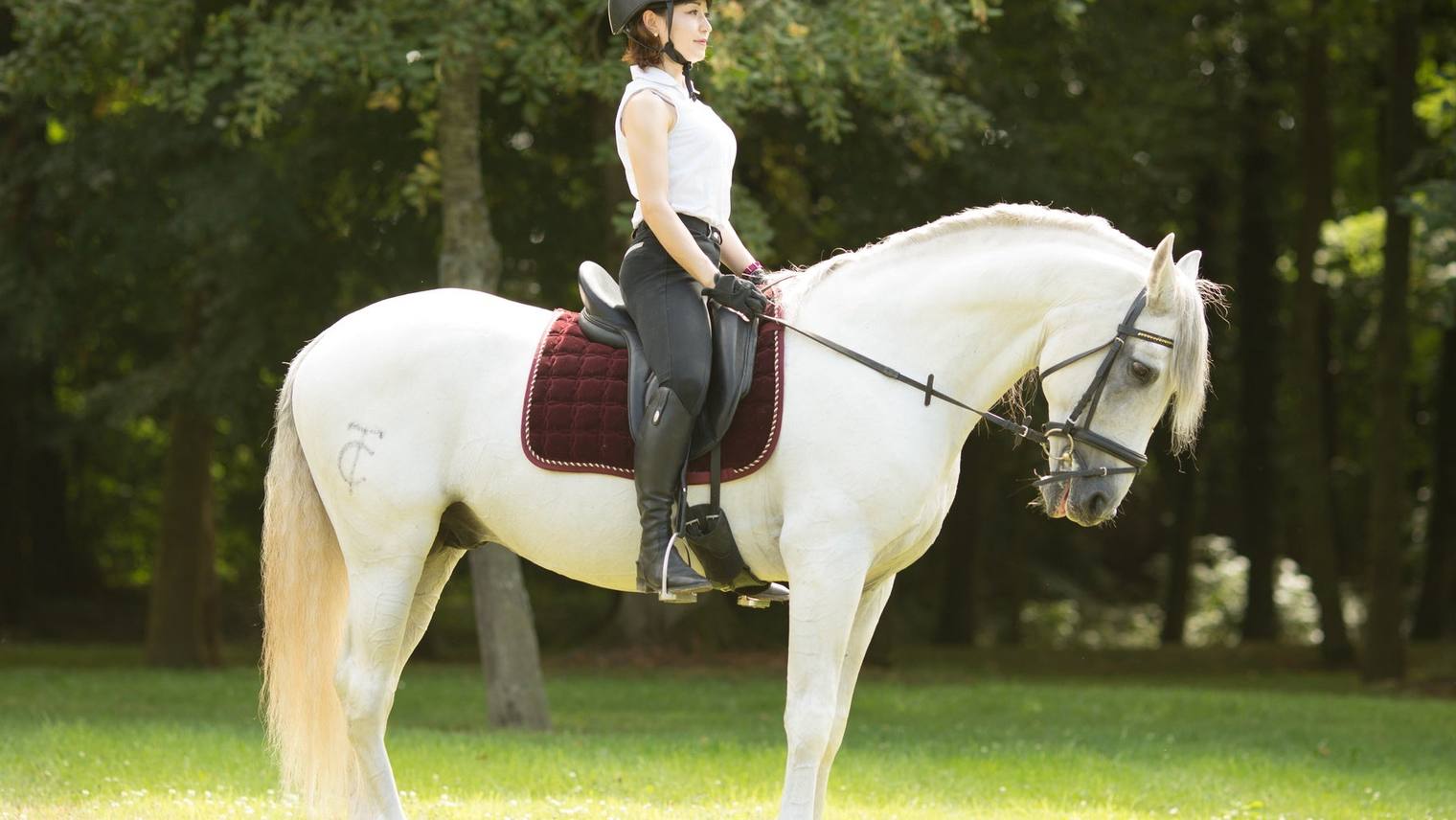
A rider's behaviour is closely watched by their horse. Whether you are doing groundwork or riding, it is wise to hold yourself well so that the horse picks up your instructions quickly and carries them out to the letter. Avoiding injury in particular comes down to sitting nice and straight on the horse. Above all, don't push your feet so far into the stirrups that you stay attached to the horse in a fall.
Learning to fall
A fall will inevitably happen sooner or later. So you need to be prepared for it. To do that, the rider must learn how to fall. They should adopt the right position and expect to end up on the ground at any moment. Through plenty of exercises, they come to internalise the reflexes for good falling positions.
Being attuned to your horse
You need to be attuned to your horse to be sure you won't get hurt. On the whole, it is the horse's movements that pose the real danger to its rider. If you can spot the signs that a horse is about to rear or misbehave in any other way, you will avoid all injuries in the future.
===END===From the workshops
Pieces related to this guide




Also worth reading