Hoof wounds
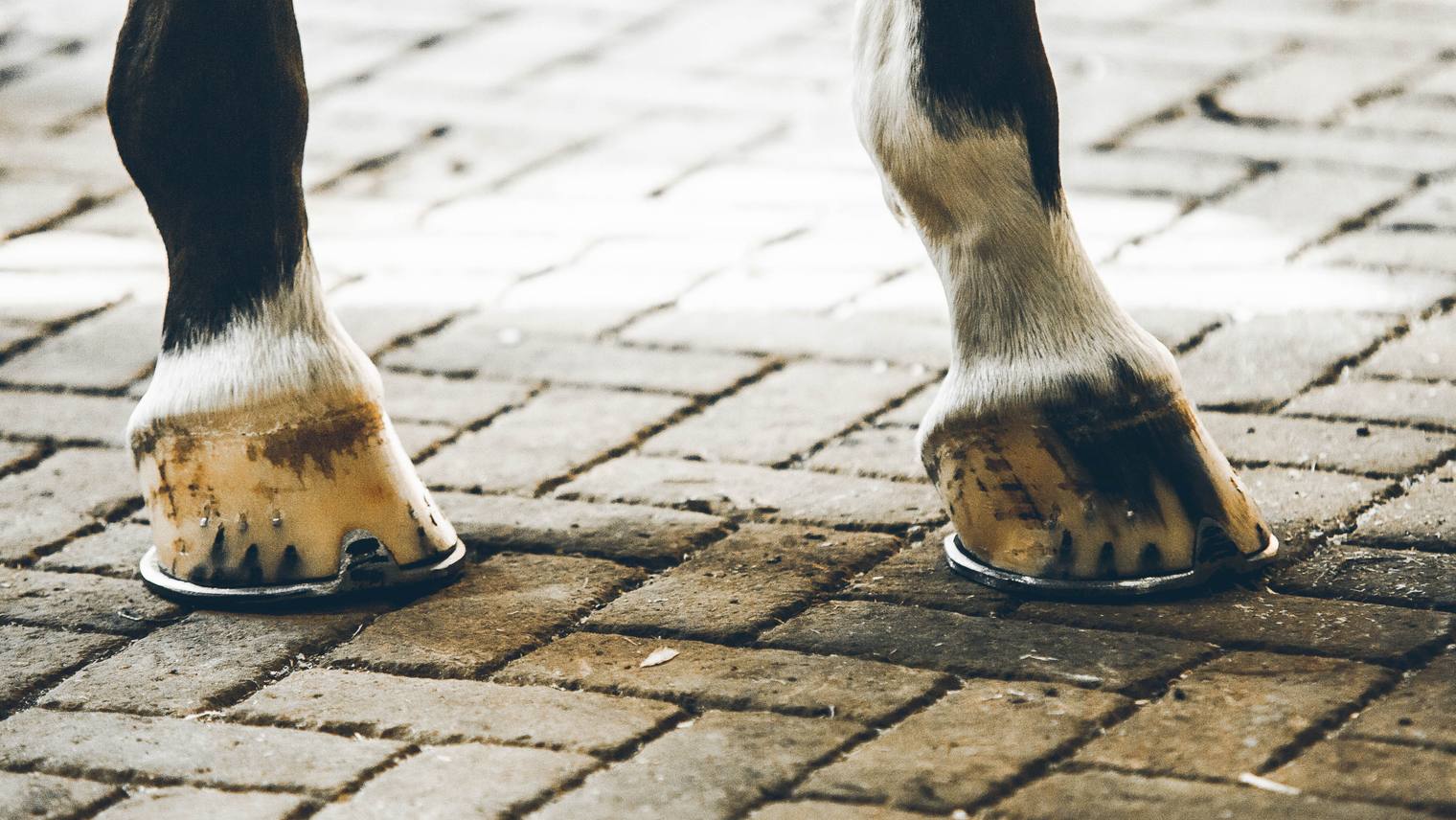
Haven't you noticed that when you walk about in wet conditions, your feet develop little sores? It's the same for horses, who have to cross all sorts of ground with their hooves all but bare. That said, wet ground alone won't be the cause of any hoof wounds. Other factors come into play too. In this article, we look at hoof wounds and the treatments that clear them up in horses.
What hoof wounds are
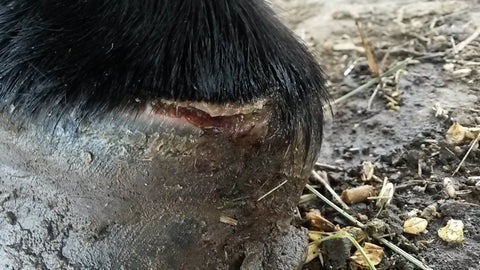
Hoof wounds are fairly common. They are injuries that can affect the hoof wall, the bulbs of the heel or the coronet. They break the continuity of the tissue and require an active healing process to repair. Wounds are classified according to their severity.
Superficial wounds are limited to the outer edge of the hoof wall or, in the soft tissue, to simple grazing with the edges slightly parted. Wounds with moderate tissue loss are characterised by the tearing away of a significant part of the hoof reaching the tubules of the wall, or by wounds whose edges are too far apart to be brought together.
Serious wounds involve damage to the laminae of the foot or soft tissue injury, sometimes infected and with substantial tissue loss. Location also plays a part in classifying wounds. Hoof avulsions refer to a tearing away of the hoof wall. Bulb wounds and coronet wounds cover any wound sited in one of these areas.
Hoof wounds are essentially traumatic. They mostly happen during transport, in an accident, in the field or in the stable.
Diagnosing hoof wounds
First of all, the wound must be dated, located and the circumstances established. Diagnosis is based on the appearance of the injury and where it is. It is therefore essential to classify the wound as described above. A wound with hoof avulsion will be assessed according to the proportion of horn torn away and its location. Coronet wounds are not trivial, and call for early, appropriate care.
Treating hoof wounds
Whatever the wound, thorough cleaning with a mild or antiseptic soap followed by rinsing is needed. A local antiseptic should then be applied for a few days. This is generally enough for a superficial wound. For a moderately deep wound with moderate tissue loss, an antiseptic cream should be applied before putting on a dressing, which will be changed regularly depending on the amount of discharge. Serious wounds require prompt attention from the vet, sometimes with systemic treatment using antibiotics or anti-inflammatories.
Some pharmacists advise never using chlorhexidine and povidone-iodine together on the same wound, as one inactivates the other. A mixture of sugar and povidone-iodine (10% solution) can be applied to the wound to draw out the discharge while also acting as an antiseptic.
The mixture is made by stirring sugar and povidone-iodine together in a bowl until you have a smooth paste that isn't too runny. It can be applied to a compress and held in place with a bandage, available from La Sellerie Française
From the workshops
Pieces related to this guide
Also worth reading