Catching your horse in the field: an approach strategy
Once the horse is out in the field, you have to be able to go and fetch it. This step doesn't always go smoothly. Here are a few tips to help you manage it.
Fetching a horse from the field
When a person walks into the field, the animals may see them as a predator and be inclined to run away. The human reaction is then often exactly the opposite of what it should be: chasing after the animals. This approach only increases their stress and their flight response, and in a race a human is no match for a horse. Catching a horse in the field therefore calls for a genuine approach strategy. Besides the frustration it causes the handler, this chase is a source of many risks: sprains, falls, kicks… Handlers are therefore strongly advised always to wear high-top safety footwear, available from La Sellerie Française. With this type of boot, not only does the toe cap protect the foot from being crushed, but the high ankle also limits the risk of sprains.
An approach strategy in the field
Handlers often go to fetch animals from the field because they need to be worked, or because the vet or the farrier is due. The handler often sets off feeling apprehensive (if they know, for example, that a vet's visit is not an easy business with that particular horse) and often waits until the last minute to go and get the animal. The horse senses that the person is nervous and will tend to move away; the handler then gets annoyed, because they can see time slipping away, and their nervousness feeds the horse's. It's a vicious circle.
In such cases it is better to bring the horse in several hours in advance and to go into the field without any apprehension. A horse that lets itself be caught should be rewarded. To make the approach easier, a real strategy needs to be worked out. To avoid causing stress in the animals, handlers use the panoramic gaze technique. This means keeping an eye on the individual while looking at the group as a whole. The principle is based on the fact that predators fix their gaze on a potential victim before attacking, so a person who stares at the horse they want to catch behaves like a predator and makes the animal uneasy, which then tends to flee.
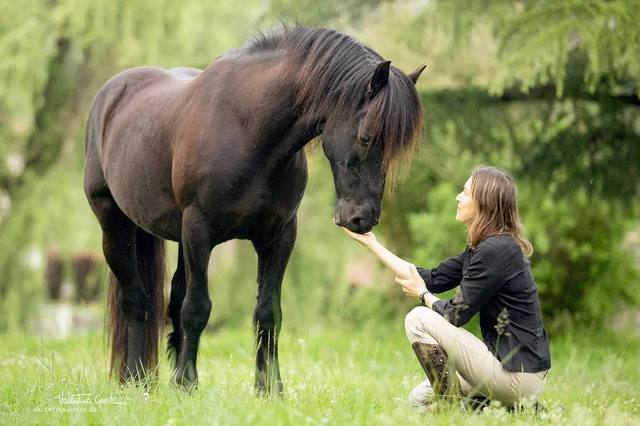
If, on the other hand, the person uses a panoramic gaze over the herd while watching the individual they want to catch out of the corner of their eye, there is a better chance the operation will go calmly. Once close to the chosen animal, approach it from the front, slowly, speaking calmly and calling it by name. The handler must always be alert enough to anticipate any move to flee on the animal's part and stop before it happens. If the horse comes towards the person of its own accord, they should stand still and let the animal come to them. When it is close enough, the handler slowly takes hold of the halter or gently passes a rope around the animal's neck. They can also tempt it with a treat such as a carrot or a sugar lump, but this shouldn't become a habit.
From the workshops
Pieces related to this guide
Also worth reading