Riders with disabilities: para-sport and para-dressage
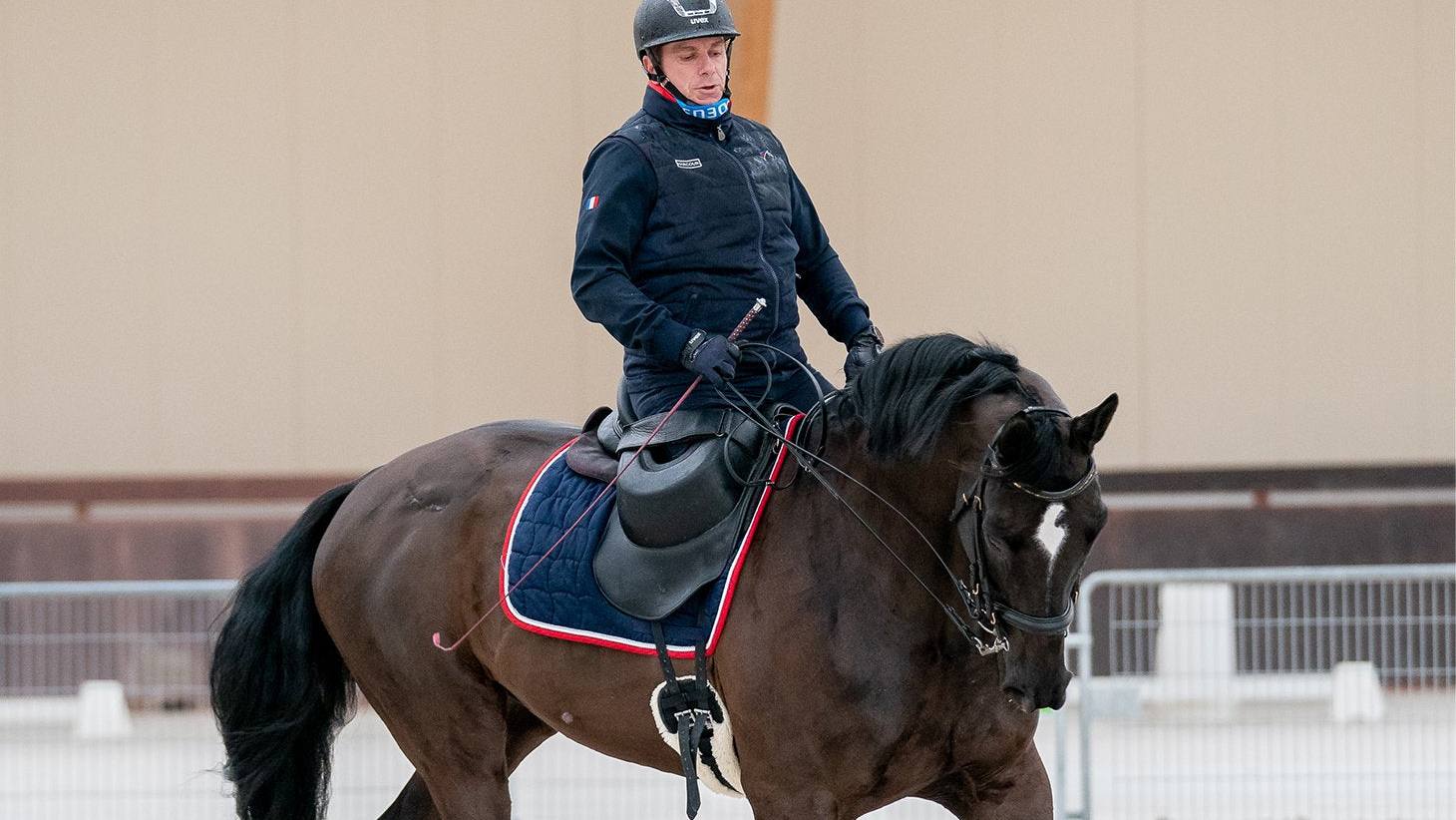
Anyone can ride. The recent inclusion of para-dressage in Paralympic events and world championships is proof of that. There are therefore no limits or constraints linked to physical condition in the equestrian world, and para-sport shows this through para-dressage.
Para-dressage: what is it?
Para-dressage is an equestrian sport that allows all riders with physical disabilities to compete just as riders without disabilities do. The main aim is to give everyone the chance to live out their passion and show what they can do, whatever their physical differences. In that spirit, para-dressage has become a celebration of equality between riders and their horses.
Riding can of course be done purely for oneself, for personal well-being and outside any competitive setting. In that case, the rider simply needs to find a suitable horse and enjoy riding to the full in a dedicated space. Competitions, on the other hand, are there to assess the abilities of the rider and their horse according to strict standards.
At this level, what is judged is the skill the rider has developed in partnership with their horse. In particular, there must be balance between the two partners. Above all, the rider must show muscular tone. At the same time, they demonstrate their finesse and their riding ability. Showing sufficient independence will earn extra points.
Who it is for
Para-dressage is an activity for people with disabilities in general. However, to take part in a competition, riders are grouped according to their disability. This means that a rider with a disability affecting both arms cannot compete in the same group as a rider with a disability affecting the trunk. This led to the creation of different grades for the various competitions.
Grades 1 and 2 are for riders with impairment of the trunk along with some limitation in the arms and legs. Grade 3 covers riders with unilateral impairment and those with a problem of trunk balance, specifically in terms of mobility. Grades 4 and 5 bring together, respectively, riders with severe impairment of the arms, blind riders and hemiplegic riders, and riders with visual impairment or impairment of one limb, or even two.
Preparing for para-dressage
The first step in taking up para-dressage is finding your horse. The horses used have particular qualities and have been trained for this kind of work. Beyond the horse's own schooling, the rider needs to teach it to adapt to them and to their aids. This is where building a partnership comes in. To achieve it, you need to spend as much time as possible in the saddle getting to know one another. Above all, it is wise to have a professional alongside you, a riding instructor who can spot small problems and find solutions where needed.
From the workshops
Pieces related to this guide
Also worth reading