How does a share (demi-pension) work?
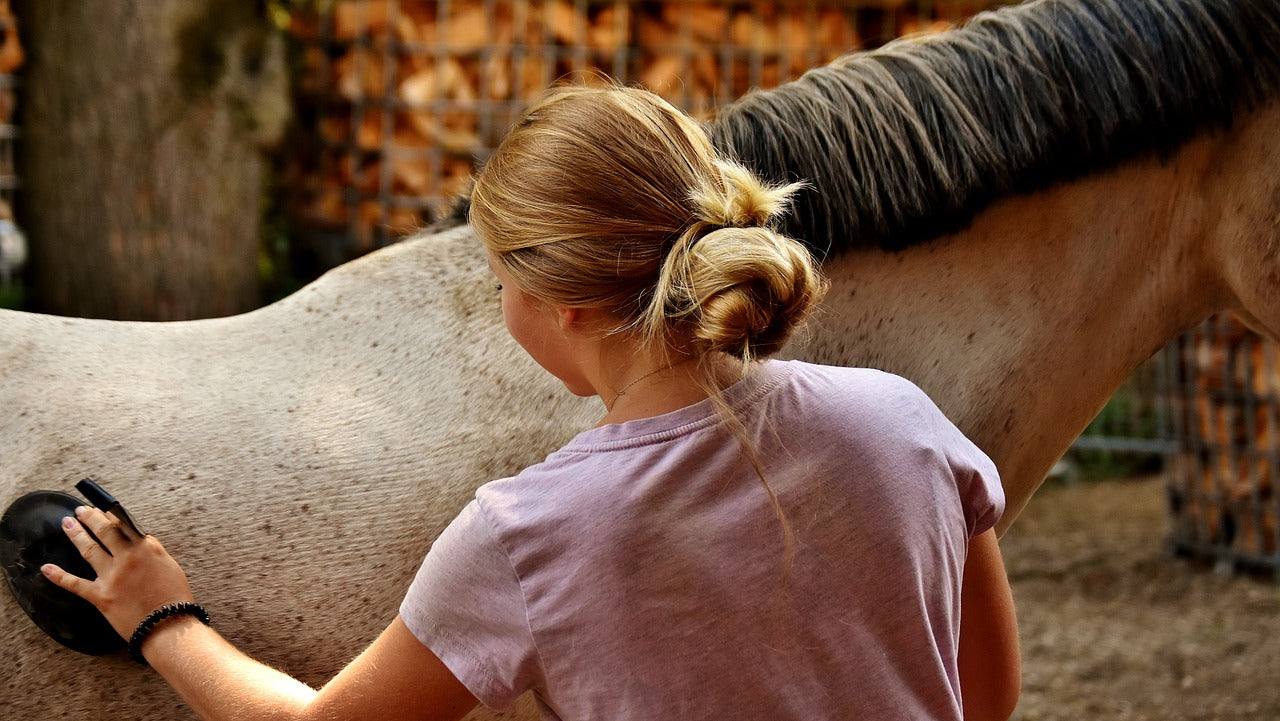
A share arrangement allows a rider to ride the same horse regularly without having to bear the considerable cost of buying one, or the responsibility of ownership. It is an arrangement that has its drawbacks as well as its advantages.
How does a share work?
A share is an arrangement that lets a rider have the same horse part-time, or shared, and ride it regularly without having to take on the costs or responsibilities an owner would carry. To this end, a contract or agreement is drawn up between the lender and the borrower to set out and define all the conditions as well as the price. Under a share arrangement, you might for example be offered a half-share, a quarter-share or a third-share.
With a half-share, the borrower can take the horse out roughly three or four times a week. A quarter-share means taking the horse out just once a week. With a third-share, the borrower rides the horse two days a week.
Naturally, the days are set in advance in the contract, and the price varies according to the type of arrangement chosen. That said, there are generally three types of share arrangement: a share on a riding school horse, a share on a privately owned horse, and the option for an owner to put their horse on share at the riding school.
What is a share on a riding school horse?
If you are an experienced rider, the riding school may offer you the chance to take one of its best horses on share. This allows you to work the same horse regularly. It also means you improve while building a special bond with your favourite mount. You may even be able to compete with the horse. Should the horse be put up for sale, you have first refusal. If the horse becomes unavailable through illness or a lost shoe, the share switches to another horse for as long as it is out of work.
As for the benefits to the horse, it gets to be looked after by the same person and to escape lesson hours with novice riders jumping onto its back or pulling on its mouth.
On the downside, during the tourist season or at competition time, the riding school may ask to have priority over the horse. In other words, the horse will be ridden by several riders of varying ability. In that case, all the work you have done with your mount over several months may need to be picked up again or redone. The horse may also have picked up bad habits that you will have to work out of it all over again.
What is a share on a privately owned horse?
A share on a privately owned horse works in much the same way as a share on a riding school horse. The difference here is that you deal directly with the horse's owner. It is advisable, however, to be at a similar riding level to them. In this case the horse is well schooled and its tack is of exceptional quality, like the tack offered by https://laselleriefrancaise.com/. The horse is also far more capable than a riding school horse.
On the other hand, you will have to comply with the owner's requirements as to how the horse is worked, the care you must give it, the tack you must use when riding it, and so on.
From the workshops
Pieces related to this guide
Also worth reading