Choosing a leather headcollar: size, construction and useful options
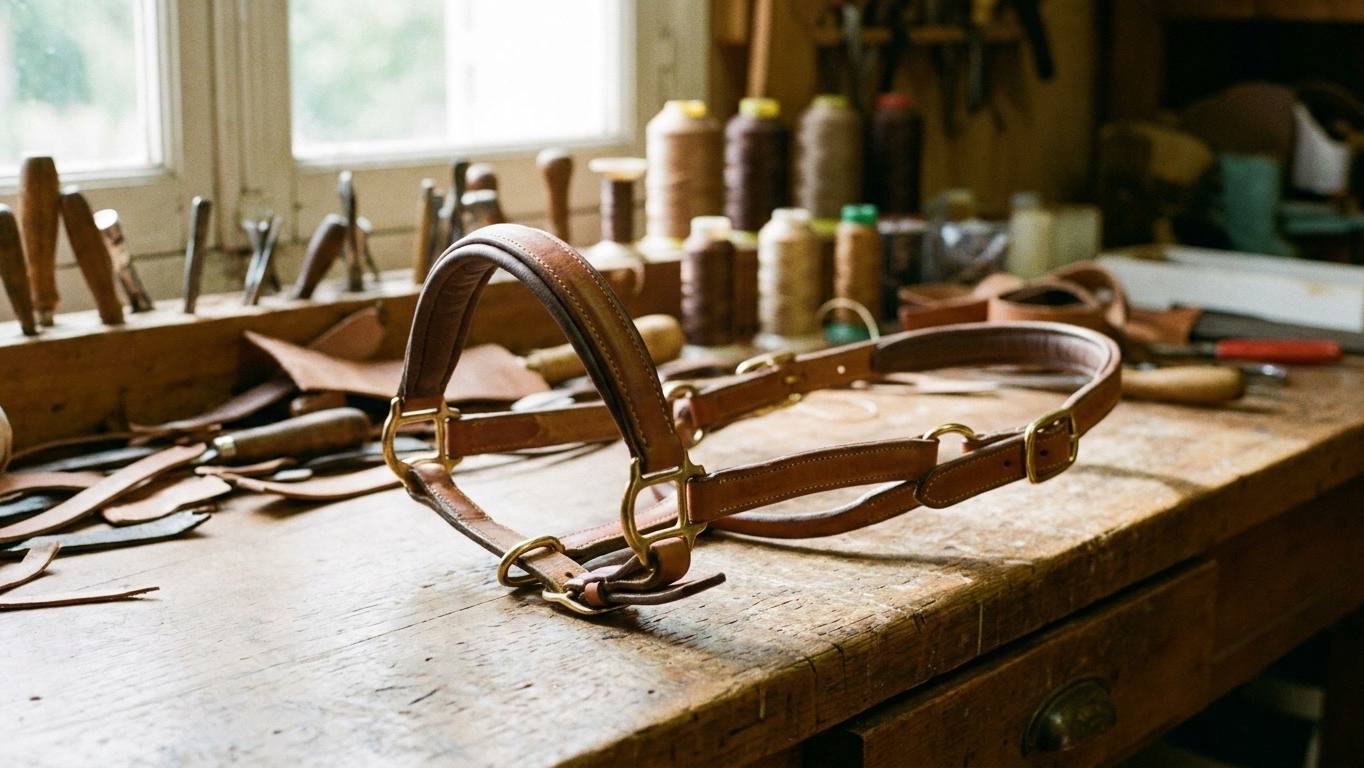
Start with intended use and measurements when choosing a leather headcollar, also called a halter. A show headcollar, an everyday headcollar and a rope training halter may look similar in photographs while serving different purposes. Neither the price nor the word “luxury” establishes the right fit or conditions of use.
Explain what you need
Tell the workshop how you plan to use the headcollar: leading, preparing your horse, showing or transport. Ask which uses the specific model is designed for. For groundwork with a rope halter, see our separate rope halter guide.
If your current headcollar fits, its make, size and buckle settings provide a starting point. If it rotates, rubs or only fits on the final hole, mention that. Ordering the same size label from another workshop does not guarantee identical proportions.
Follow the maker’s measurement instructions
Ask for the workshop’s diagram before sending measurements. Confirm where each measurement begins and ends: measuring the horse and measuring an old headcollar are not interchangeable methods.
Your enquiry can include:
- the requested measurements and their units;
- your current equipment’s reference and buckle settings;
- front and side photographs, if the maker finds them useful;
- any areas where rubbing has occurred;
- the date by which you need the finished piece.
A quotation should distinguish changes to size from colour choices. Ask how fit can be checked on arrival and what alterations the workshop can offer if necessary.
Three different constructions
These examples describe features stated in the product listings. They are not a ranking of the workshops.
| Piece | Documented details | What to ask |
|---|---|---|
| Havane Sellier hand-stitched leather headcollar | Horse size, leather from a Normandy tannery, stainless-steel fittings and hand stitching with linen thread. | Do the dimensions suit my horse and usual adjustment settings? |
| Elixir Sellerie calfskin-lined, padded headcollar | Calfskin and foam lining; custom sizing available. | Which measurements are needed, and which headpiece option should I select? |
| Villaruiz full-grain leather headcollar | Vegetable-tanned leather, made in Lyon, headpiece adjustable on both sides; pony, cob and full sizes. | Which size and adjustment range suit my horse? |
On the final listing, the French term “cuir végétal” refers to vegetable-tanned leather. It does not mean an animal-free material.
When comparing pieces, ask for close photographs of the stitching, edges and hardware. Also consider repairs: can the workshop replace a cheekpiece, lining or clip? A repairable component may matter more in daily use than an additional decoration.
What leather alone cannot tell you
The material alone does not establish that a headcollar will break at the appropriate point if a horse pulls back. Ask your instructor to check the headcollar, lead rope and tying arrangement together for the intended use. Do not select a model solely because it is advertised as exceptionally strong.
The BHS offers practical horse-handling education, including putting on a headcollar and tying up. For a beginner, a demonstration with the horse and equipment concerned is more useful than a product photograph.
Care is also an opportunity to inspect
Keep the saddler’s care instructions: linings, finishes and metal components may require different treatment. During cleaning, examine folds, buckle holes and stitching. Set aside a cracked, distorted or unstitched component and ask for advice; a care product cannot replace a repair.
Before adding engraving, confirm the options, lead time and conditions for changing your order. Successful personalisation starts with a headcollar that fits.
From the workshops
Pieces related to this guide
Also worth reading