Approaching a horse in its stable and leading it on a rope
You have just bought your horse and have started learning the various ways you need to interact with it. Unfortunately, you sometimes struggle to approach a horse in its stable and to lead it on a rope. Fortunately, we have thought of you. In this article, find out how to go about it.
Approaching the horse in its stable
As with any handling of horses, going into the stable should be done calmly, without rushing. The handler attracts the horse's attention by calling it by its name. Before going in, make sure the horse's head is facing the stable door. If the horse presents its hindquarters, the handler should wait for it to turn round before entering the stable, unless they want to risk taking a kick.
To avoid startling the animal and to try to get it to turn towards the door, the handler can speak to it calmly and call it. If the horse really will not turn, the handler can stand to the side of the hindquarters (while making sure to keep an escape route open) and push on the top of the animal's thigh, firmly asking it to move over.
Faced with an aggressive horse, the groom must not let themselves be intimidated. If they back off, the horse will take this as a victory and is likely to become increasingly aggressive. With this type of animal, you need to make yourself tall and move firmly towards it while staying alert to any attack. The stable is a confined space where the chances of getting out of the way are limited, so grooming or treating a horse directly in the stable is strongly discouraged. The animal can turn round suddenly and trap you against a wall. To work on a horse, it is better to take the time to lead it to a grooming area that is large and clear enough to avoid being crushed.
The horse must be tied to a fixed point (a bar, a ring fixed to the wall, etc.), because if it is tied to something that moves (a Nadar barrier, the stable door, etc.) and the horse pulls back, that item can shift or fall and injure both horse and handler. The horse should be tied with a quick-release knot, which allows the horse to be freed quickly in case of a problem by simply pulling on the free end of the rope. To tie this knot, the rope is passed through the tie ring, the free end is passed over the rope and then under it. The end of the rope is then folded in two and the loop thus formed is placed in the middle space. Some horses quickly work out the trick for untying themselves, so it is advisable to secure the knot.
Leading the horse on a rope
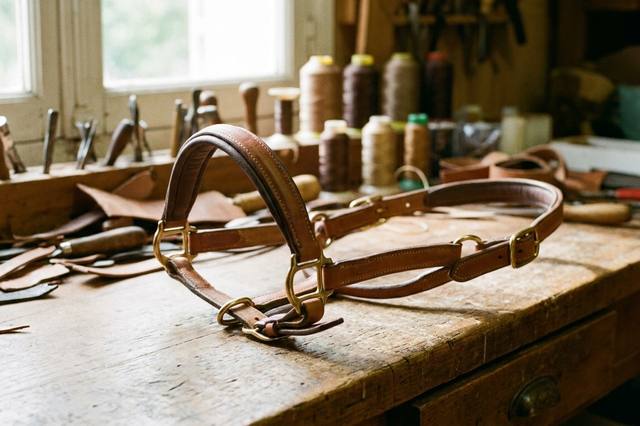
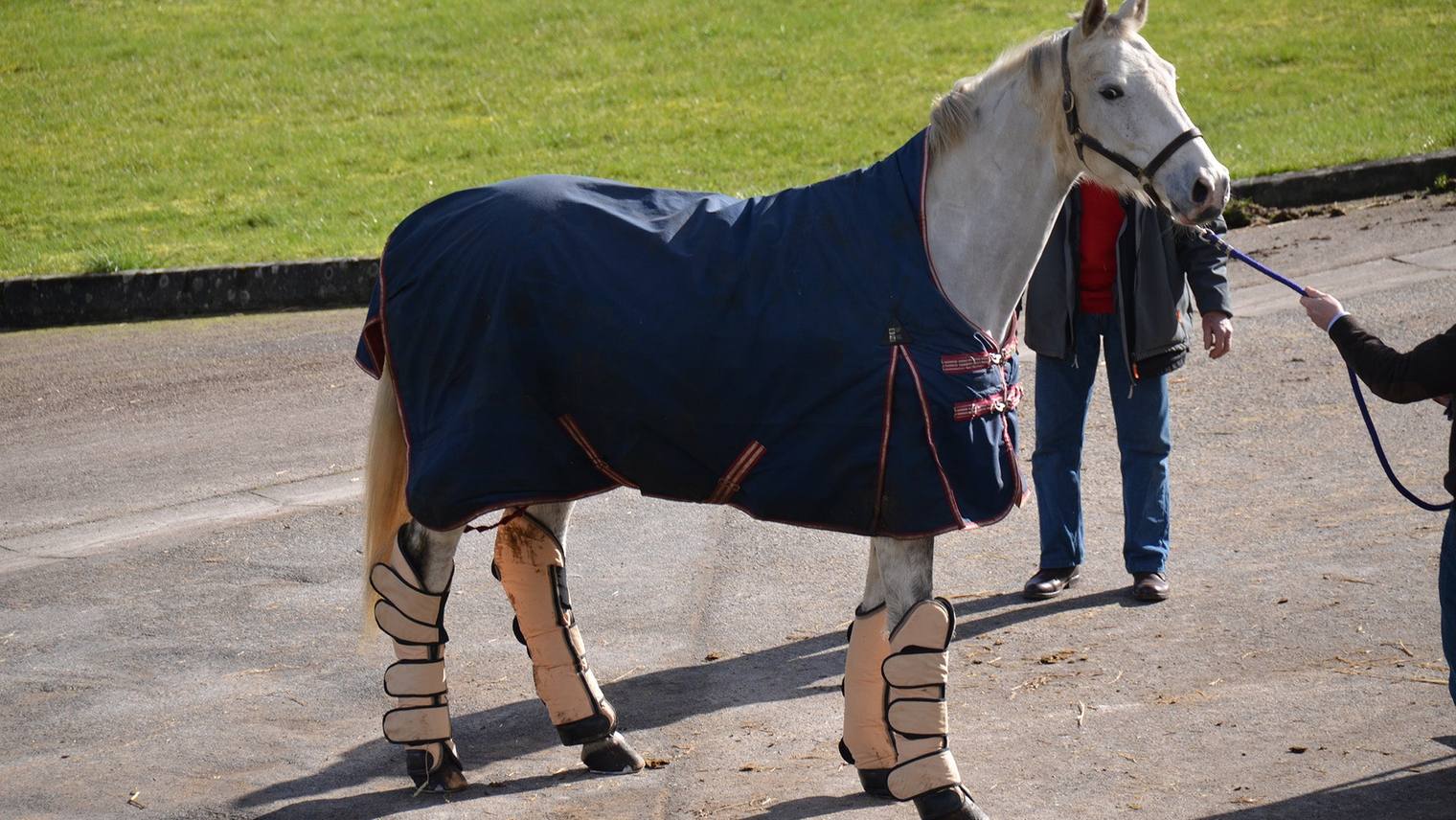
Once the horse has its head towards the door, the handler comes to stand on its left to put on a good-quality halter, whether bought from La Sellerie Française or not. They should position themselves in front of the shoulder, slightly behind the head to avoid being struck. To lead a horse correctly on a rope, the handler should stand on the animal's left and hold the rope in both hands.
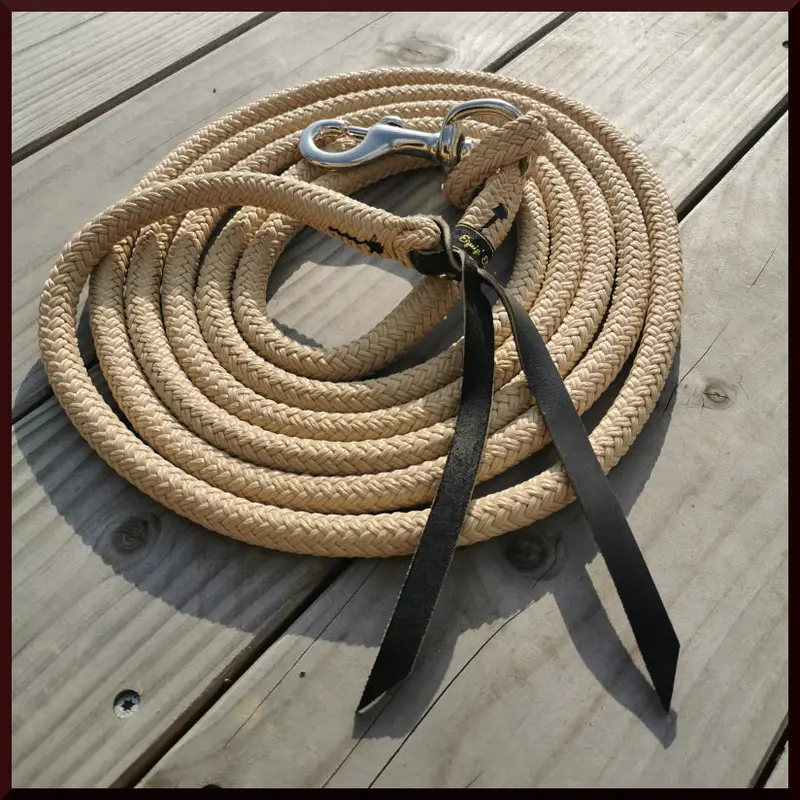
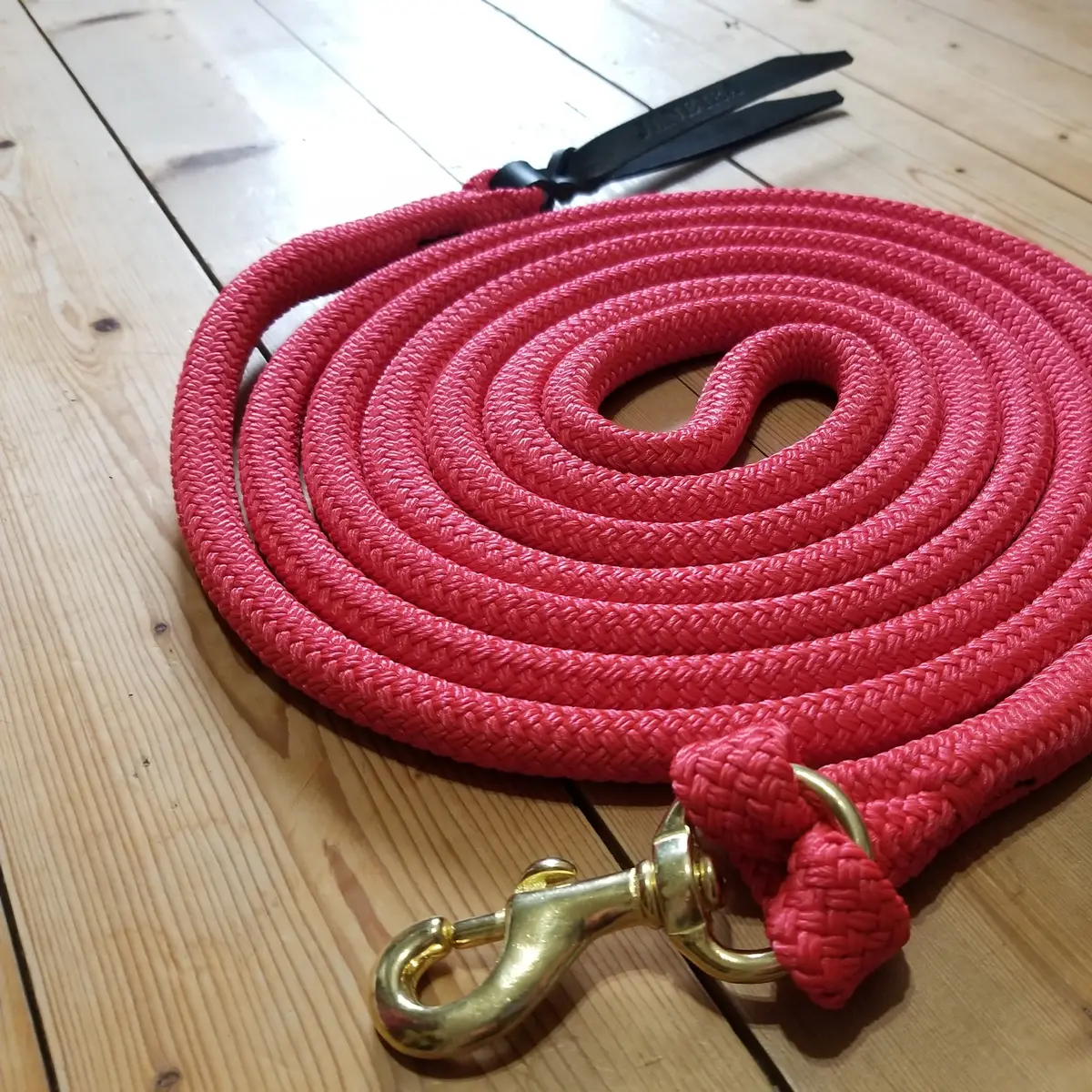
The right hand is placed about 20 centimetres from the rope's clip, to give the horse's head enough freedom (but not too much), and the other hand is placed further along the rope. The rope must not trail around the handler's or the horse's feet and must never be wound around the hand. If it is, and the horse takes fright and pulls, the groom may end up with a rope burn on the palm or several broken fingers. If the horse becomes uncontrollable, it is better for the handler to let go of the rope than to be dragged behind the horse and seriously injured. You then have to wait for the horse to calm down before removing the lead rope, or tempt it over with a bucket of feed.
When horses have not been out for a long period, or when the weather is cold (horses are often more excitable), a few precautions are needed. The rope is simply passed through the ring of the halter without clipping the clip on, and the handler holds the clip and the other end of the rope in their left hand, the right hand still holding the doubled rope 20 centimetres from the halter ring. If the horse becomes too hard to hold or sets off at the entrance to the field, the handler can let go of the free end of the rope while keeping the clip in hand so that it does not catch in the ring.
Another tip for slowing down a horse that is a little too excitable is to place your elbow in the hollow of the animal's shoulder. To avoid rope burns, the handler can also wear gloves with a non-slip palm. A handler turning a horse out should also make sure, once at the gate of the paddock or field, to turn the animal round so that its head is facing them. Horses often buck with delight when they are turned out, and this can seriously injure the handler if the hooves make contact.
From the workshops
Pieces related to this guide
Also worth reading