My horse is afraid of the trailer — what can I do?
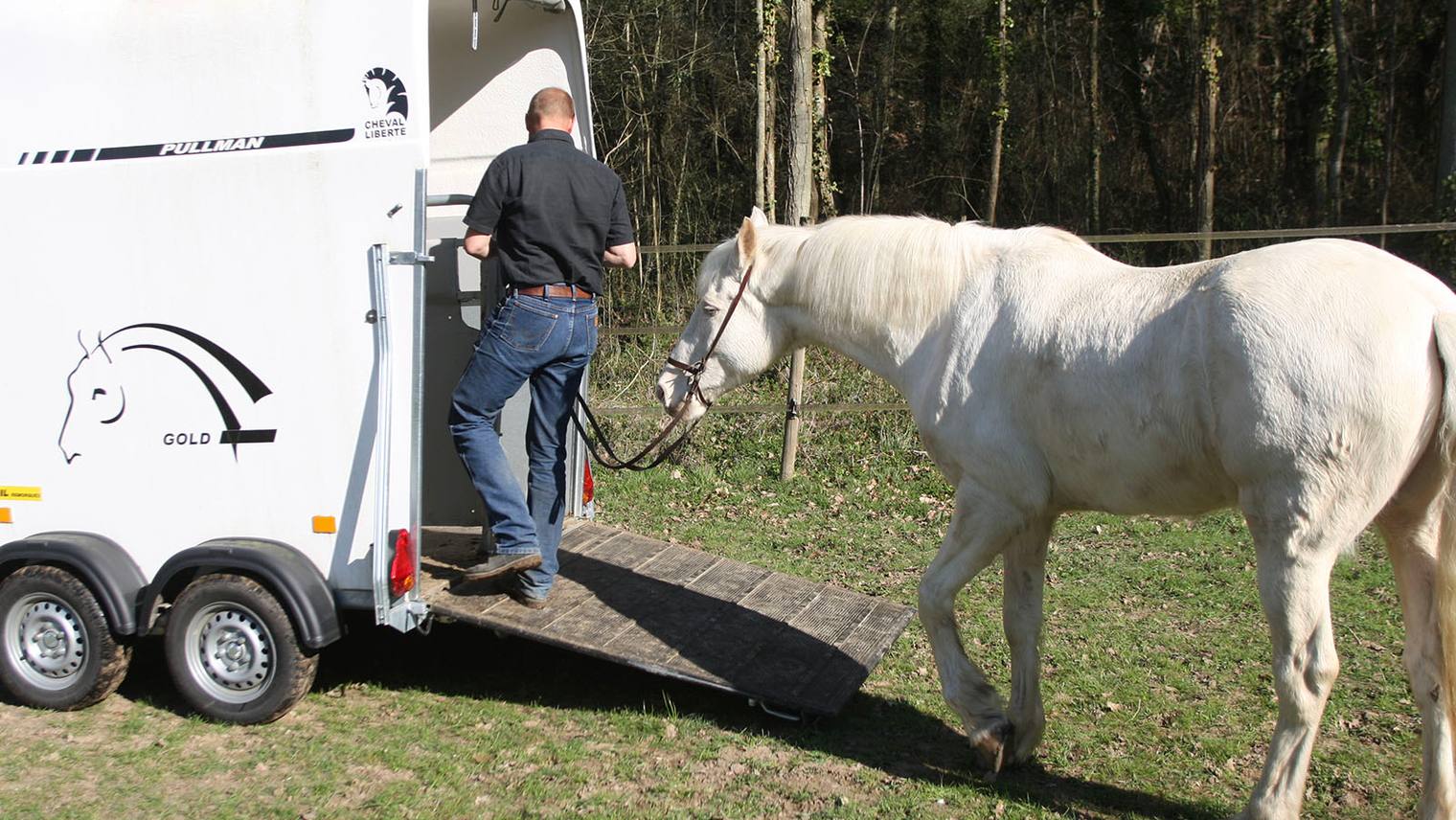
When stress becomes too great, a horse can develop a genuine "phobia", leading to problems with loading and travelling. The phobia shows itself through avoidance (running out, kicking, pulling back on the lead rope, and so on) or through physiological signs such as sweating or passing droppings. The trailer or lorry then becomes the phobic stimulus. That is why, in order to keep anxiety-inducing factors to a minimum and make the journey easier, it is important to pay attention to the choice of vehicle, how it is fitted out, and to training for loading and unloading.
Know the rules in force
The regulatory basis for transporting equines is the European regulation of 22 December 2004, which came into force in January 2007. These rules apply to all vertebrate animals transported over more than 65 km in connection with an economic activity. They set out the conditions and standards to be met in order to protect the safety, welfare and health of the equines being transported, as well as the administrative obligations. They cover various points such as how the vehicle is fitted out, the length of the journey and the transporter's authorisation.
The vehicle
The vehicle must be laid out and organised in a way that ensures the horse's welfare and safety. It must meet criteria for fittings and space that depend on the size of the equine and the length of the journey and, where applicable, be approved by the DDPP. Certain points require particular care, including a watertight floor, ventilation, headroom and the tying system. The vehicle (single vehicle or towing combination) must be registered, must not exceed the PTAC or PTRA, and must not exceed the authorised width and length.
Speed limits and the braking system must be suited to the vehicle's PTAC. These requirements differ depending on whether the journey is a long or a short one. A journey is considered short if it does not exceed 12 hours within France and 8 hours internationally. For short journeys, the transporter must hold a type 1 authorisation. For long journeys, a type 2 authorisation is required.
The horse
The horse must be identified (by microchip for animals born in France, or imported or brought into the country, after 2007). The owner must be able to produce its papers. The horse must at the very least be vaccinated against equine influenza in France, and against influenza and tetanus within Europe. Worldwide, each country has its own health regulations, so it is worth checking with the French embassy in each country.
The horse must be in good health and fit to travel. Long journeys are not permitted for unbacked horses. Horses must travel in individual stalls (except for mares with foals at foot). Intervals for watering, feeding, travelling and resting must be respected, and a journey log must be kept (except for registered equines). The journey must not exceed 24 hours and a break must be taken at least every 8 hours. By following all these recommendations, your horse will become less and less frightened of travelling in the trailer.
From the workshops
Pieces related to this guide


Also worth reading