What is cross-country?
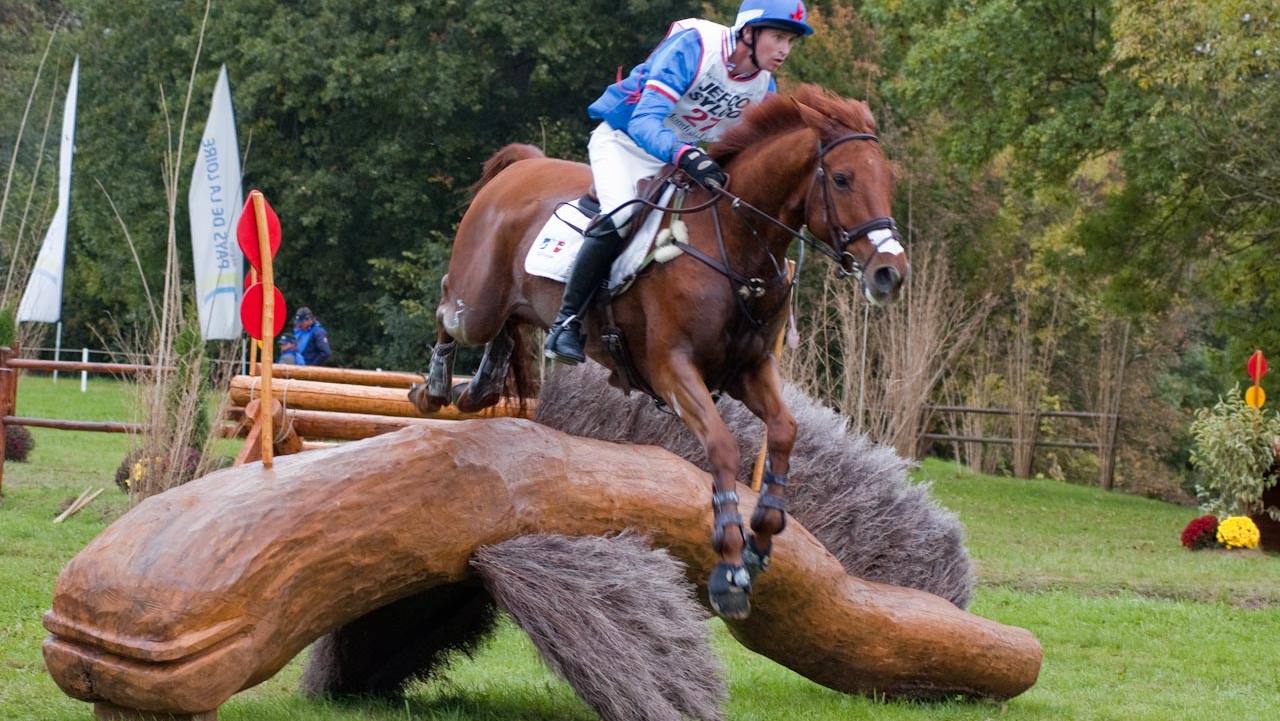
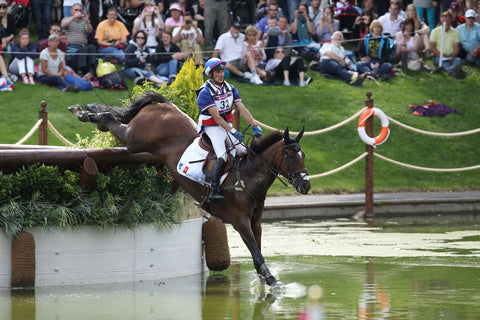
Have you ever heard of cross-country? It's the most spectacular moment of an eventing competition. The fences, which are often very imposing, ask a great deal of courage from the horse as well as real stamina, because they come one after another on a timed course several kilometres long. So what exactly is cross-country?
Cross-country, a test that calls for many qualities
A horse that gallops from one end of a cross-country course to the other, taking on one difficulty after another, deserves a great deal of admiration. The aim of cross-country is to show the horse's agility, speed and endurance as well as his jumping ability. At the lower levels, cross-country is considered an endurance test in its own right.
At the higher levels, cross-country is preceded by roads and tracks and a steeplechase. By the time he starts the cross-country, the horse has already done plenty of work. That's why some riders try to cover the two roads and tracks phases and the steeplechase in a fairly short time.
The reason is that the rest period between these first three phases and the cross-country is long enough for the horse to recover for a few minutes before beginning another long effort. For an effort like this, the horse must be sufficiently fit and have the right kit for the job. La Sellerie Française offers the best equipment for your horse.
An impressive course to get round
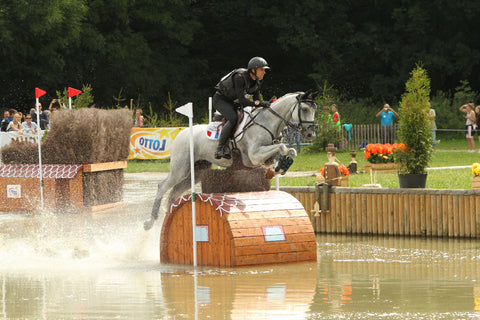
A cross-country course generally covers a distance of 2,000 to 4,200 m depending on the level of the class. That said, the fences must be fixed and imposing in both appearance and shape. As for the height of the fixed part, it must not exceed 1.20 m.
The fences, however, are usually sited on changes of terrain, downhill as well as uphill, in front of or even over a ditch. That makes them both impressive and much harder to jump.
On the course, many fences are made up of several elements and therefore require several jumps. A coffin, for example, has an upright sited on a downhill slope. There is also a ditch on a bounce stride and a second upright on a bounce stride sited on an uphill slope.
Walking the course, essential before you start
Before the class, a detailed plan of the cross-country is handed out to the competitors. Even so, walking the course on foot is essential before setting off. It isn't necessarily the least physical part of the exercise, because here you have three or even four kilometres of course to discover.
As a rule, one walk round won't be enough to get a clear idea of each fence and its approach, or to memorise the course properly.
From the workshops
Pieces related to this guide

Also worth reading