Show jumping: understand courses, oxers and fence heights
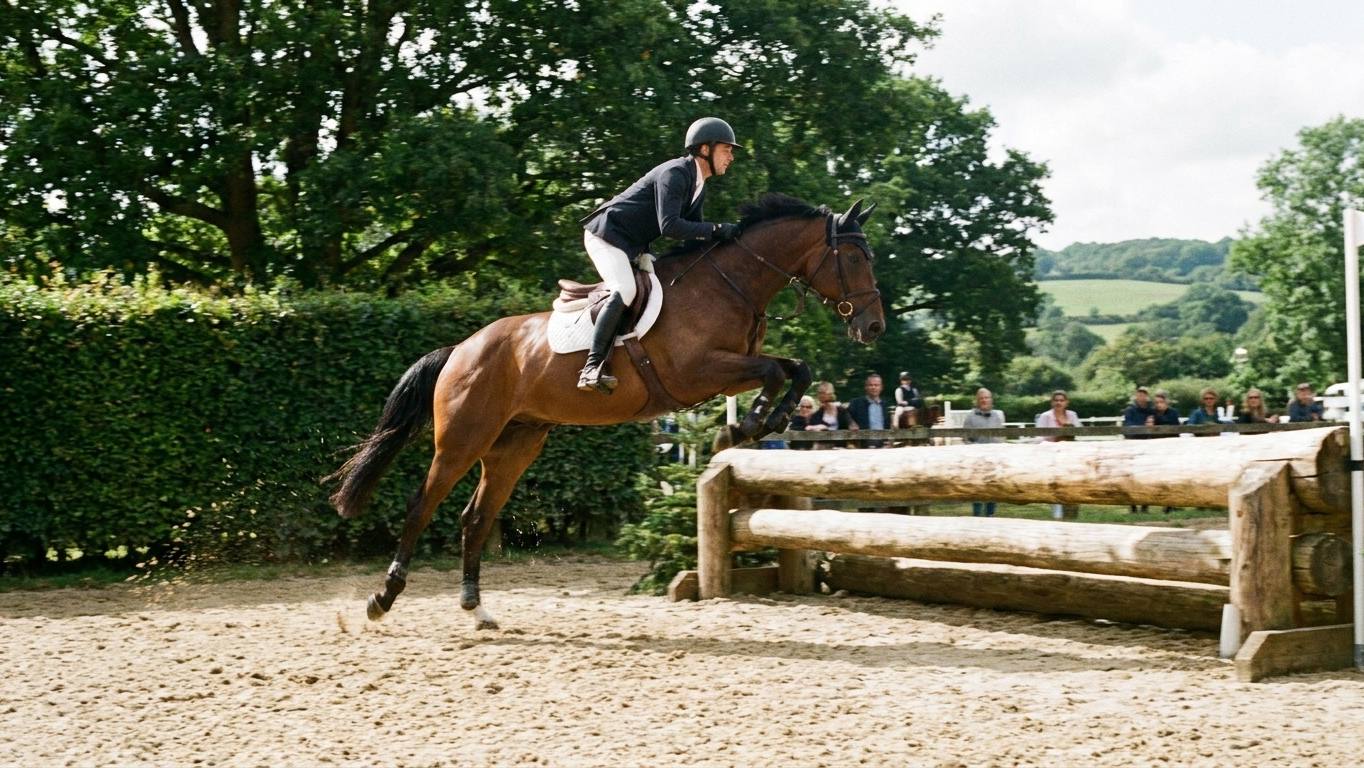
Show jumping involves completing a course in the correct order under the class conditions. The French federation describes a clear round as avoiding faults such as knocked rails, refusals and run-outs while meeting the time requirement. Understanding a result also requires knowing the class’s scoring system.
Read the course before watching the clock
Identify fence numbers, direction of travel and the start and finish. With your instructor, locate turns and linked obstacles. Ask how that class is ranked: time does not have the same role in every format.
A course walk prepares a strategy for the partnership. It is more than memorising a series of heights.
Separate height from spread
A vertical primarily presents a height question. An oxer adds spread between its elements. Two fences of equal height can therefore ask different questions. Their position in the course, approach and following obstacle also matter.
The FEI defines vertical and spread fences in Articles 209 and 210 of its 2025 Jumping Rules. These terms describe obstacles; they do not constitute an exercise-building plan. Have your instructor set and adapt exercises rather than applying one standard distance to every horse.
Establish what the class name means
An abbreviation such as “P3” cannot establish a universal height. Find the discipline, series, full class name and applicable rules. Do not confuse a French Poney category with a Pro category because of one letter.
| Information | Why it matters |
|---|---|
| Full class name | Identifies the relevant rule table. |
| Discipline and series | Prevents comparisons between different formats. |
| Date and rule edition | Establishes the applicable requirements. |
| Technical conditions | Lets you consider height, spread, course and scoring together. |
| Entry conditions | Allows the club to check eligibility. |
The FFE regulations are the starting point for French competitions. An old blog table is not sufficient evidence for entering a partnership.
Use an observable training aim
Before a lesson, ask what the exercise is intended to improve: route, rhythm, balance or coordination. After a round, describe what happened before asking to raise fences. Where recording is permitted, a video can help review a specific moment with the instructor.
Useful progression need not mean higher or faster. It depends on horse, rider, footing and the quality of the work already completed.
From the workshops
Pieces related to this guide
Also worth reading