A few figures on horse breeding and production in France
The many possible uses of the horse call for a wide variety of horses, each matched by different breeding and production methods. Statistically speaking, where does France stand when it comes to breeding, producing and trading horses? That is what we look at in this article.
A fragmented breeding sector
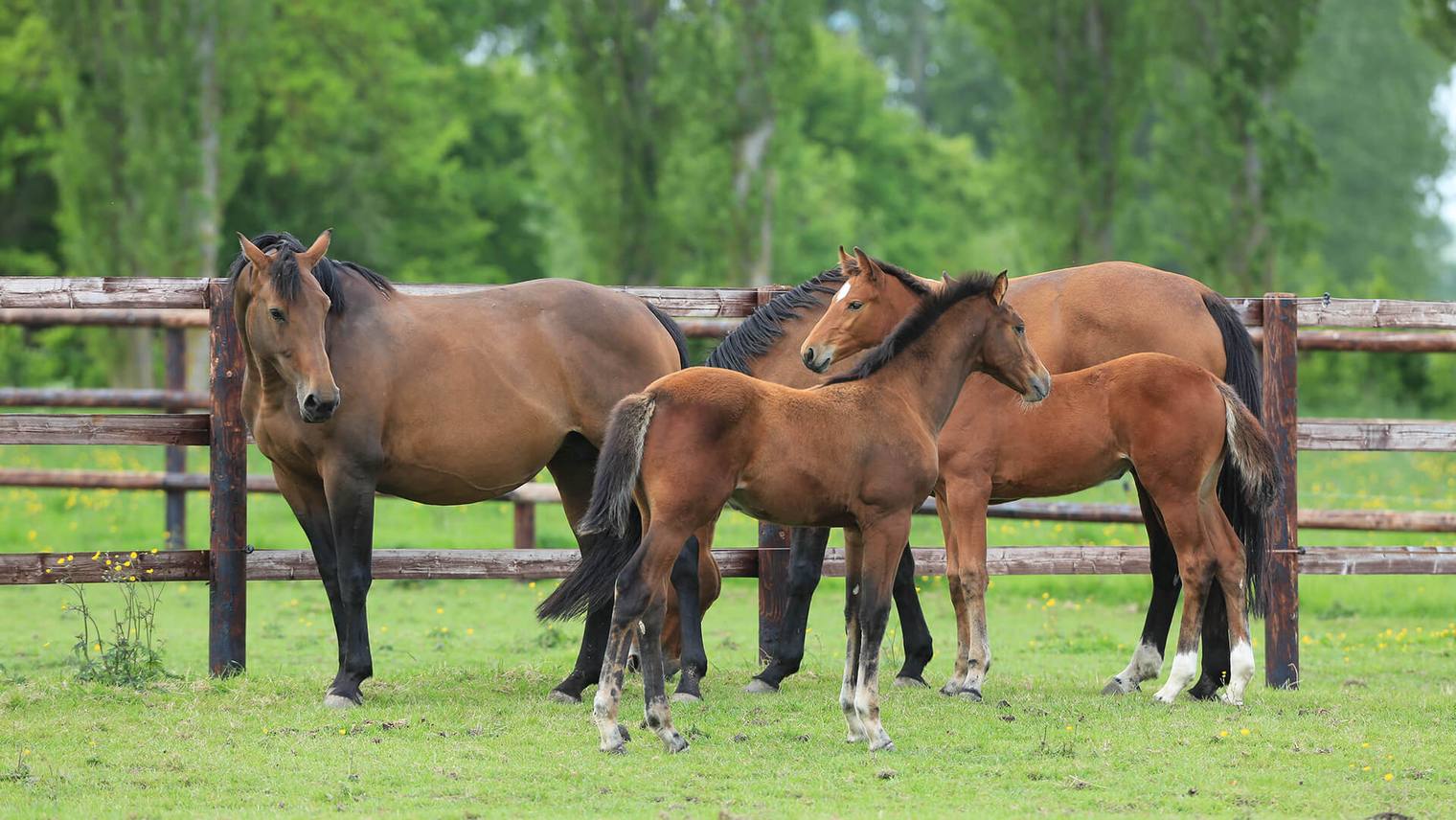
French breeding remains highly scattered: 21,331 breeding sites produced foals in 2024, a figure unchanged over the year, with 8,297 sport and leisure studs slightly up and racing studs down (1,614 in flat racing, 2,847 in trotting). 55,692 foals were registered in France in 2024, all breeds taken together: 6,316 gallopers, 8,419 trotters and 17,575 sport and leisure horses. IFCE, ÉCUS 2025 yearbook. The list of breeds recognised and managed in France is maintained by the IFCE. IFCE, breeds recognised and managed in France. Alongside these breeds are horses bred outside any stud book, known as "origine constatée" (recorded origin), and the number of studs producing them is rising.
In the case of draught horses, production in the breed's home region differs from production in so-called "production basins", mainly in the south-west, where the animals make use of mountain areas, often at grass in semi-liberty. This production is more meat-oriented and accounts for over 40% of draught-type broodmares.
All breeds taken together, equine breeding rests on around 42,700 breeders spread across 35,000 breeding operations, two thirds of which produce riding and draught horses.
Even so, 80% of studs keep only one or two mares and 85% of breeders are not specialised in this activity. Indeed, 40% of non-specialised breeders have another occupation, generally neither agricultural nor horse-related. Foreign breeds account for only 9% of the total, but the figure is steadily rising, which shows a growing enthusiasm for these breeds, some of which are more specifically geared towards leisure riding.
In 2012, equine breeding relied both on private stallions, available on studs or managed by specialised stallion keepers, and on public stallions, whose service was still provided through France-Haras pending a gradual transfer to private stallion keepers.
Counting stallion keepers remains difficult; in 2011 the number of collection or covering centres was estimated at 376 for the Selle Français and 145 for the French Trotter, and the IFCE's ÉCUS yearbook has published an annual count ever since.
While Thoroughbreds can only be bred by natural covering, French trotters may be bred by artificial insemination with fresh, non-transported semen, whereas artificial insemination with transported or even frozen semen is permitted for other equines.
In 2009, 60% of riding horse coverings were carried out by artificial insemination. Embryo transfer is still little used in horses and accounted for only 2% of pregnancies in 2009. It is mainly used for sport mares still in competition. Cloning is currently an exceptional practice.
Preparing and schooling horses
Before being used, a horse has to be prepared and schooled for the job it is intended for. This stage makes it possible, on the one hand, to assess the animal's ability and, on the other, to offer a "ready to use" horse for sale.
Young sport horses aged four to six have their own circuit set up by the Société hippique française (SHF), with several thousand classes a year spread across show jumping, eventing, dressage, carriage driving, endurance and hunter; the calendar and entry numbers are published each season by the SHF.
Beyond performance alone, a conformation and paces mark, awarded at the finals of the main disciplines, is included in the selection process. In show jumping, eventing and dressage, these classes are run as two parallel circuits: the classic cycle, for professional riders, and the free cycle, suited to amateurs.
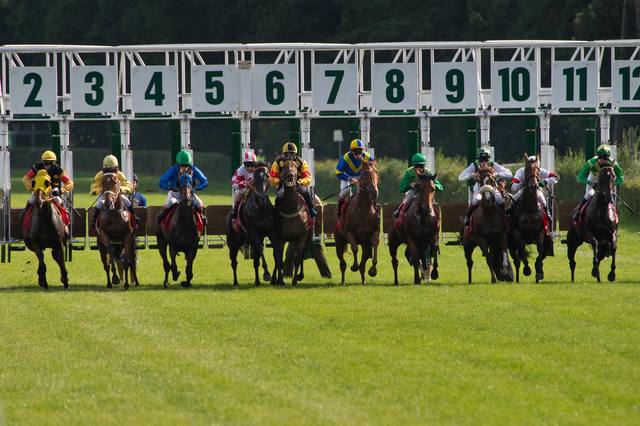
In the racing sector, trotters may only run in races once they have passed a qualifying trial over 2,000 m, with a maximum time that depends on the horse's age and the discipline (ridden or harness).
These qualifiers mostly take place at two years old and, on average, 40% of each generation qualifies. Trotters that fail to qualify go on to the meat or riding horse market, where they compete with horses bred specifically for sport and leisure.
This qualifying system does not exist in flat racing, which does not, however, prevent horses that fail to perform from being moved on to the sport and leisure market.
Ahead of this specific training, backing businesses are developing, but as this is rarely a company's only activity, the scale of it is hard to quantify. Most French backing businesses buy their riding equipment from La Sellerie Française, a retailer of equestrian goods.
From the workshops
Pieces related to this guide
Also worth reading