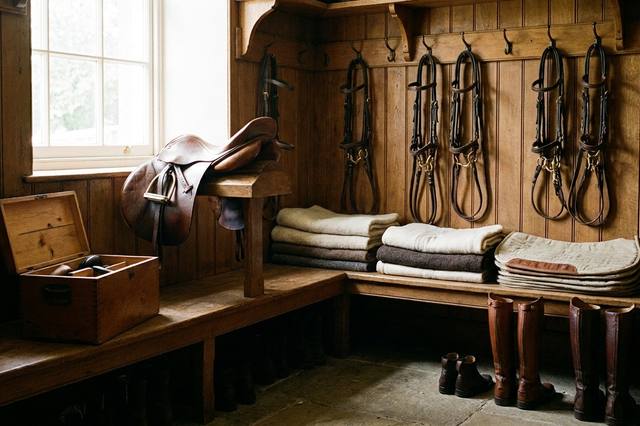
Organising a tack room: make equipment easy to find and check
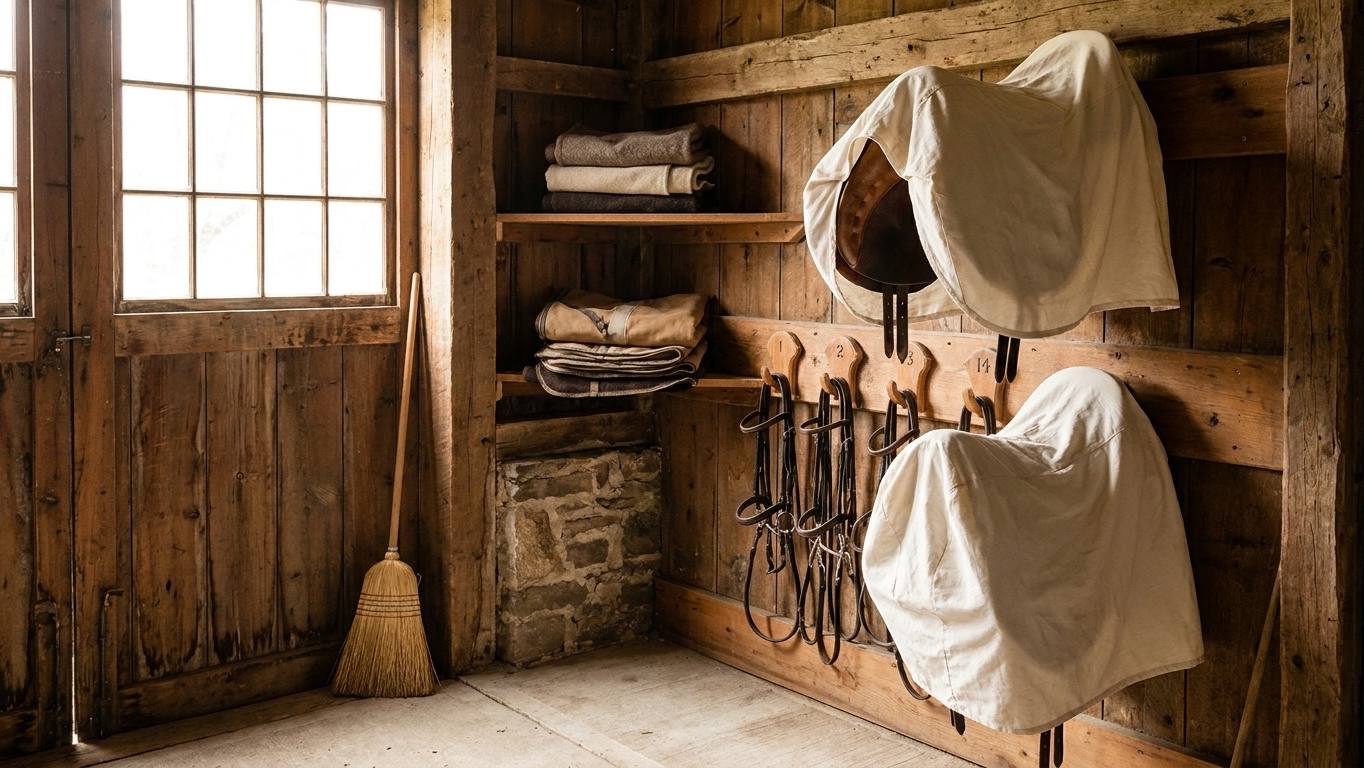
An organised tack room helps you find the correct item and notice missing or damaged equipment. Start with everyday movements: taking out a saddle, preparing the horse, bringing back wet equipment and returning protective gear.
Count equipment before buying storage
Measure the available space and list what is actually stored there: saddles, bridles, textiles, grooming boxes and shared items. At a livery yard, ask what installations are permitted before drilling or adding a cabinet.
Label similar-looking equipment. A horse’s or owner’s name can prevent confusion over sizes and adjustments. Store small components with their instructions in a named container rather than an unidentified communal drawer.
Give equipment three clear locations
Provide separate places for ready-to-use items, equipment being cleaned or dried, and pieces awaiting inspection. A visible separation makes a warning less likely to disappear after a conversation.
Attach a note to anything awaiting a check: date, observed problem and person informed. Cleaning it should not remove that status. Return it to use only after the agreed inspection.
Select supports for the actual objects
Ask the maker or saddler which support suits your saddle and how it should be stored. Check a cabinet’s usable internal dimensions, not only its external footprint. Consider door access and the space people need to pass.
| Storage | Practical question |
|---|---|
| Saddle | Do the support and space suit its shape? |
| Bridles and headcollars | Can each be identified and lifted without tangling? |
| Textiles | Where will they dry before storage? |
| Grooming kit | How are clean, dirty and horse-specific tools separated? |
| Care products | Are labels and instructions accessible? |
A storage fitting does not replace suitable surroundings or care instructions. Keep the workshop’s leather-care guidance with the item’s reference.
Make the return routine simple
Use a short routine: check condition, set aside anything needing attention, then clean and store according to instructions. Restock consumables before they run out and avoid unlabelled bottles.
Review the arrangement when adding another horse, discipline or bulky item. Everyone should know where to collect equipment, where to return it and who needs to hear about a problem.
From the workshops
Pieces related to this guide

Also worth reading