How to write a horse-for-sale ad that inspires trust
Selling a horse is rarely a casual decision. Beyond the price, you want to find someone who will understand its character, its needs and its history. Yet putting all of that into an ad can be hard.
A convincing horse-for-sale ad rests on three things: precise information, photos that match reality and an honest presentation. The goal is to let a buyer judge whether your horse fits their plans before they even contact you.
A title that introduces the horse straight away
The title should give concrete markers. Rather than "Stunning horse, must see", state a few essentials: sex, breed or type, age and discipline.
For example:
"9-year-old gelding, 15.2 hh: leisure riding and hacking"
A title like this lets the reader place the horse at a glance. There is no need for capitals, exclamation marks or promises such as "the perfect horse". Facts a buyer can check are worth more than superlatives.
Put the key information first
A buyer should not have to read several paragraphs to find the horse's age or location. Start with an easy-to-read summary:
- Breed or type, and papers.
- Age or year of birth.
- Sex, colour and height.
- Location.
- Disciplines and level of work.
- Asking price.
Use the details from the horse's documents and separate what is established from what is only estimated. For a young horse, for example, an expected adult height should not be presented as a certainty.
Describe its temperament through real situations
"Kind", "easy" or "people-oriented" are personal judgements. To make them useful, explain how they show up day to day.
You can describe how your horse behaves during grooming, care, loading or hacking. Does it live out with other horses? Does it hack out alone or only in company? Is it used to different riders?
A line such as "hacks out regularly in a group, still lacks confidence alone" helps a buyer far more than "great hacking horse".
Describe the kind of rider you are looking for, too. A horse that is pleasant with its experienced owner is not necessarily suited to a novice. Saying so can spare everyone unsuitable trials.
Choose photos that truly show the horse
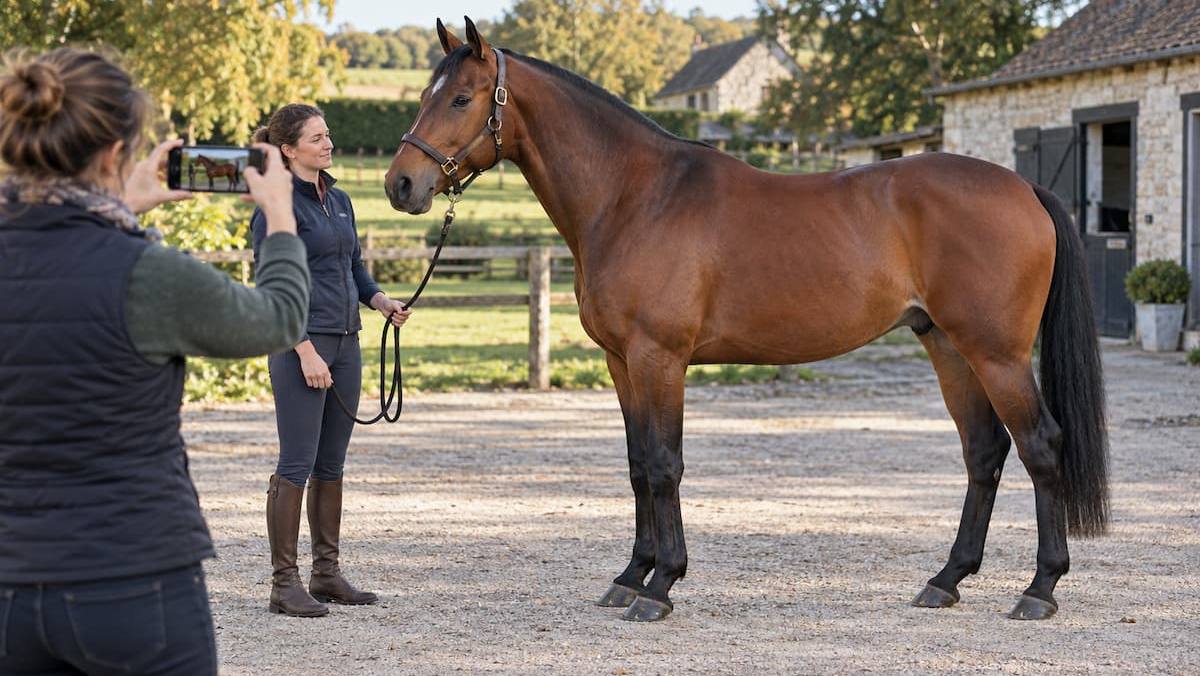
Photos should let people get to know the horse, not just make a pretty picture. Go for recent, sharp shots taken in an open setting.
A useful selection might include:
- The whole horse, side on, standing square.
- A front or three-quarter view.
- Shots in motion or doing its usual work.
- A head portrait.
Groom your horse carefully and use clean tack that fits well and suits the situation. Presentation matters, as long as it does not hide the horse's conformation.
Avoid filters that change the coat colour and framing that keeps cutting off the legs. If you add a video, choose clear footage over a fast-paced edit: the future buyer needs to be able to watch the horse.
Show a price and explain what comes with it
Price is a key filter. Stating it lets interested buyers check straight away whether their budget matches.
You can add context: training done, experience, bloodlines or verifiable results. Also say whether any tack is included in the sale. A saddle visible in the photos, for example, is not automatically part of the price.
If you are open to offers, say so simply. A clear presentation reassures more than a string of pushy phrases such as "urgent", "exceptional bargain" or "first come, first served".
Be open about health and points to watch
Known information about health, history or behavioural difficulties deserves a precise conversation with the buyer. In the ad, present the relevant points without turning a personal observation into a diagnosis. You can then share the documents you have and answer questions in a fuller exchange.
Avoid blanket guarantees such as "no health problems". State the facts you have instead, with their dates. An old vet visit cannot, on its own, describe the horse's current condition.
The ad is there to start a conversation: it replaces neither the buyer's own checks, nor a trial, nor a pre-purchase vetting by a veterinarian.
A template to adapt
Here is an outline to fill in with accurate information only:
[Sex], [breed or type], [age], [height]: [main discipline]
Based in [town and region], [horse's name] currently does [activities and how often it works].
Day to day, it [behaviour during care, handling and living habits]. Out hacking, it [actual experience, alone or in company]. It is also used to [travelling, competitions or other relevant situations].
It could suit [rider profile and plans], with particular attention to [needs or points to work on].
Papers: [details]. Health records and information: [what is available].
Price: [amount]. Tack included: [details, if any].
Recent photos and videos available. First contact by [contact method], then viewing and trial by appointment on agreed terms.
Publish your ad and stay available
Before publishing, reread your text as someone who does not know your horse. Do they understand its profile, its needs and the terms of sale?
To see a range of horses and how other sellers present them, you can browse the horse ads on France Cheval. Keep your description personal, though: every horse deserves a presentation that fits it.
Once it is live, answer with the same precision as in the ad. Ask the other person about their level, their plans and how the horse would be kept. Trust is built both ways.
Finally, update your ad if things change and take it down once the horse is no longer available.
A good ad does not try to please everyone. It helps the right people recognise themselves in what you offer, while staying true to the horse and its needs.
Also worth reading