The importance of checks in carriage driving
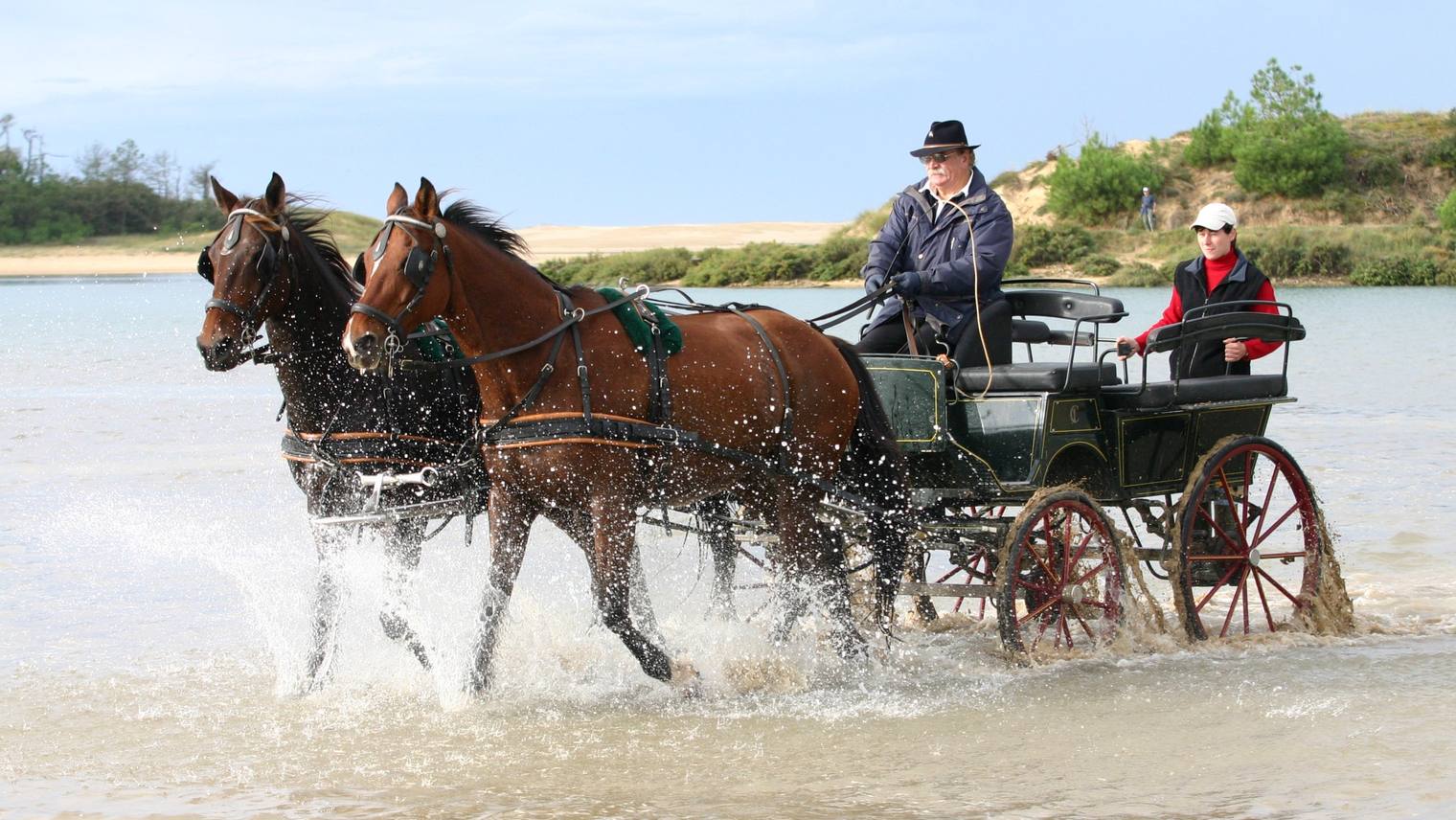
Choosing safe equipment that is suited to the needs of those using it and kept in good condition is essential for their safety and well-being at work. The slightest fault in driving equipment can injure several people (the driver and grooms, but also other road users). That is why this section is devoted to it. In carriage driving, checks cover both the harness and the carriage.
Checking the harness
The various parts of the harness must be checked carefully and maintained regularly. The following points should be considered. The condition of all the stitching. The condition of the billet straps where they rub on the roller of the buckles and where the tongues pass through them. The strength and secure fixing of the rein terrets. The condition of the backband strap. It should be taken out of its housing every time the harness is stripped down. The strength of the crupper dee and how securely it is fixed to the tree of the harness saddle. This part comes under heavy strain and, if it breaks, the breeching drops onto the horse's legs.
If there is any doubt about the condition of this part, a spur strap can be passed around the tree. The mouthpiece must not be too worn. Leather should be washed down after every outing and greased regularly.
Checking the carriage
There are several things to check on the carriage. First, the condition of the welds where they join the tubing. The welds must be free of cracks. Next, the condition of the axle bearings. To check them, lift the wheels regularly and spin them. If you feel any intermittent resistance, the bearings need replacing. The forecarriage pivot system must be checked, as must the brakes.
The carriage also needs regular maintenance. The braking system on horse-drawn carriages is similar to the technology found on cars and is maintained in the same way (changing the pads, renewing the fluid and bleeding the circuit). Another important job is greasing the metal joints, which are sometimes fitted with grease nipples.
The horse's equipment
The horse's equipment matters just as much. Many accidents happen when one of the key pieces of harness breaks (a billet strap, a stirrup leather, etc.) or when other equipment is in poor condition (a halter clip giving way, etc.). Choosing good-quality equipment is therefore already a sound starting point. You will find equipment of this kind at La Sellerie Française. It must suit the horse's build and the discipline being practised.
Leather should be chosen so that it is not brittle and can withstand considerable strain. The stitching must be well done and the metal fittings (clips, metal attachment buckles, etc.) must be securely fixed and made of metal that is strong and hard-wearing enough. To make them last, leather goods must be maintained (cleaned and greased) regularly.
This upkeep keeps them supple and so reduces the risk of tearing. Before starting work, staff must make sure the equipment being used is in good condition. Leather must be free of splits, cracks and tears (stirrup leathers, billet straps, snaffle bridle, harness, etc.). Damaged leather can give way under heavy strain, unbalancing the rider in the case of a stirrup leather, or causing the saddle to slip.
From the workshops
Pieces related to this guide
Also worth reading