The horse's sense of smell
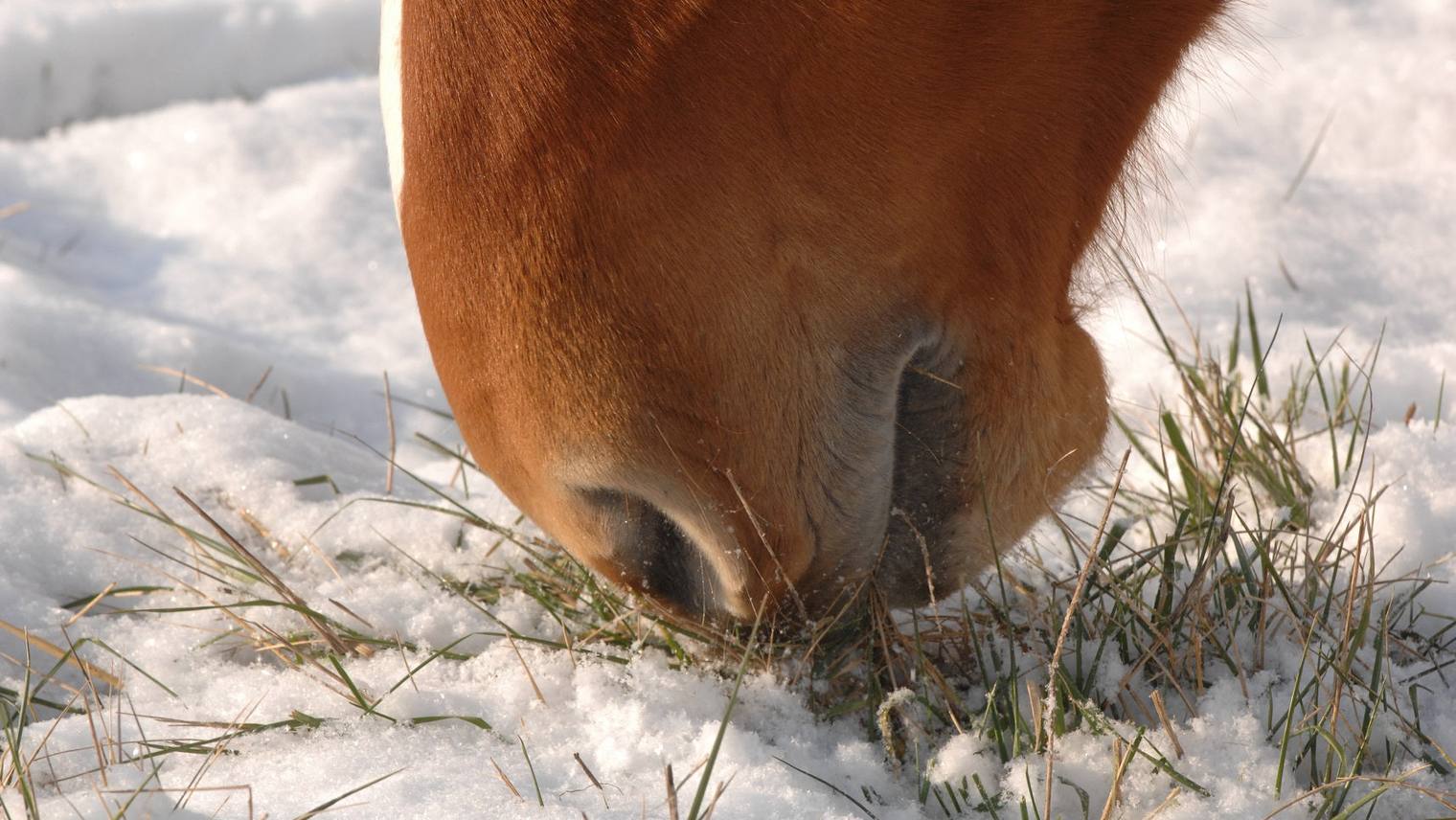
A horse's sense of smell is far more developed than our own and serves several purposes. As well as allowing the animal to sort through its food, smell plays a particularly important role in mutual recognition between horses, and also between horses and humans. Every individual, horse or human, has its own distinctive scent. When two horses meet, they begin by blowing into each other's nostrils and sniffing one another, and this behaviour will determine their future relationship. In this article, find out everything you need to know about the horse's sense of smell.
Smell: a tool that allows the horse to recognise danger
Smell plays a major part in how a horse identifies danger. When a horse is frightened, you need to give it time to sniff whatever is frightening it (the ramp of a trailer, a ford, a tarpaulin, etc.) so that it can reassure itself. If you don't and instead try to force the horse past, you make the situation worse by increasing its stress; the animal may then rear or spin round to flee, putting the handler in danger.
Horses can also detect other chemical molecules
Besides smells that are more or less detectable by the nose, there are other chemical molecules that horses can perceive: pheromones (involved in relationships within the species) and allomones or kairomones (involved in relationships between species). The best-known pheromones are the sexual pheromones, which allow a stallion to detect a mare in season. These substances are analysed in fine detail by the horse thanks to a small gland located in the nasal cavity: Jacobson's organ, or the vomeronasal organ.
In order to bring the substances to be analysed into contact with this gland, the horse performs a characteristic grimace: the flehmen response. These molecules cannot be detected by the human nose and can give rise to reactions from the animal that seem incomprehensible to us — for example, a stallion becoming excited on smelling the pheromones of a mare in season, even when she is several kilometres away.
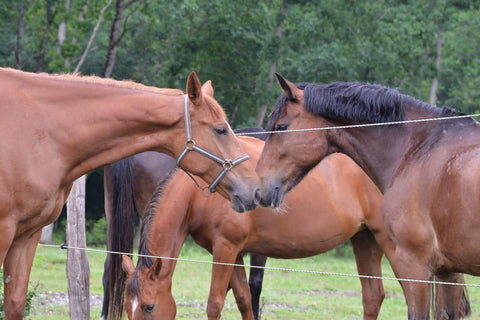
There are other pheromones besides the sexual ones — for example, stress pheromones found in the urine of some individuals. They are produced when an animal feels in danger, when loading into a trailer for instance, and have the effect of stressing any other individuals that detect them, even when there is no real danger.
It is therefore best not to load the most nervous horse first, so as to avoid stressing those that follow. Conversely, appeasing pheromones such as appeasines calm animals down. These substances are available commercially in spray form, including on La Sellerie Française, and can be used to calm a horse before a journey or a visit from the farrier, for example.
To be effective, they must be given before the animal becomes stressed, that is to say at least 30 minutes before the event. They are only a sticking plaster, however, and should be used as a last resort, the best preventive solution being, of course, a well-educated horse in the first place.
Humans can also give off chemical substances (allomones and kairomones) that horses detect. It is well known that a horse can "smell" its rider's fear. When frightened, we secrete these chemical molecules and pass our stress on to the animal.
If you are frightened or very much on edge (the day before a competition, after a bereavement, etc.), it is better to keep away from horses. Sensing its rider's stress, the horse will itself become stressed and nervous and may react (shying, rearing, etc.), which in turn will stress the rider still further.
It is a vicious circle that can end in an accident. Some riders also panic at the thought of riding certain horses. Rather than forcing the person, it is sometimes better to avoid putting them on the object of their fear, so as to prevent any accident.
From the workshops
Pieces related to this guide
Also worth reading