What to do if your horse has back pain
For most horses, pain originates in the back. The reason is simple: a horse's back is constantly asked to carry riders for all sorts of purposes, and it ends up suffering when shortcomings creep into its daily routine. So what should you do when your horse has back pain? That is what we look at in this article.
What to do when your horse has back pain
If there are obvious or acute signs of back pain, the first thing to do is to call a vet. Until the horse has been examined closely and the cause of the reactions or the change in behaviour has been identified, the back should not be worked. Only once the cause is known can the problem be solved. Several types of specialist can help a horse with a sore back.
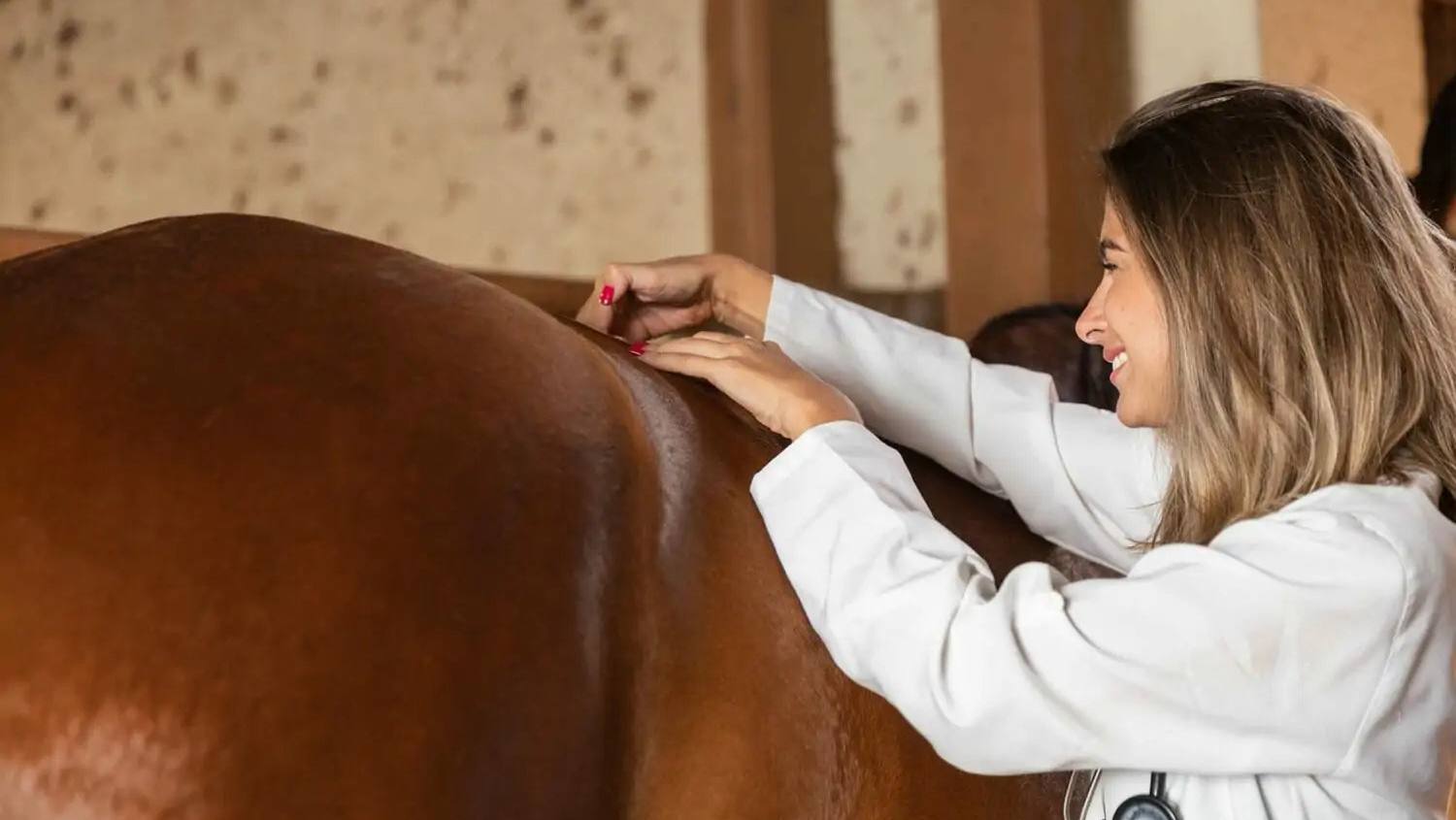
Vets are the first port of call in working out where the pain is located and which structures are involved. Imaging techniques such as X-rays or ultrasound can be useful here. If necessary, they can give the horse painkillers or anti-inflammatories.
Saddlers also have a role to play: having the saddle checked by a specialist and adjusted if needed can improve the situation considerably. That said, back pain is not necessarily linked to a poorly fitting saddle. It is precisely to prevent such pain from arising in this way that many riders buy from La Sellerie Française.
Then there are therapists specialising in manual treatment methods (physiotherapy, chiropractic, osteopathy, acupuncture and so on): these approaches can release tension, mobilise joints and help relieve pain. Through targeted exercises, movement therapists can teach the horse to perform the right movement patterns and to activate important muscles. As with people, training the muscles that stabilise the trunk is often a key part of treating back pain in the long term. Riding instructors are qualified trainers too (whatever the discipline) and can help the rider learn a way of riding that spares the horse's back and encourages it to stabilise itself properly.
For their part, riders can work on their balance, on muscular stabilisation of the upper body, on sitting symmetrically, on a light seat in the faster paces, or on learning how to put the horse correctly on the bit. In many cases it is sensible and indeed necessary to call on several specialists to resolve a back problem. It is important to develop a clear treatment plan that solves the problem for good. While adjusting the saddle is usually fairly quick, the training needed to change the movement patterns of horse and rider can be lengthy and demanding.
Making sure treatment is tailored to each individual horse
Some causes of back pain (bony changes, for example) are not reversible and therefore have to be treated symptomatically in many cases (pain therapy). For every horse with a sore back, a treatment plan suited to its particular problem needs to be drawn up. For instance, there is little point in changing the saddle if the problem lies with the person riding. The vet is generally the best placed to coordinate the various measures required, as they are in the best position to judge the order in which the list of problems should be tackled for the best results.
From the workshops
Pieces related to this guide




Also worth reading