Emotions in horses
Although Darwin published a book entitled "The Expression of the Emotions in Man and Animals" as early as 1872, most scientists long refused to speak openly about emotion in animals. That era now seems to be over. It is now accepted that emotions are central to the way an animal perceives its environment. They therefore contribute to its state of well-being or ill-being. What about the horse? Does it feel emotions? How can we recognise them and take them into account in day-to-day management and training?
What is an emotion or an emotional state?
An emotion is a transient reaction to a triggering event, associated with behavioural changes in facial expressions, vocalisations, activity, posture, flight, fighting, approach and investigation. The changes may be physiological, affecting heart and breathing rates, blood pressure, sweating and hormone levels. They may also be cognitive, involving the perception, analysis and memorisation of information by the brain.
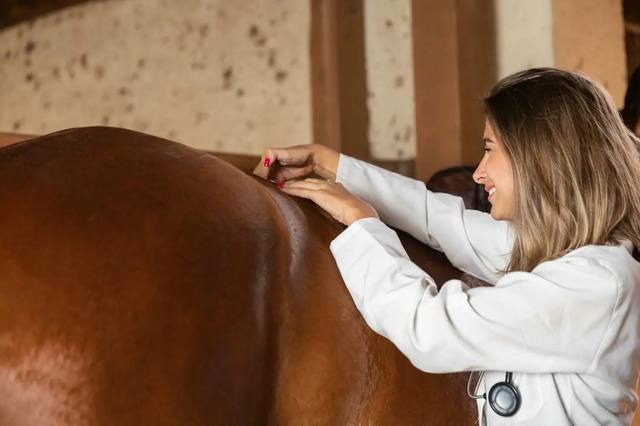
In the horse, for example, a negative emotion such as fear causes avoidance or flight and an increase in heart rate. A positive emotion, such as the pleasure that follows scratching at the withers, produces a characteristic behaviour, with the head extended, movements of the lips and a decrease in heart rate.
It is mainly negative emotions, such as fear, that have been studied in the horse, probably because they are expressed more intensely and their consequences are more harmful. Still relatively little is known about positive emotions. Work carried out on farm animals helps us understand how play, care and social relationships lead to states in which animals feel pleasure or even joy. A recent study (Statton et al.) conducted on horses identified situations that can induce positive emotions, such as grooming on preferred areas of the body. The same applies to the giving and eating of a palatable feed, or to positive social behaviour between familiar individuals.
Beyond emotion, which is by definition fleeting, recent studies show how the accumulation of these emotions can lead to prolonged affective states, known as emotional states, experienced positively or negatively. Negative states, such as anxiety and depression, are again better documented in the horse. Generally speaking, in animals as in humans, negative emotional states bring about a shift in attention towards potential threats, a tendency to remember negative events and impaired judgement. Taking horses' emotions into account in their management and training is therefore important for their welfare, their ability to learn and their rider's safety.
How can an emotion be recognised?
Little work has been done on emotions in the horse, and most of it concerns fear, pain and stress, which induce negative emotions. It is a field of research that is currently expanding rapidly. Potential indicators are put forward in the literature, but not all of them have been fully validated. Behavioural indicators are the most useful ones for the rider or owner. Here are a few examples.
Indicators of stress
Indicators of stress are potentially linked to negative emotions. Stress can be brought on by a great many factors or situations: fear, pain, unmet needs, frustration, and so on. It may be acute or chronic. Acute stress in the horse tends to be associated with increased reactivity, with more locomotor behaviour, less resting behaviour and less time spent feeding.
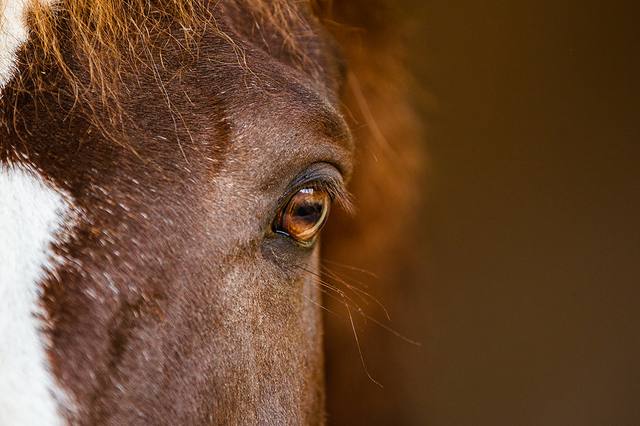
Acute stress in the horse is also associated with an increase in alert behaviour: head and neck raised, ears moving, eyes wide open, little weight taken on three feet, vocalisations such as alarm snorts and blows, flared nostrils, muscle tremors. Acute stress is also linked to more frequent defecation. Chronic stress has been described in the horse in particular, associated with a frozen posture: head extended with the jaw-neck angle open, neck and back at the same height, head and ears immobile and most often turned back, eyes open with a fixed stare. Such horses are more indifferent to stimuli in their environment, but more reactive in challenging situations such as the novel object test. This corresponds to a negative emotional state.
Feeding can help reduce stress in the horse. You will find feed suited to your horse's situation at La Sellerie Française.
Indicators of discomfort or pain
Indicators of discomfort or pain are also linked to negative emotions. In equines, pain can be recognised from changes in behaviour: marked agitation, nervousness, unusual anxiety, aggression, or on the contrary a stoical posture with withdrawal, reluctance to move, abnormal weight distribution or weight shifting, a low head not associated with sleep or drowsiness, a fixed stare, flared nostrils, clenched jaws. These last criteria are facial expressions, produced by movements of the underlying musculature.
Some types of pain have a more specific behavioural expression. With pain in the limbs, for example, you may see changes in posture, refusal to bear weight, lameness or reluctance to move. A horse suffering from abdominal pain will roll, look at its flanks, kick at its belly with a hind leg, stretch out as if to urinate, or else be unresponsive and appear depressed.
A horse may show signs of discomfort or pain only when it is being worked. The dividing line between discomfort and pain is not well understood. The behaviours described are numerous and vary in intensity: reluctance to move forward, tension, asymmetry in bending, resistance, tail swishing, ears back.
Some behavioural signs point more specifically to discomfort or pain in the mouth, caused by poorly fitted or badly used equipment (a bit that presses on the tongue or palate, of the wrong size, and so on) or by injuries to the mouth, possibly along with sharp enamel points or wolf teeth. The horse will then try to rid itself of the problem through various avoidance behaviours, which can become violent: leaning on the bit or, conversely, dropping the contact, opening the mouth, putting the tongue out, putting the tongue over the bit, going behind the bit or throwing the head.
Ear position
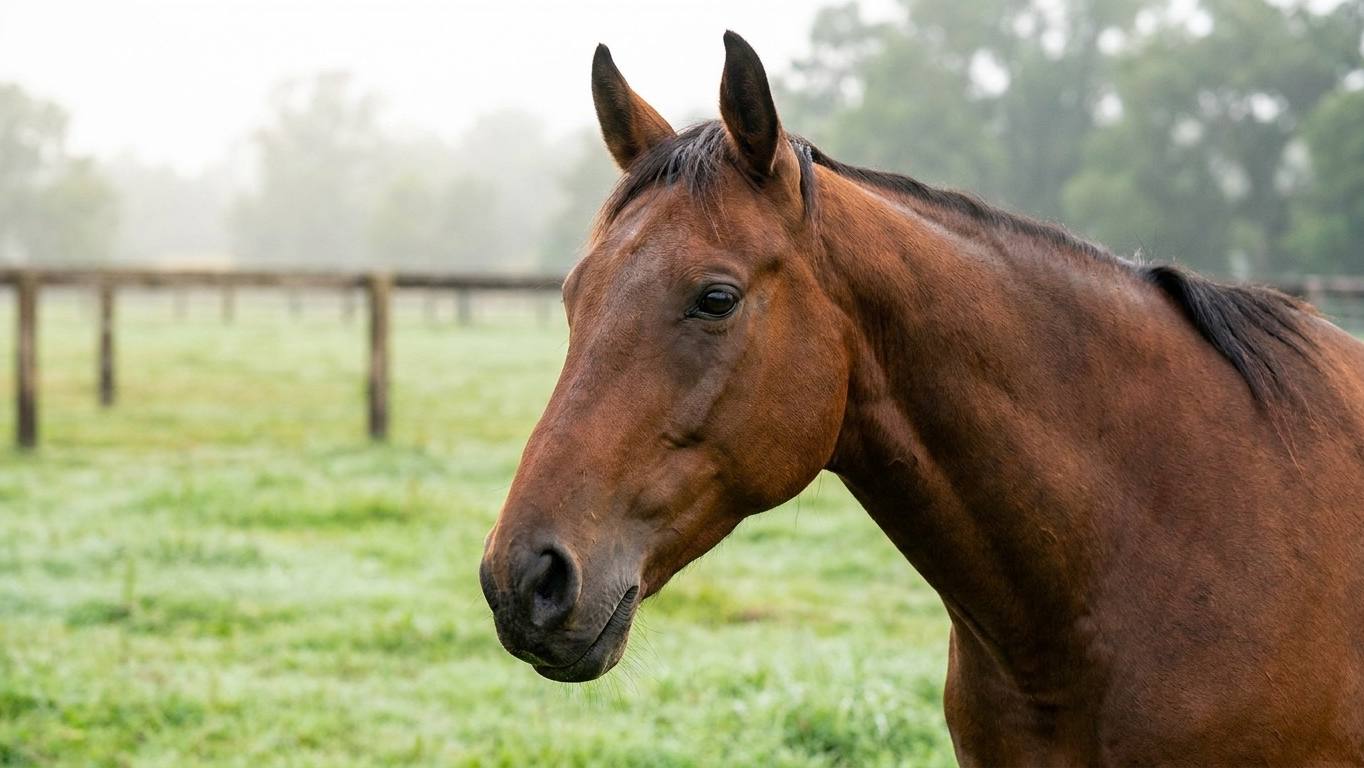
Ear position is certainly a good indicator of emotions in the horse, although its full range of meanings is not yet known. Ears pricked forward can be a sign of alertness or sustained attention towards an event, without it being possible to link this clearly to a positive or negative emotion. Ears held back for prolonged periods are thought to indicate chronic stress, possibly associated with physical or mental pain and therefore reflecting negative emotions.
Ears turned back, but only briefly in response to an event, are also considered a sign of aggression, again an indicator of negative emotions. Ears forward, in an attitude of attention towards a person (gaze directed at the person, interaction with the person), in work based on positive reinforcement, may correspond to positive emotions.
Vocalisations
Vocalisations allow animals to communicate with each other and are assumed to be associated with emotions. The contact call, a soft vocalisation from a mare to her foal or her handler, is probably associated with a positive emotion. In contrast, the open-mouthed whinny is often given when horses are separated and reflects stress, and therefore a negative emotion. The same goes for the blow or snort given when the horse is frightened.
Other behaviours
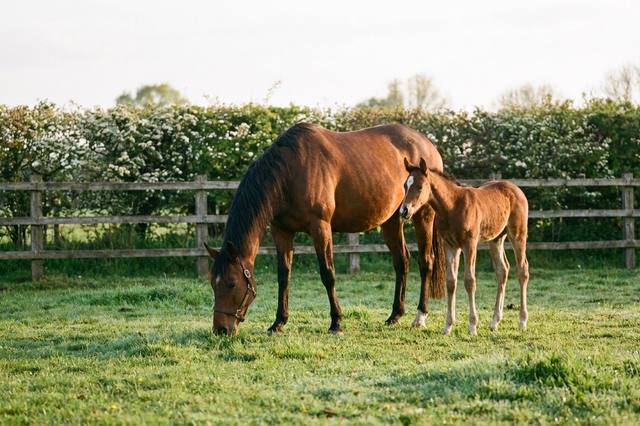
Certain behaviours within the horse's behavioural repertoire, such as play in young horses and friendly interactions between companions, are put forward as reflecting positive emotions or emotional states.
From the workshops
Pieces related to this guide




Also worth reading