Galop 2: syllabus, tests and preparation
To become a professional competitor, you have to pass every Galop. There are normally 7 of them. Before reaching that stage, you mainly need to get ready to show that you have the basics at Galop 2. Here's how to go about it.
Getting ready
To prepare for an exam like Galop 2, you need to cover the bare minimum. That starts with learning about life as a rider, helped by all the right kit, and in particular a comfortable saddle like those shown on La Sellerie Française. Above all, you need a riding instructor on hand. You can book the instructor for a private lesson, or work with them in a group lesson, which is less draining on the wallet. The instructor must also be competent and give you a solid minimum grounding in riding.
Beyond the instructor, you should set aside time to work on your own with your horse. These are special moments when the horse is at its rider's disposal and both pay attention to each other, so they quickly build a partnership. Make sure no one comes along to disturb the peace at those times.
Finally, preparation means reading the official manuals and the federation guides. They set out clearly all the information a beginner rider, or a rider at Galop 2 level, needs. For theory revision, you can also play online on the professional platforms designed for the purpose.
The tests
Like all the other Galops, Galop 2 takes place in two main parts. In the theory, the rider's knowledge of the subject is assessed, in line with their level of riding competence. The practical part follows, with exercises both on the ground and in the saddle, to gauge the candidate's general ability.
In the theory part, the candidate has to answer questions from experts and professionals on specific aspects of riding. They will need to know the chapter on the aids and the different parts of the snaffle bridle. Add to that the parts of the saddle and the school figures. Questions may also cover other topics if the rider turns out to be very knowledgeable and quick-witted. Above all, take care to memorise the basic routines expected of a beginner rider: what comes before mounting, and what comes after the session.
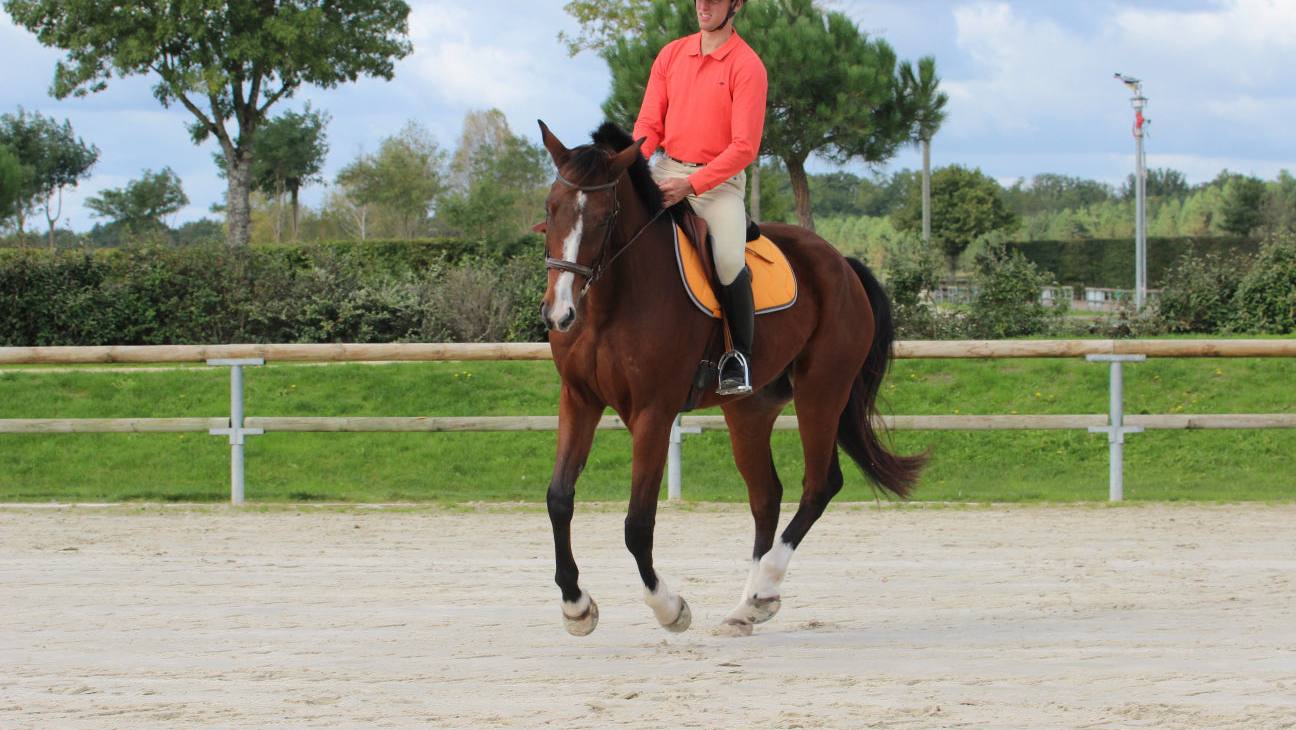
The practical begins on the ground. The rider is asked to lead their horse in hand along a set track. They must show that they know their animal and can steer it in the desired direction without deviating. The practical is also the stage where the rider shows they can bridle their own horse. They then mount and make sure their stirrups are properly adjusted. After that, it is their ability to steer the horse from the saddle that will be marked. To do so, they must follow the track. There is also a small fence at the end of the test that they will have to jump with their horse.
From the workshops
Pieces related to this guide
Also worth reading