The horse's five senses
Just like us, the horse is one of those equids with five senses: sight, hearing, smell, touch and taste. While some of these senses are less developed than our own, others are far sharper. They allow the horse to make better sense of its environment and to build relationships with everything in it, including humans, and the rider in particular. In this article, discover the horse's five senses.
Sight
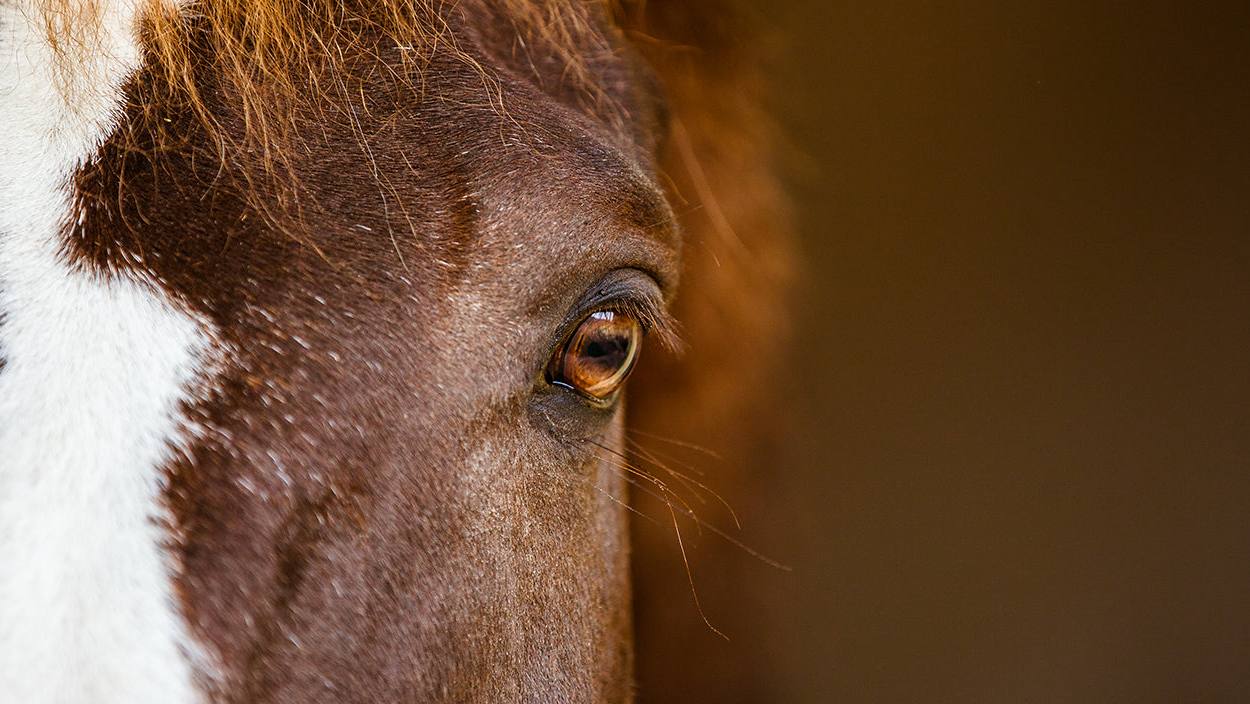
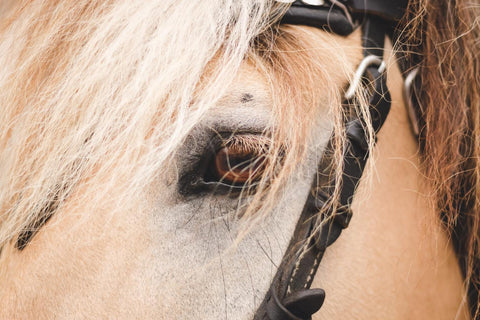
A horse's field of vision covers 340°, but it has two blind spots: directly in front and directly behind. This is why a horse will startle if you touch the end of its nose or its hindquarters without warning (watch out for kicks!). The binocular zone is the area where the vision of both eyes overlaps, allowing the horse to judge distance and depth and to see in 3D. This type of vision is typical of herbivores and helps them spot danger (predators) around them.
A horse can see near and far at the same time (it can graze and keep an eye on its surroundings simultaneously). Its night vision is very good, close to a cat's for example, but it needs time to adjust to changes in light. Its colour vision is similar to that of a colour-blind person. In carriage driving, drivers cover part of the horse's eyes, and so part of its field of vision, with blinkers, to stop it seeing behind and sometimes to the sides. You'll find made-to-measure blinkers at La Sellerie Française, one of the best shops for equestrian accessories.
Hearing
Hearing is very highly developed in the horse. It can, for instance, hear a mouse in the straw 100 m away, and it picks up earthquakes before we do, as well as ultrasound. A horse's ears are mobile and move independently, turning towards wherever a sound comes from.
Smell
Smell is also very highly developed in the horse and works thanks to the olfactory cells in the nostrils. It allows the horse to find water, to investigate new objects, to recognise other horses by sniffing droppings and urine, to detect a mare in season, and so on. Horses greet one another by sniffing each other's noses. The flehmen response is a characteristic behaviour in mammals, in which they use the vomeronasal organ in the palate to detect pheromones or particular smells.
Touch
A horse's sensitivity varies from one part of the body to another. The head and back are very sensitive, while the limbs are much less so. A horse's skin will twitch at the touch of a fly. The hooves have no feeling and form a protective casing around the foot, which is sensitive and plays an important part in balance. Around the muzzle and lips are the vibrissae, long sensitive hairs that should never be trimmed (even for turnout), as they help the horse sense its surroundings. Horses enjoy contact with each other and will mutually groom and scratch one another (grooming).
Taste
Taste allows the horse to recognise and sort through its food. It has to be very careful about what it eats, since it cannot vomit. Naturally, it isn't drawn to sweet flavours: that's something we humans have got them used to.
From the workshops
Pieces related to this guide



Also worth reading