Looking after your horse
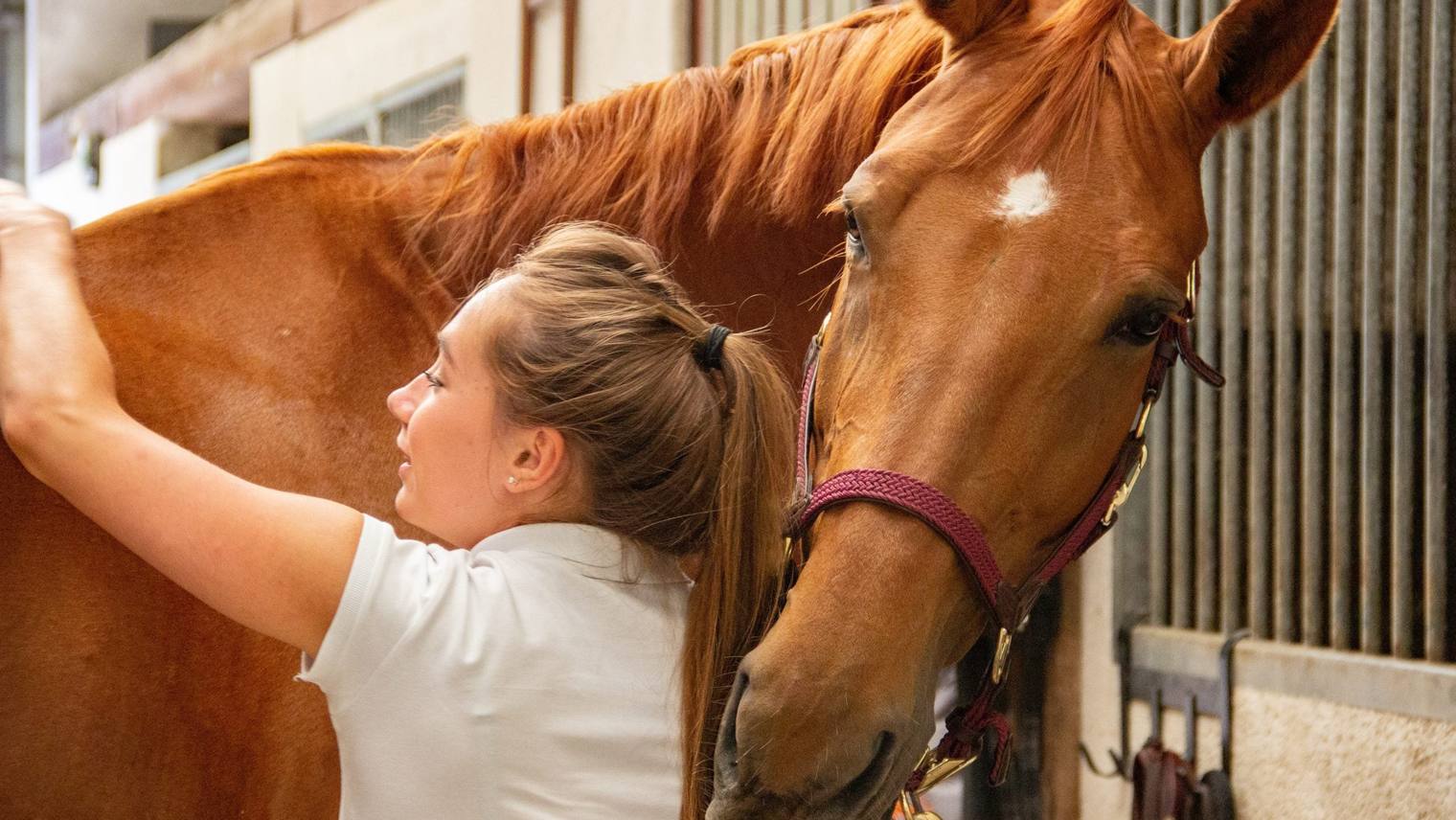
A horse is first and foremost a living creature that needs care, just as people do. When you have a horse, it's essential to be able to look after it properly without necessarily being an expert in equine medicine. Here's how you can take good care of your horse.
Putting on and taking off boots
Knowing how to put on and take off your horse's boots is one of the first things to learn when you have a horse. As there are several types of boot, this article will cover the most common ones.
Brushing boots and tendon boots
Brushing boots and tendon boots are mainly used for jumping and cross-country. Their job is to protect the horse's tendons during work. Closed, rigid tendon boots are preferred for cross-country, as they protect the whole cannon bone and the tendons. They are put on by sliding down from the knee so that they sit correctly on the leg, and the fastening straps should be on the outside of the leg, pointing towards the back of the limb.
Fetlock boots
Fetlock boots can have a single or double shell. They protect the fetlocks of the hind legs. They are mainly used for jumping and cross-country. They are generally fastened without being done up too tightly along the cannon bone, then slid into place, with the fastenings on the outside and pointing backwards. You'll find quality fetlock boots at La Sellerie Francaise.
Overreach boots
Open or closed, overreach boots are mainly used on the front legs, often for horses that forge. They protect the coronet, the bulbs of the heel and the fetlock area.
Polo wraps
So-called "polo" wraps can be used on all four legs. They mainly protect the tendons. They are thick and must not restrict the joints. Start applying the wrap on the inside of the cannon bone, working downwards and covering about three quarters of the previous turn, down to the ergot. Then work back up and fasten the Velcro below the knee on the outside of the cannon bone.
Travel boots
Travel boots are very tall, very thick boots designed to protect the knees, cannon bones, hocks and fetlocks during transport. They generally fasten in the same way as ordinary brushing boots. The dock can be protected with a bandage or a tail guard, and the poll with a poll guard.
Checking and caring for the legs before and after work
The feet
The feet should be picked out before and after work. This means cleaning the sole, the frog and the collateral grooves. Doing this makes it possible to spot problems such as bruised soles and sand cracks, and also to remove any foreign bodies that could damage the foot. You should also check the shoeing, to see whether a shoe is loose or nails are missing. The feet should be greased regularly to keep the hoof supple.
The legs
Before and after work, brush the legs all over to remove any traces of mud, sand and other dirt. This brushing allows you to spot any injuries or abnormal heat, particularly by running your hand down the legs. When the outside temperature allows, you can hose the horse's legs off. Be careful to dry the legs with a towel to avoid mud fever.
From the workshops
Pieces related to this guide
Also worth reading