Backing a young horse
One of the first stages in the partnership between horse and human is backing. It is the stage in which the horse learns to work with people. That said, it is not as straightforward a process as it might appear. What exactly is backing? We look at it in this article.
Backing: what is it?
"Work" is a human social activity that animals have shared with humanity since the Neolithic period. To "work" is to invest one's physical body, but also one's mind (Christophe Dejours, 2003). A study by Jocelyne Porcher (Inra) showed that domestic animals are capable of taking the initiative in order to cooperate with the task in hand (Porcher, Lainé and Estebanez, 2016).
For a young horse, backing marks a break with the familiar world of the stud and the start of a new life. It has to face three new challenges: leaving the world of childhood behind — some breeders describe backing as a second weaning; learning new things; and managing a new relationship with humans.
This is why successful backing consists in building a consistent, stable way of communicating between you and your horse.
Backing a young horse means presenting it with real working situations, breaking the learning down as much as possible to make sure the horse is able to succeed at the exercise, without smoothing over the real difficulties it will have to face throughout its career. Backing also means getting the horse used to the kit it will be wearing, such as the exercise sheet, the saddle pad… and other items available from La Sellerie Française.
On the other hand, starting work also involves an emotional investment in the learning situation. It is the trainer's responsibility to build a kind relationship with the young horse, which is in a position similar to that of a human apprentice — in other words, a worker who is being guided.
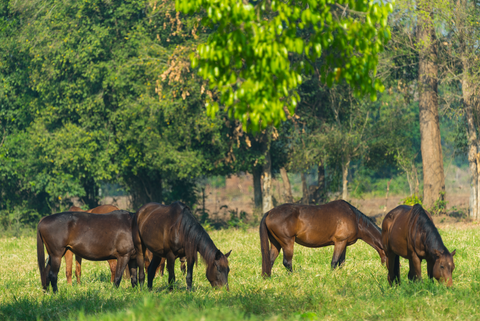
The fundamentals of backing
Riding or driving is the end goal. Between these two goals there are common basic principles. The common thread is close-quarters work. Whether for riding or for driving, nothing should be attempted with a young horse without first going through groundwork. Whatever the discipline, this groundwork always calls for consistency and determination. These shared principles come through in the use of the eyes, the voice, position and touch.
The means used during backing
Position
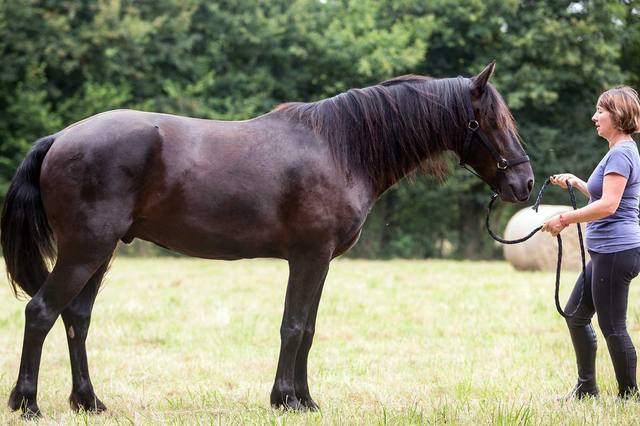
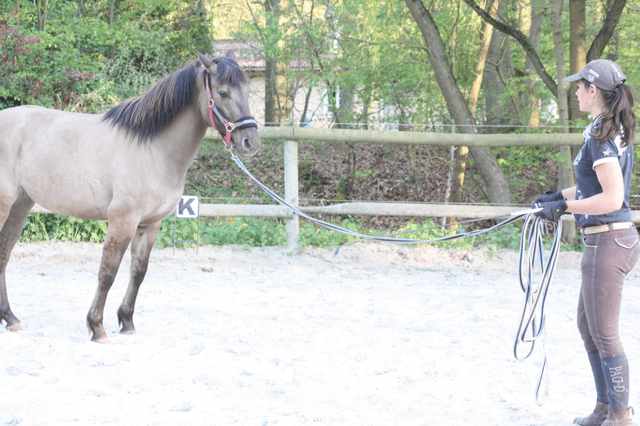
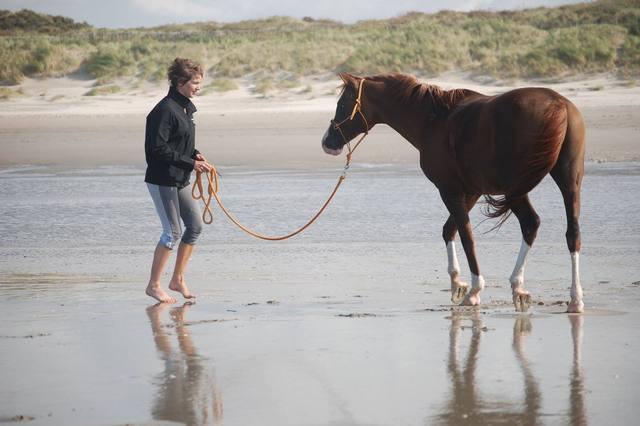
During groundwork, the bodies of the human and the horse need to come together, in other words the two partners should be close to one another, either facing each other or side by side.
The hand
The closeness between the human's body and the horse's allows the hand to act, that is to say to touch the horse and to prepare the hand-to-mouth relationship.
The voice
The voice guides actions, it reassures and it corrects.
The human's attitude towards the young horse during backing
The rider has to commit to the relationship through their eyes, their voice and their touch. Nicolas Blondeau puts it well: "Without soul, the voice is nothing but a sound."
Consistency and determination
The horse must sense the human's willingness to see the task through with full conviction. The human's strength is determination, and the human's gentleness is consistency.
From the workshops
Pieces related to this guide


Also worth reading