Why does a horse rear?
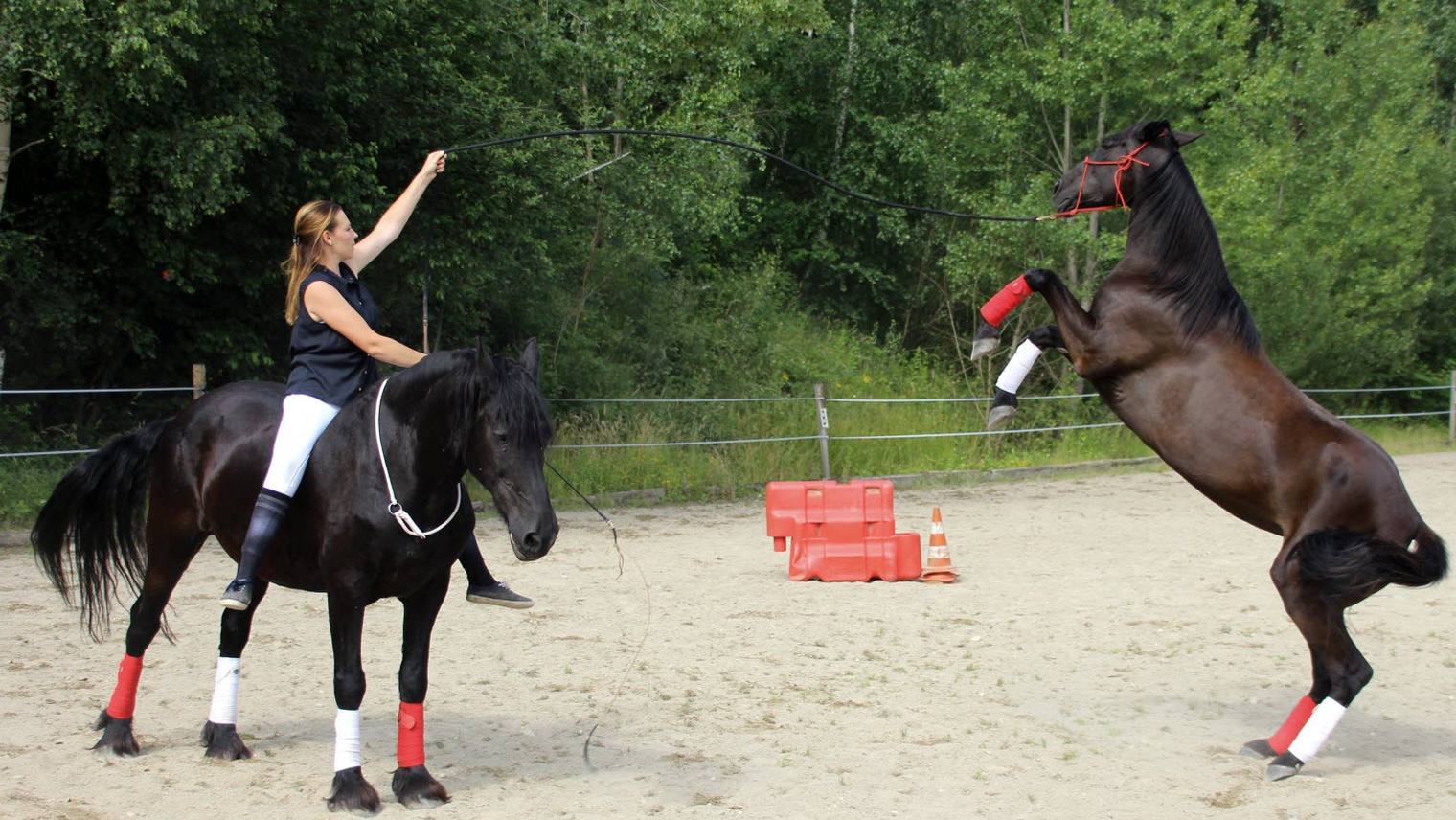
Whether the horse is being ridden or handled from the ground, it can show all sorts of defensive reactions. Among them is rearing. Because it is dangerous for the rider, it is important to manage and prevent rearing. Why does a horse react in this way? Here is everything you need to know.
Fear
If your horse is faced with something frightening, one of its reflexes may be to rear in order to escape from what is scaring it. It may have spotted an object in the corner of your arena, or a "ghost" in the stable yard that worries it.
By nature, the horse is a prey animal that would rather flee to defend itself. That said, in most cases, when a horse is frightened it refuses to go forward towards the area or object that worries it. In that situation, the rider can quickly become annoyed and will then increase the pressure by pulling on the lead rope or pushing with the legs. The horse is then left with no other option than to rear in order to get rid of the pressure being applied and to take flight.
Pain
When a horse is in pain, it cannot tell you so in words. It therefore uses other kinds of reactions to signal its discomfort, rearing among them. The underlying problem may be linked to the tack being used, such as an ill-fitting saddle or bit. In that case, the most reliable solution is to buy quality equipment from La Sellerie Française.
Pain can also be caused by something the rider does. It may be a smack with the whip, a spur used badly, or a physical problem. To avoid the pain, the horse has no other choice than to rear.
If you want to check whether your horse's reaction is due to pain, you can have it given a full check-up. A vet, an equine dentist or an osteopath will almost certainly help you identify the problem very quickly.
Misunderstanding
When some horses do not understand what their rider is asking, they may react by rearing. Poor communication between rider and horse can lead to genuinely conflicting situations.
When a horse is being worked, for example, it is asked to perform various exercises. If it is faced with a request from its rider that it cannot understand, it may offer a rear in an attempt to satisfy that rider.
Rearing can also be a way for the horse to escape the pressure of the hands or legs that the rider applies while asking for an exercise.
Excitement
When horses are excited, they cannot always contain their emotions. This is usually the case with stallions and young horses. A horse may rear on its way to the paddocks, or in the special atmosphere of a competition. A stallion that meets mares or other horses it does not know may also rear out of excitement.
From the workshops
Pieces related to this guide

Also worth reading