Buying or rehoming a donkey: prepare the home and budget
Before comparing advertisements, check that your plans can support donkeys for the long term. The purchase or rehoming fee is only one budget line. Facilities, companionship, care and your availability determine the rest.
Start with companionship
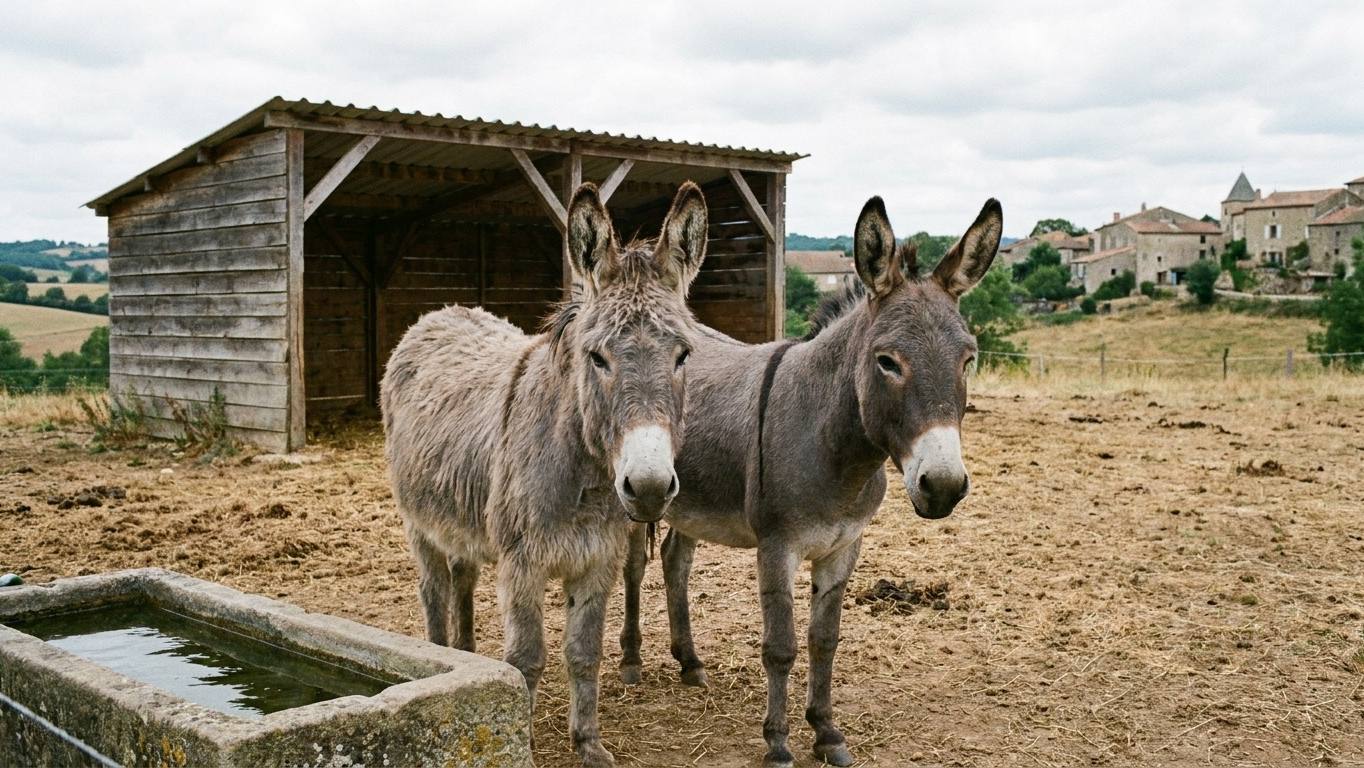
The Donkey Sanctuary recommends keeping donkeys with other compatible donkeys and preserving established bonded pairs. Many live into their thirties, so arrangements need to last. Plan for the group you will welcome rather than an isolated animal. The Donkey Sanctuary’s buying guide.
Ask which animals live together, how they behave during care and what routines they know. When rehoming through an organisation, clarify its accommodation, follow-up and return conditions, together with financial responsibilities. The word “adoption” alone does not explain the agreement.
Obtain three sets of quotations
| Area | What to cost before arrival |
|---|---|
| Arrival | Purchase or rehoming fees, veterinary examination, paperwork, transport for the group |
| Facilities | Fencing, shelter, dry standing, water, storage, professional access |
| Running costs | Appropriate feed, bedding, maintenance, care, hoof trimming, holiday cover |
Add accessible contingency savings. Ask someone experienced with donkeys to assess the site: land area alone says nothing about winter conditions or the work required.
Ask your vet and hoof-care professional about fees, travel charges and availability. Plan the care schedule with them. An annual figure found online cannot tell you what is included or whether suitable professionals cover your location.
Plan feeding specifically for donkeys
A horse’s diet cannot automatically be transferred to a donkey. The Donkey Sanctuary emphasises fibre requirements and their tendency to gain weight, and advises against cereal grain-based feeds. Have the diet adapted to each donkey’s body condition, teeth and health, avoiding abrupt changes. Feeding guidance.
For budgeting, establish which forage to buy, how to store it and how much your group will need with the professional advising you. Do not treat the land as an unlimited food supply.
Look beyond the advert’s labels
“Miniature” or “micro” does not describe everything you need to know. Ask for age, measured height, identification, documented breeding and care history. An advertised adult height for a young foal is still an estimate.
Watch familiar handling routines with someone who knows the donkey. Discuss your plans with a vet before committing. Measure for the equipment you actually need: a “pony” size label does not establish that an item fits a donkey.
You are ready to compare offers when you have an assessed home, a companionship plan, local quotations and someone available every day. Those details tell you far more about the commitment than the initial asking price.
From the workshops
Pieces related to this guide
Also worth reading