Choosing a Connemara pony: practical points to check
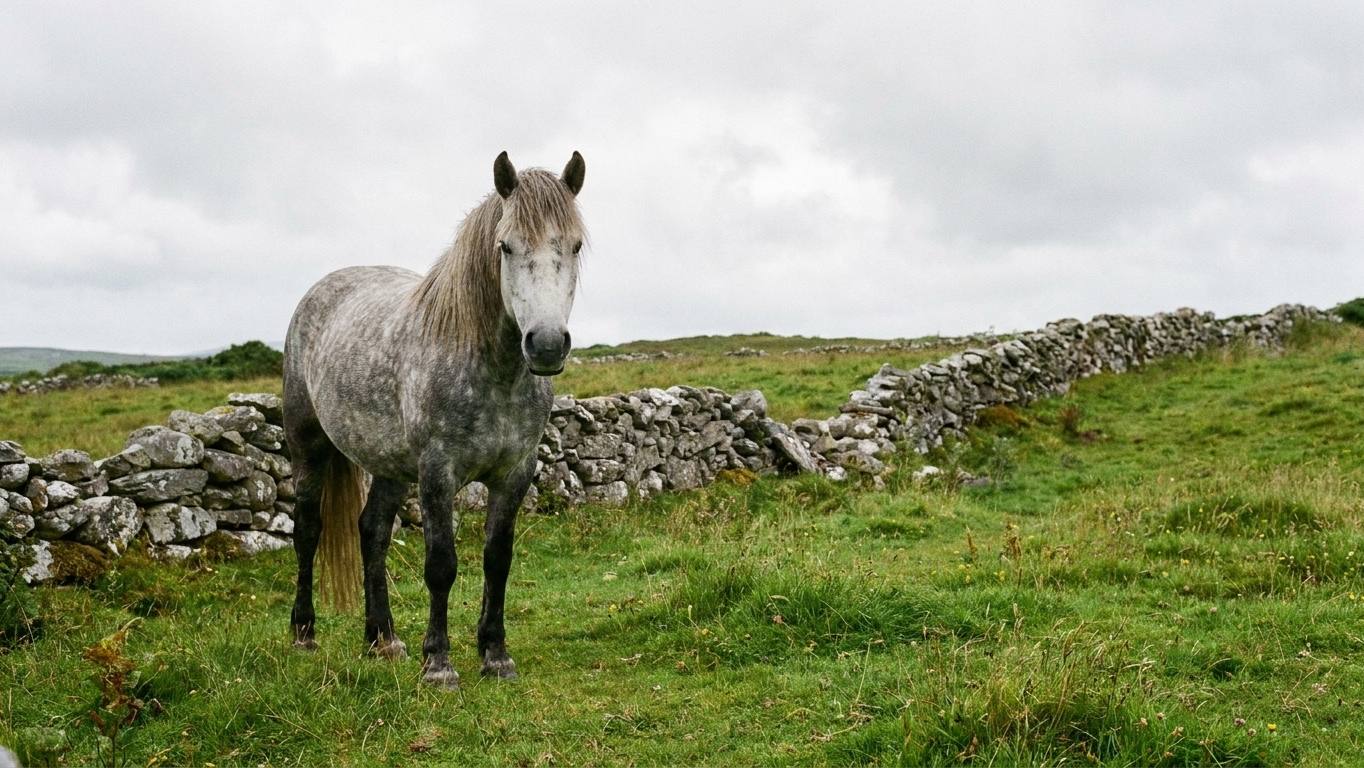
Connemaras attract riders looking for a leisure or sport pony. When choosing an individual, separate the breed standard, its training history and the intended rider’s needs. A pedigree cannot replace observation in the situations where you plan to use the pony.
Read the standard in context
The Connemara Pony Breeders’ Society publishes the breed’s breeding programme. The 128–148 cm height range appears within stud-book classification requirements. Read it in that context rather than assuming that every pony advertised as a Connemara is guaranteed to fall within it. CPBS breeding programme
Request identification documents, measured height and registration details. For competition, separately check the applicable measurement rules. Stud-book classification and sporting eligibility answer different questions.
Match the search to the rider
For a child progressing through lessons, explain present skills, available support and planned activities. For an adult, also have the physical suitability of the partnership assessed. An advertisement describing a pony as weight-carrying does not settle that question.
Ask how long it has performed the advertised work and with which riders. Results achieved by a professional do not demonstrate that a beginner could reproduce them. Arrange the trial with your instructor, starting with appropriate tasks.
Understand HWSD results
Hoof wall separation disease is an inherited condition affecting the hoof wall. The University of California, Davis veterinary genetics laboratory describes recessive inheritance: carrying one copy of the variant is different from being affected. Genetic testing distinguishes these statuses. UC Davis information on Connemara HWSD
Request the result linked to the pony’s identity and have a veterinarian interpret it, particularly if breeding is planned. This test is not a general assessment of hoof health or a complete pre-purchase examination.
Budget for fitting and ongoing care
Measure for each item instead of ordering a generic pony size. Have the saddle assessed with the intended rider. Budget for accommodation, appropriate feeding, hoof care, veterinary support and instruction. The breed’s reputation for hardiness does not remove those costs. Keep the individual pony’s requirements at the centre of the decision, rather than assuming that a familiar breed name guarantees a low-maintenance purchase.
From the workshops
Pieces related to this guide
Also worth reading