Choosing a horse’s stable: space, flooring and the full project cost
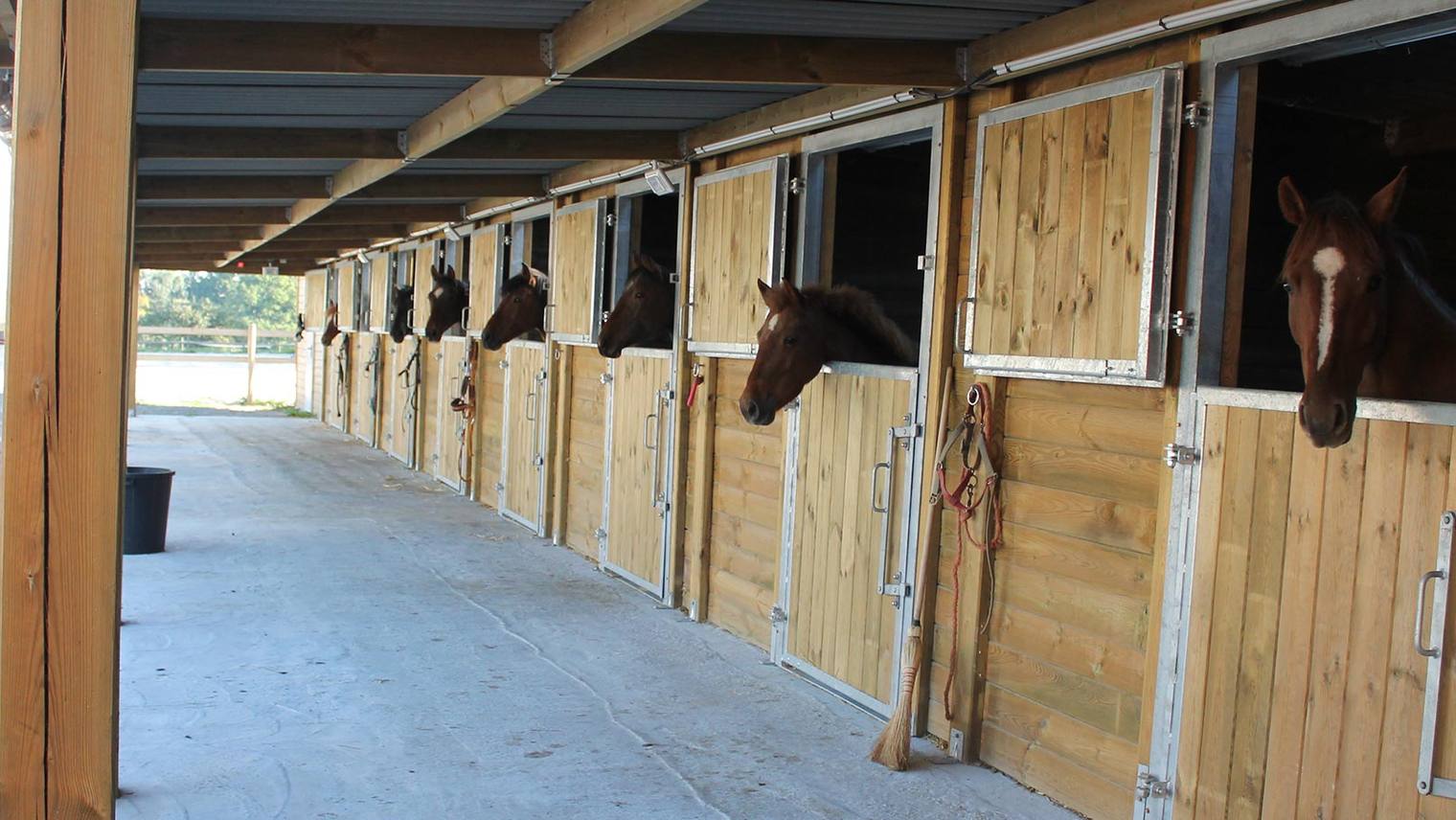
Assess a stable as part of the horse’s daily routine. A new building alone does not meet the need for movement and contact with other horses. IFCE identifies both as important elements of housing and welfare. IFCE guidance on housing and welfare
Before comparing fronts and prices, describe the project: which horses will use it, time spent inside, access outside, supervision and cleaning arrangements.
Define usable space with the designer
The horse’s size, the layout and the intended use all matter. A floor area advertised in a catalogue is not a universal promise of comfort. Design recommendations also address usable dimensions, doors, partitions and trapping hazards. IFCE guidance on loose-box design
Have the layout drawn with its internal equipment included. Ask the designer how the horse will move, lie down and get up, and how you will enter to provide care. Trace the routes for feeding, cleaning and taking the horse outside as well.
Examine the base before choosing mats
Rubber mats are one component of a flooring system. Before ordering, establish the requirements for the base, liquid management, joints, any fixing method and cleaning. An impermeable mat does not establish that the complete installation will prevent liquids getting underneath.
Compare products intended for the same location: a loose box, passageway and wash area have different uses. Obtain instructions for the exact product. Plan the bed as well: bedding contributes to a suitable resting area. IFCE guidance on bedding and welfare
Compare the installed cost
Ask each supplier to identify what the quotation includes.
| Item | Details to establish |
|---|---|
| Structure | Usable dimensions, materials, doors and options |
| Site | Preparation, foundations and water management |
| Delivery | Vehicle access, unloading and handling |
| Installation | Assembly, connections and handover |
| Running costs | Cleaning, bedding, maintenance and repairs |
A cheaper kit may require more preparation. Do not treat advertised bedding savings or service life as guaranteed results for your own installation.
Check the project before committing
Discuss the proposal and its location with the relevant local planning authority before ordering. Establish which local constraints and procedures apply, then reconcile these with the technical quotation.
Keep the drawings, instructions and maintenance requirements. At handover, inspect the work with the installer and record anything that needs correcting before the horse moves in. A useful comparison considers the finished installation, daily management and clearly allocated responsibilities.
From the workshops
Pieces related to this guide



Also worth reading