Show jumping wings: how to choose the right jump standards
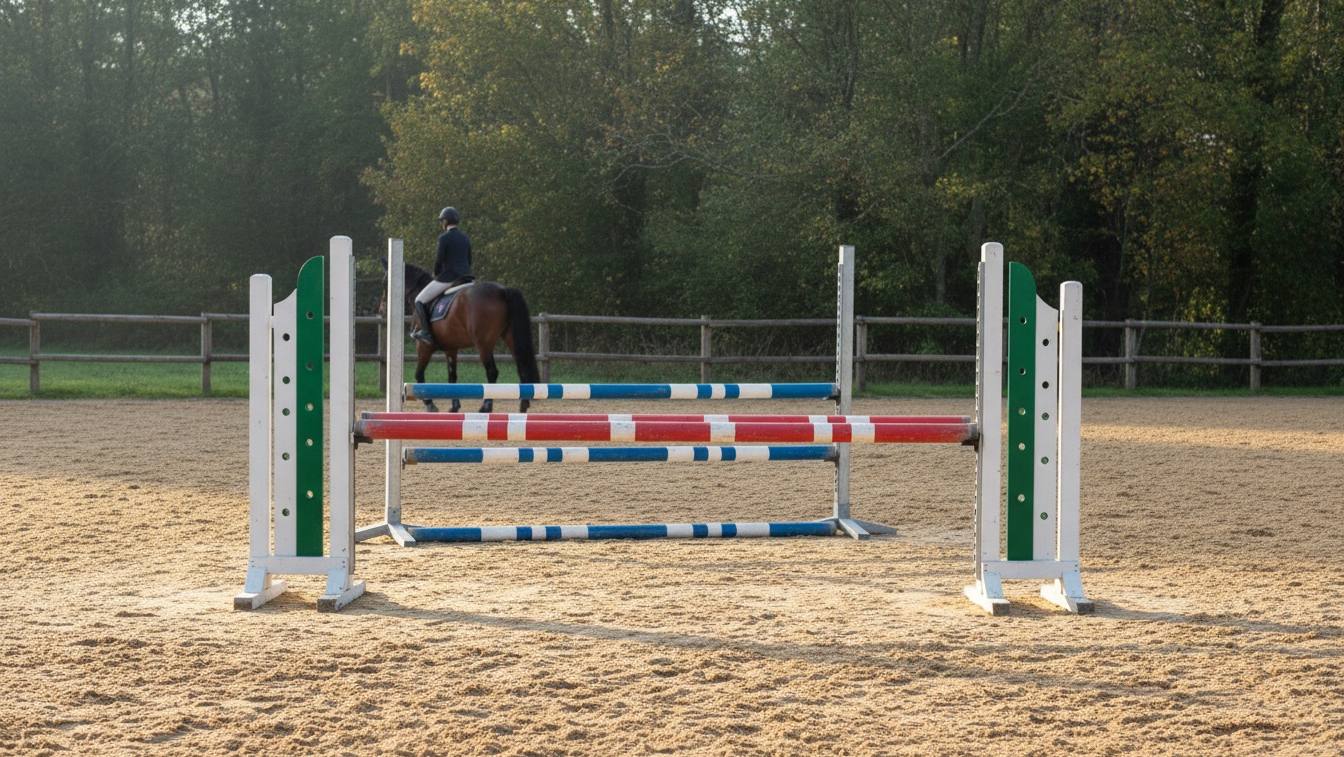
There is no show jumping without jump wings. These upright stands, set in pairs, hold the poles at the height you choose and give each fence its shape: an upright, an oxer, a gymnastic line. Whether you are setting up your own arena or running a riding school, they decide how safe your fences are, how easily you can adjust them and how long it takes to build a course.
The choice looks simple. It is not quite: material, base design, adjustment system and compatibility with your poles all change how they work day to day. To get a concrete idea of what exists, you can for example browse the chandelier équestre Legiret Technibox range, which covers jump wings, a lunging stand and jump cups. Here is what to check before you buy.
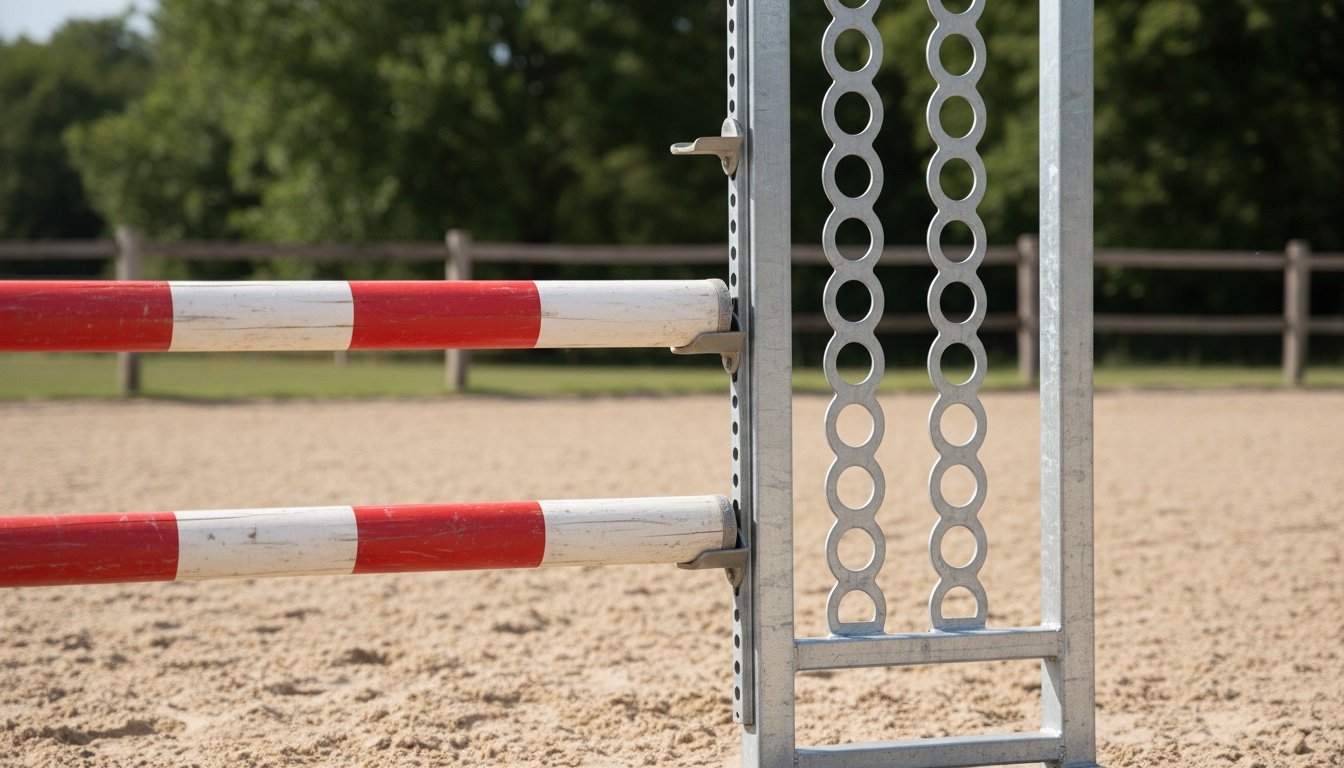
What is a jump wing for?
The wing is the side support of the fence. It carries jump cups (also called pole cups or pole supports) that the poles rest in. You move the cups up or down a notch to raise or lower the fence, without moving the wing itself.
Used in pairs, wings make an upright. With two pairs you build an oxer, a spread fence with two sets of poles. They are also used for gymnastic exercises and raised poles, which are very useful when working young horses.
Single or double wings?
This is the first question to settle, because it shapes the rest of your kit.
| Single wing | Double wing | |
|---|---|---|
| Design | One upright on a base | Two linked uprights, often with a central panel |
| Main strength | Light, easy to move, versatile | More stable, more substantial, closer to competition fences |
| Typical use | Uprights, gymnastics, arenas that change often | Fixed fences, oxers, competition grounds |
| Drawback | Less stable on soft ground | Heavier and bulkier to handle |
For a private arena where the layout changes often, single wings are usually the best place to start. Double wings make sense when you want more imposing fences, or when you are preparing horses for competition courses.
Which material?
Each material suits a different use. The right choice depends on how often you jump, your ground, your climate and who will be moving the kit.
| Material | Strengths | Watch out for |
|---|---|---|
| Galvanised steel | Sturdy, weatherproof, handles heavy use | Heavy; check edges and feet |
| Aluminium | Light, rust-free, handy if the course moves often | Lighter, so sometimes less stable in wind or deep sand |
| Resin or plastic | Light, no maintenance, softer on contact | Stiffness varies with quality; UV can age it over time |
| Wood | Traditional look, pleasing to the eye | Needs regular stain or paint to last |
Galvanised steel remains the safe bet for professional yards. For personal use, aluminium and resin win on weight: you can set up and take down a course on your own without wearing yourself out.
Safety points not to overlook
A fence must be able to fall without bringing the horse down with it. A few details make the difference:
- Base stability. A wide, well-seated base stops a wing tipping over at the slightest touch or in the wind. On soft ground, choose a flat base that will not sink.
- Jump cups. They should hold the pole without locking it. A pole that is hit must fall easily.
- Safety cups. On the back rail of an oxer, cups that release the pole on impact reduce the risk of a horse getting caught between the two rails.
- Finish. No sharp edges, no protruding welds, no unused cup left in place at leg height.
Height, adjustment and pole compatibility
Check the overall height of the wing and its adjustment range: it should cover everything from raised ground poles to the highest fence you plan to jump, with room to spare. The step between two holes matters too: the finer it is, the more gradually you can bring a horse on.
Finally, make sure the cups fit the diameter of your poles, and that your pole length matches the spacing you want between wings. Matching kit is quicker to set up and ages better.
Looking after your wings
Storing them under cover between sessions extends the life of every material. Check fixings, cups and feet regularly: a cracked cup or a bent foot should be replaced before it gives way. Wood needs stain or paint from time to time, metal a look at any rust spots, resin a simple clean.
In short
A good jump wing is first and foremost one that suits how you ride: single and light for an arena that changes often, double and sturdy for more built-up fences. Look at stability, cup quality and adjustment range before price. And to understand how these fences fit together on a course, read our article on show jumping courses, oxers and heights.
Also worth reading