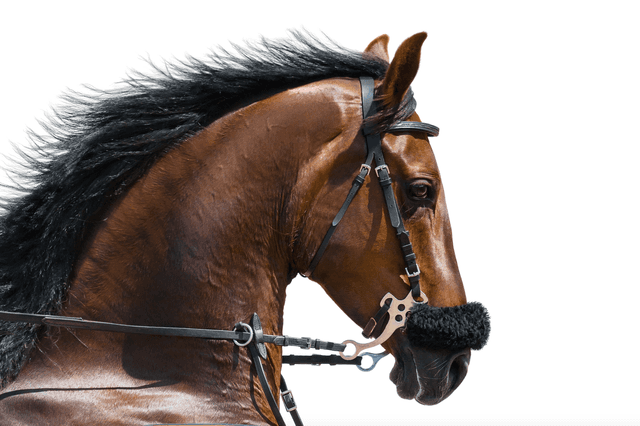
How to choose a bridle for your horse
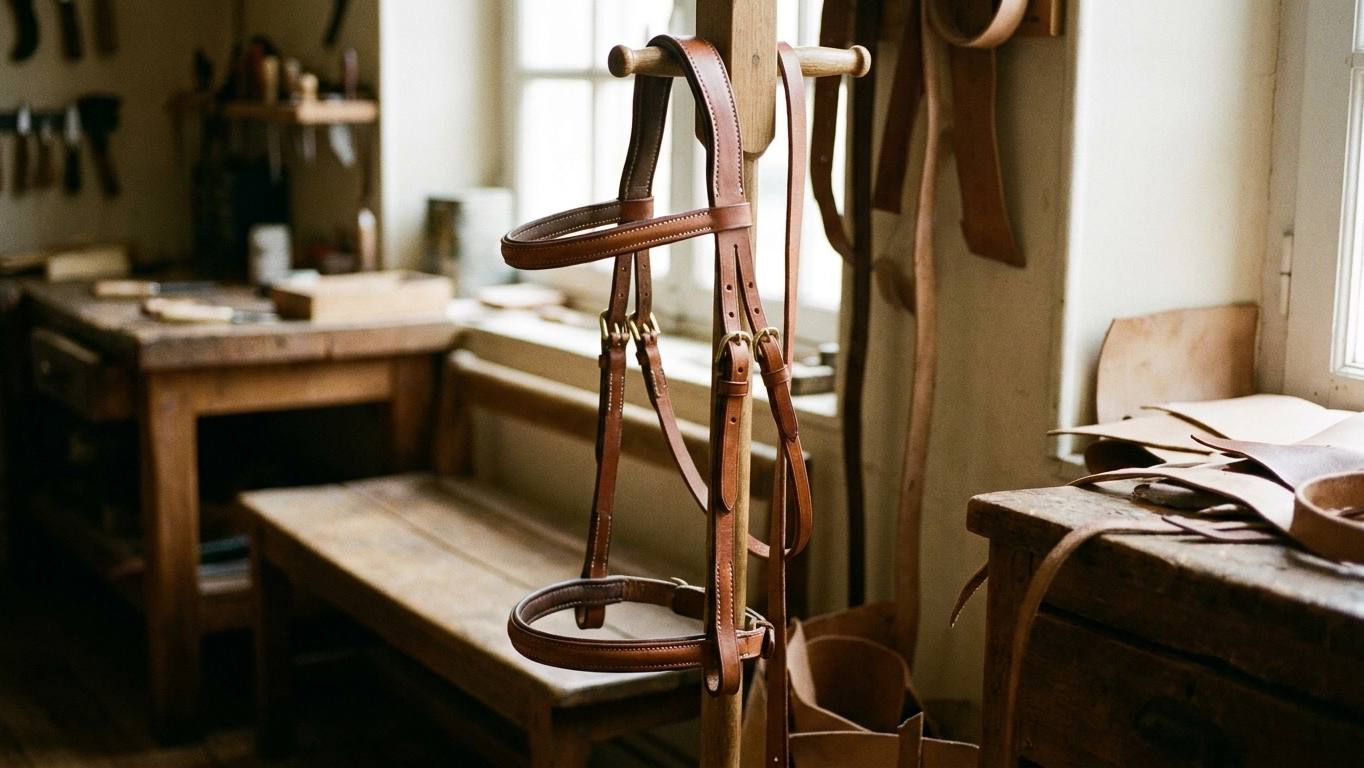
Choose a bridle component by component: browband length, headpiece shape, cheekpiece adjustment, noseband and leather finish. An “anatomical” label or an attractive photograph cannot tell you whether it will suit your horse.
Here is what to check before ordering, with specific examples from the workshops represented by La Sellerie Française.
Start with the right equipment
This guide covers bridles designed to carry a bit. Check the bit and reins separately in the order details: appearing in a photograph does not mean they are included.
If you want bitless equipment, tell the maker at the outset. A side-pull or hackamore involves a different choice of tack, rather than a decorative variation of the same bridle. The French Horse and Riding Institute (IFCE) discusses these differences in its guide to nosebands and bitless systems, available in French.
Before comparing models, write down how you ride, the equipment you use and what you want to change. “The browband is too short” gives a maker more to work with than “I would like more comfort.”
Check the components, not just the size label
Pony, cob, full and XFull are starting points. Ask for the model’s measuring guide and follow its reference points: a measurement taken on the horse is not interchangeable with the length of a leather strap laid flat.
Prepare a simple brief for the maker:
- the requested measurements, including their start and end points;
- clear front and side photographs of your horse wearing the current bridle;
- components that have reached the end of their adjustment range or seem poorly proportioned;
- the bit and reins you use;
- your preferred options and when you need the equipment.
Then ask which dimensions can be altered. Choosing a lining colour and having a browband made to a different length are different services.
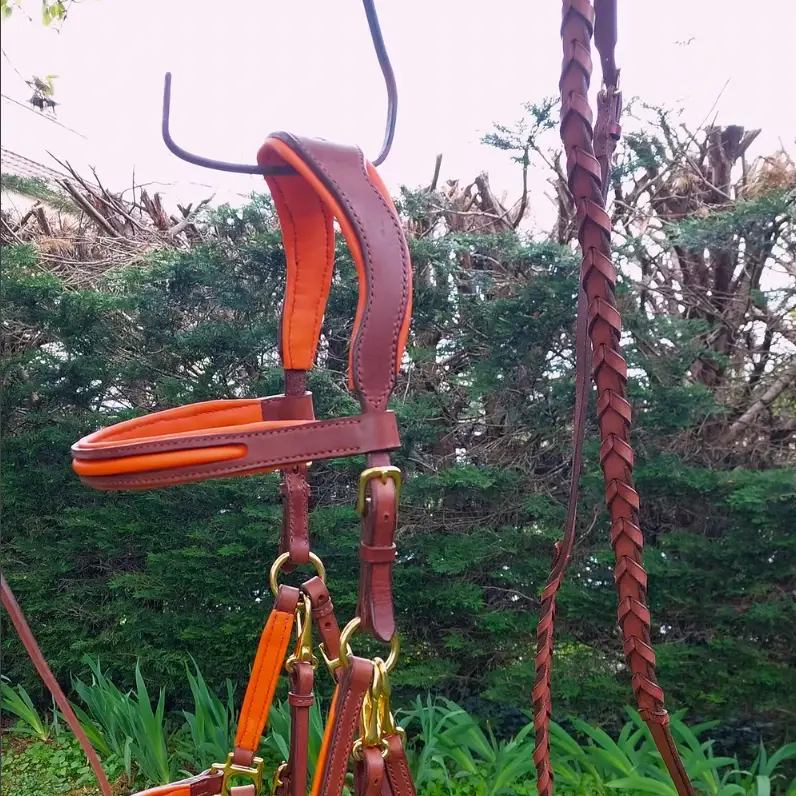
The catalogue shows this variety. Havane Sellier’s hand-stitched chic bridle is described in the French listing as size “poney D”. Bluemane’s anatomical dressage bridle includes a made-to-measure option requiring measurements.
Practical checks when trying it on
The IFCE’s bridle assessment poster, in French, highlights space behind the ears, browband length and the position of buckles relative to the jaw joint. Its noseband reference is room for two fingers at the bridge of the nose.
Use these observations to prepare a discussion with a professional. They do not replace an individual fitting, particularly for the bit. If something looks wrong when trying the bridle on, have it checked before riding in it.
What you can compare in the makers’ descriptions
Compare documented features rather than repeated promises of comfort.
| Your question | Catalogue example | What to confirm for your order |
|---|---|---|
| How does the bit attach? | Havane Sellier describes buckle attachments on its hand-stitched jumping bridle. | The arrangement and compatibility with your equipment. |
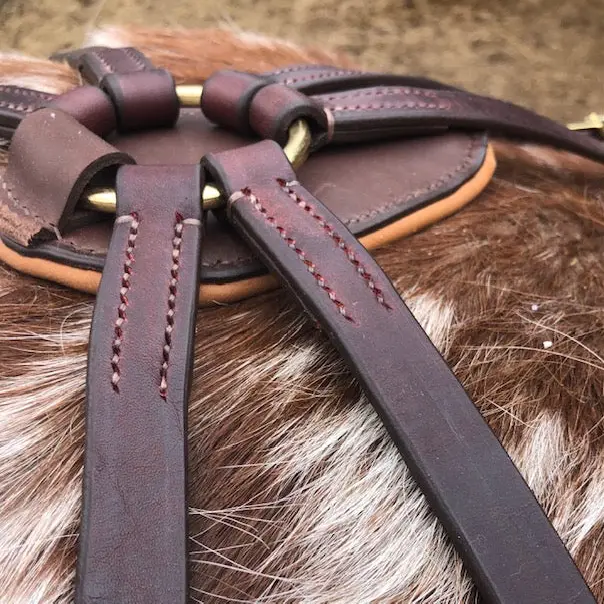
| How is it constructed? | Bluemane describes hand saddle stitching with waxed linen thread, plus polished and waxed leather edges. | The finishes and options on your chosen model. |
| Where does the leather come from? | SBL’s leather bridle distinguishes Belgian outer leather from a French lining. | The origin of the materials in your selection. |
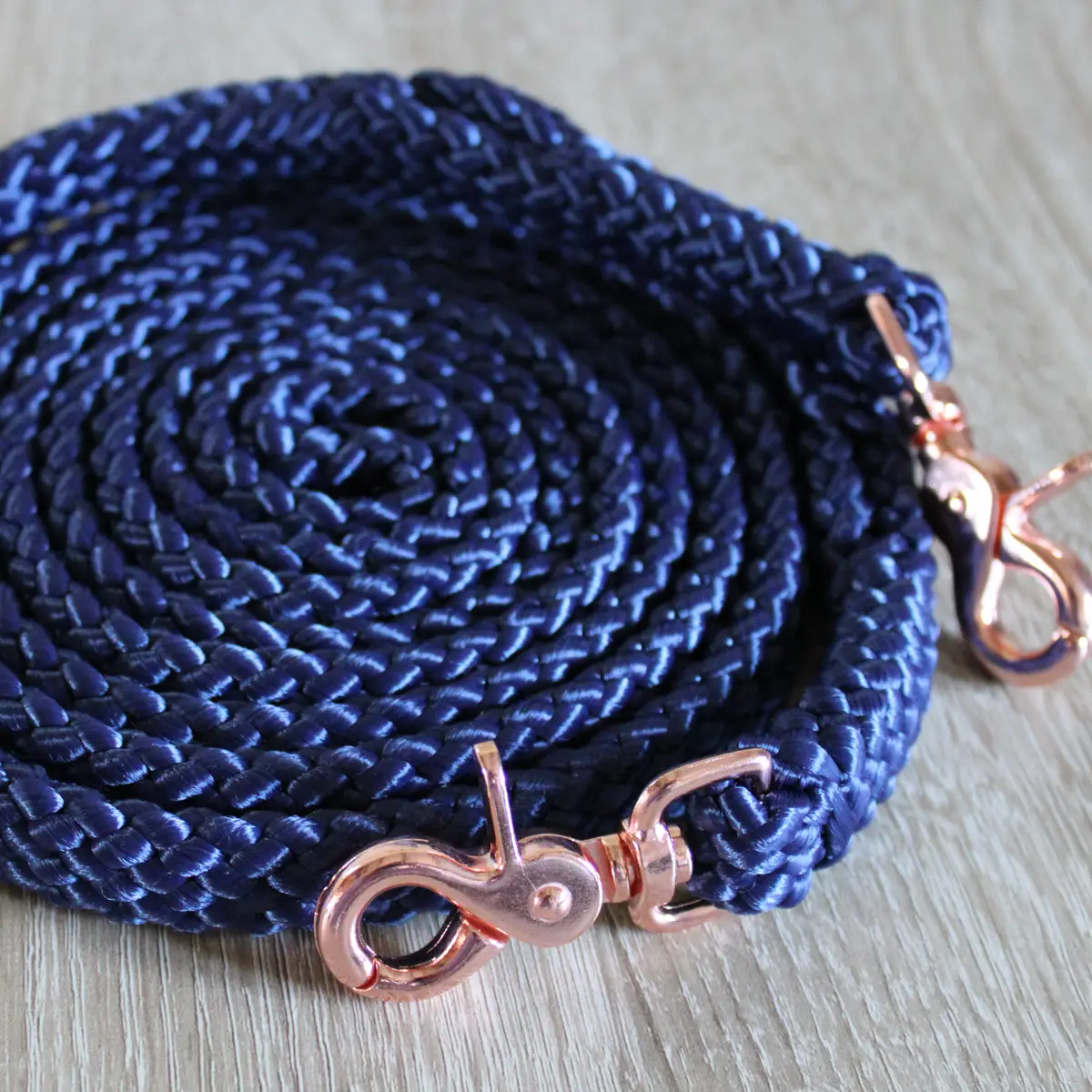
| Are reins included? | The description should specify what is supplied. | What is included with other models. |
French manufacture does not automatically mean that every raw material is French. A specific description helps you understand the purchase without extending a manufacturing-origin claim beyond what it says.
Planning your budget
Compare a defined package: bridle type, size, options, whether reins are included and any alterations. Otherwise, two prices may describe different orders.
Check the price of the selected configuration and request a clear quotation for alterations. Also ask what can subsequently be repaired or replaced: browband, cheekpieces, keepers or fittings. Price alone does not answer questions about fit or the workshop’s aftercare.
If you need the bridle by a particular date, confirm the stated lead time before approving your measurements. Made to order and immediately available are different arrangements.
Leather care and wear checks
Remove dirt with soft cleaning materials and a suitable leather product, following the maker’s instructions. Air-dry away from direct heat. Use cleaning time to examine stitching, buckles and folded leather around attachments. Store the bridle in a ventilated place on a rounded support. The IFCE explains these principles in its tack-care guide, in French.
If a component appears weakened, ask the maker which repair or replacement is appropriate.
Three common questions
Will an anatomical bridle suit every horse?
The label alone is not enough. Check which component has a shaped cut, ask for dimensions and assess its suitability for your horse. The featured models do not all share the same construction.
Can I personalise the finish without ordering made-to-measure dimensions?
That depends on the model. Leather colour, stitching or fittings may be selectable independently of dimensions. Confirm the available options before placing your order.
Do I need a new bit with a new bridle?
Consider these as separate decisions. Tell the maker which bit you use and have the assembled equipment checked; buying a new bridle does not by itself determine a new bit.
Start by identifying the information you still need, then compare the featured models. You can approach the workshop with a precise request, your measurements and photographs, and the options that are useful for your horse.
From the workshops
Pieces related to this guide
Also worth reading