Does my saddle fit my horse? What to check
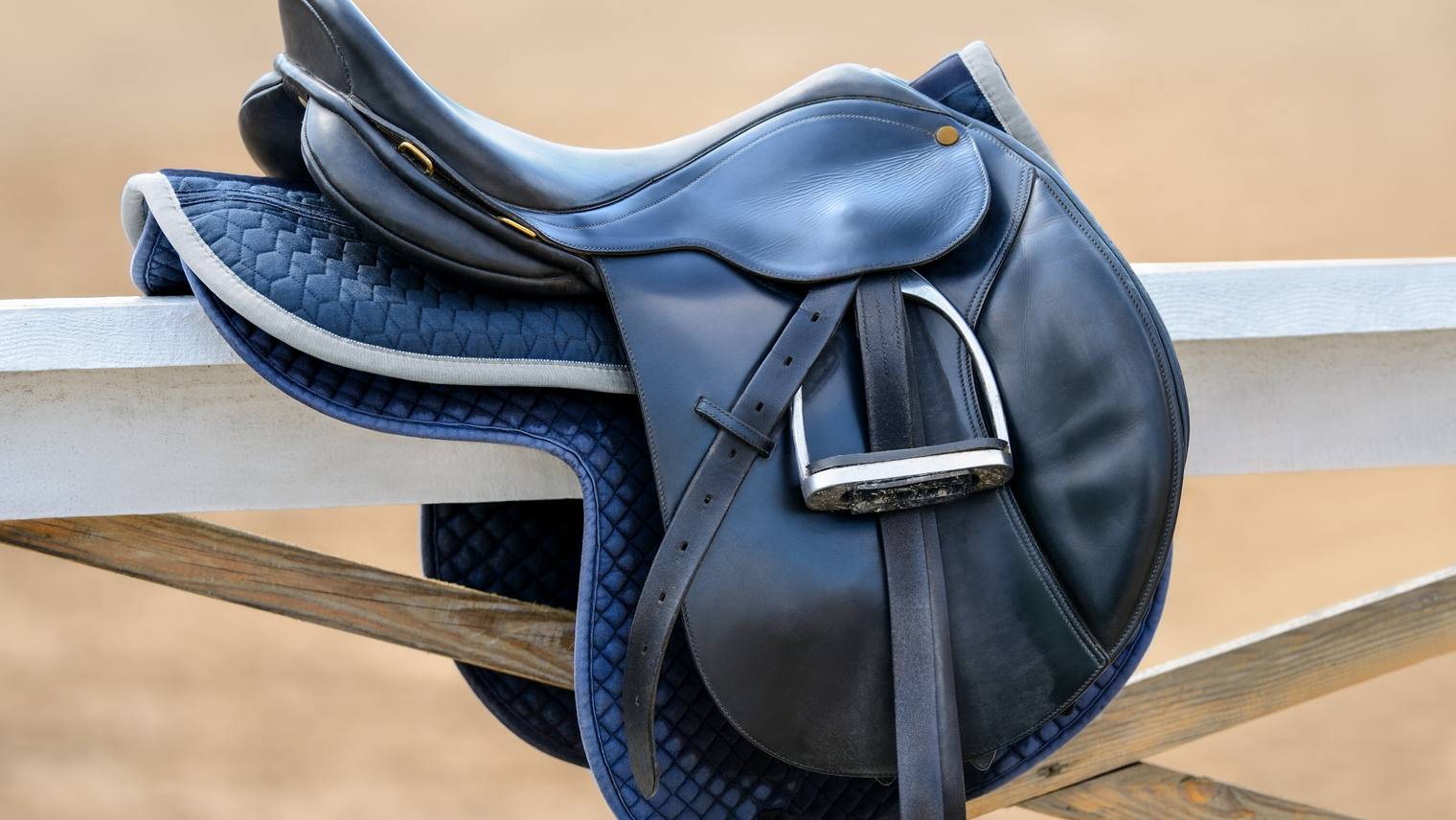
A saddle that feels comfortable to you may not fit your horse. A saddle selected for the horse’s back must also allow you to ride without fighting your position. Before buying another model, have the whole arrangement assessed: horse, rider, saddle and accessories.
This guide helps you prepare for that assessment and ask useful questions. It also provides a way to compare another saddle with your current equipment without deciding on brand or price alone.
What the assessment should consider
The French Horse and Riding Institute (IFCE) approaches saddle fit as an assessment of horse and rider, both stationary and in motion. The horse’s dimensions, the rider’s dimensions and the saddle’s construction need to be considered together. This is a principle of its saddle-fit assessment training, described in French.
A seat measurement or gullet width alone does not establish that the complete arrangement fits. At your appointment, ask what will be checked and how observations at rest will be supplemented by assessing the rider in the saddle.
Four areas to discuss with the professional
The IFCE’s saddle assessment poster, in French, highlights four areas:
- the saddle’s position relative to the shoulder and the rear limit of the weight-bearing area;
- clearance around the spine and withers;
- saddle balance;
- saddle stability.
Ask the professional to show you these reference points on your horse. A photograph or a single check cannot replace the full assessment. The IFCE also provides an introduction to saddle-fitting principles, in French, to help you prepare.
Prepare for a useful appointment
Start with an accurate account of your situation. Gather the following information:
| What to bring or describe | How it helps the discussion |
|---|---|
| Your current saddle and its identifying details | Establishes what can be assessed, retained or altered. |
| The pad, girth and accessories you use | Shows the equipment actually used, rather than a theoretical setup. |
| Your discipline and usual riding sessions | Explains the situations in which you use the saddle. |
| Dated observations | Records what changed, when and in what circumstances. |
| Previous adjustments and repairs | Preserves the equipment’s history. |
| Your budget and timing constraints | Helps compare realistic options before placing an order. |
Record your own experience too: difficulty finding your position, discomfort around a block or differences between configurations. Describe the sensations without assigning a cause yourself.
An ill-fitting saddle can contribute to pain or changes in behaviour, as the IFCE explains. That does not mean every problem comes from the saddle. If your horse shows pain, lameness or an unusual reaction, seek veterinary advice rather than repeatedly testing saddles under a rider.
Assess before replacing
At the end of the appointment, ask for clear answers to three questions:
- Which elements of the current arrangement are problematic?
- What alterations are possible on this saddle, and what are their limits?
- How will the result be checked after the work?
A written record, even a brief one, preserves the observations and decisions. Confirm who will carry out the work, what the quotation includes and when a follow-up assessment is planned.
Include the saddle pad in that discussion. Show the one you use and ask whether a change is needed. Buying another accessory should not be treated as the automatic answer to a problem that has not yet been identified.
If another saddle is needed, compare specific configurations
The workshops represented by La Sellerie Française offer different constructions and options. These two examples suggest concrete questions to ask.
Havane Sellier’s general-purpose saddle with an interchangeable gullet
Havane Sellier’s general-purpose saddle offers several seat and gullet sizes, single-flap or double-flap construction and girthing options. The listing requests contact before ordering so that a quotation can be prepared.
Discuss these options with the professional assessing your equipment. Ask which configuration they recommend for you and your horse, and which observations support that choice. A long options list does not replace an individual assessment.
Equi Créa’s made-to-measure dressage saddle
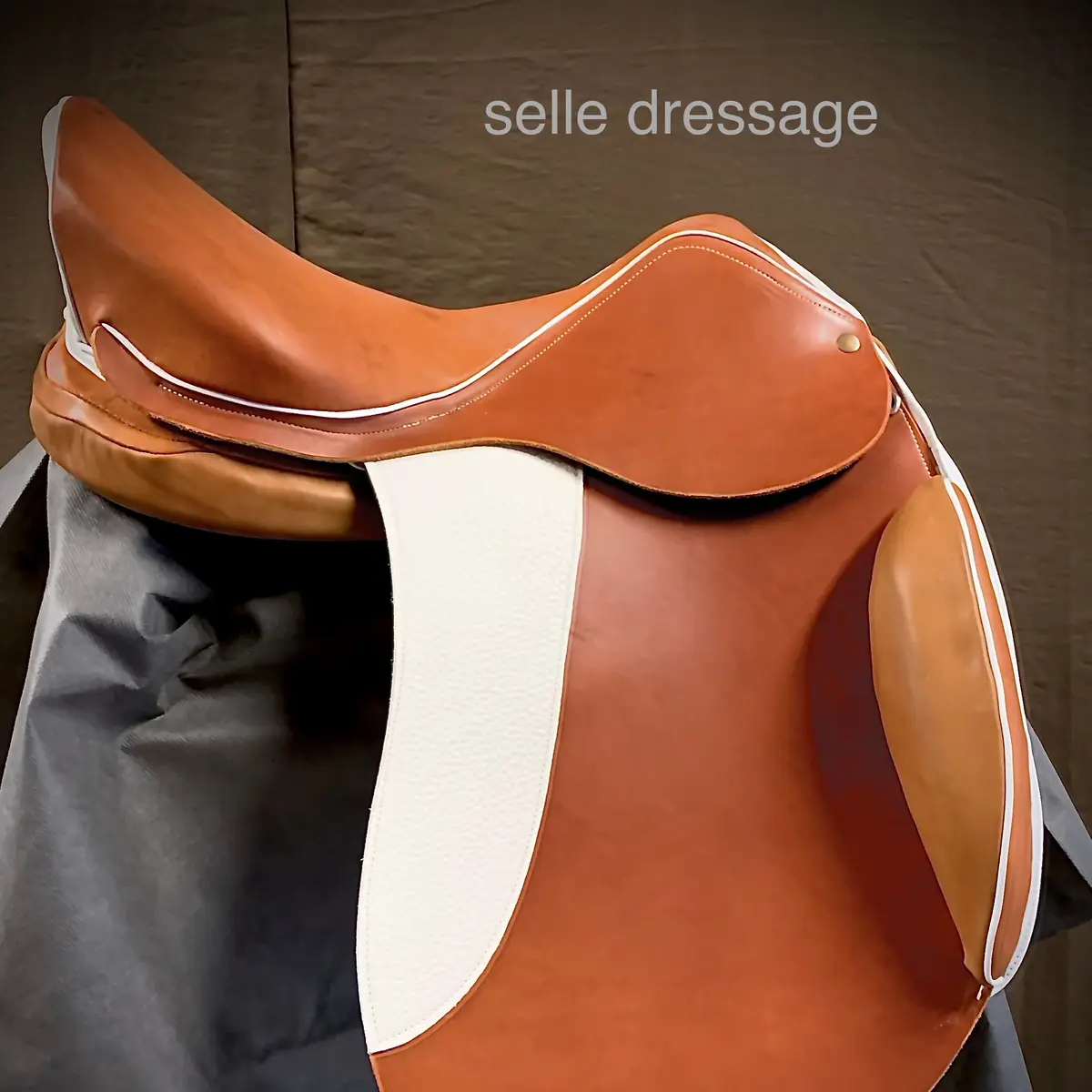
The Equi Créa dressage saddle is offered in several versions, including single-flap, with blocks or a simple version without blocks, with a choice of leather and colour. The workshop also requests a preliminary discussion and an individual quotation.
Ask about the required measurements, trial arrangements, customisable components and follow-up. “Made to measure” should describe a specific service: which measurements are taken, which parts are adapted and how the saddle is assessed on delivery.
Compare the service as well as the price
Compare quotations for equivalent configurations. Separate the saddle, options, any travel charges, trials and follow-up. Ask what is included and what may incur an additional charge.
The same approach applies to a second-hand saddle. Before completing the purchase, establish how its condition and fit can be checked. The purchase price is only part of the decision if further work is needed.
Keep a record of the follow-up
After an alteration or a new order, keep the assessment, details of the selected configuration and the professional’s contact information. Agree on the circumstances that should prompt another check, including changes in the horse’s situation or your riding.
The appointment should leave you with an understandable decision: retain, adjust or replace, and why. Assemble this information before approaching one of the featured workshops about an order.
From the workshops
Pieces related to this guide
Also worth reading