Caring for a leather saddle: a saddler’s routine, step by step
A leather saddle is an investment counted in thousands of euros and, well kept, outlives the horse it was bought for. Leather is skin: it dries out, it drinks, it moulds, it wears where it rubs. Care consists of countering these four things, in this order: clean, feed, dry, store.
1. Clean
After every ride, a dry or barely damp cloth over the flaps and seat removes sweat and dust before they set in. Horse sweat is salty and acidic; left on the sweat flaps and girth straps, it stiffens and weakens the leather within weeks.
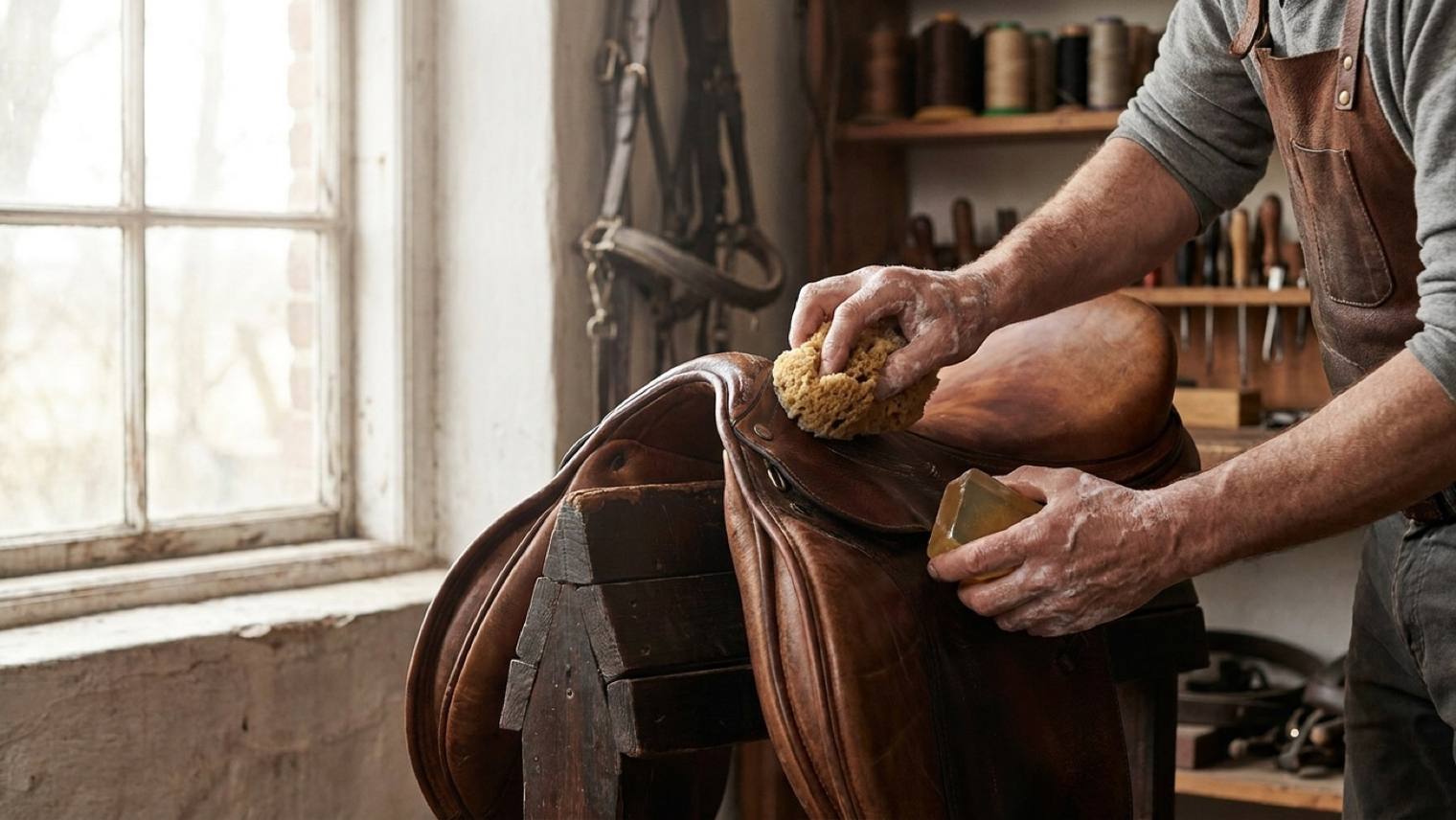
Once a week for a saddle used daily, once a month for occasional use, move to a full clean: glycerine saddle soap or a leather soap on a wrung-out sponge, in small areas, without excess lather and without soaking. Pay attention under the flaps, to the girth straps and to the stirrup leathers, taken off for the occasion. Wipe with a clean cloth and let it breathe.
2. Feed
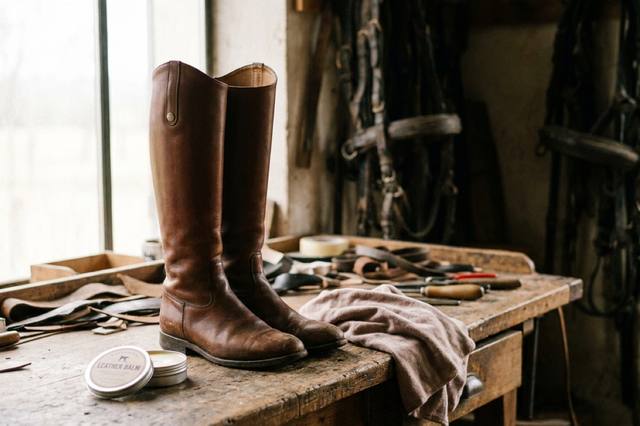
Cleaned leather has lost some of its oils; give them back with a leather balm or cream, in a thin layer, with a cloth, then buff once the product is absorbed. Two classic mistakes:
- too much grease. A saddle shining with grease is not better protected: the pores are clogged, dust sticks, the leather softens and the stitching eventually slips. Well-fed leather is supple and matt;
- the wrong product. Pure oils, such as neatsfoot oil, soften a great deal and darken leather irreversibly; keep them for very stiff new leather or very dry leather, sparingly. Household products, silicones and shoe polish have no place on a saddle.
The balms and soaps made by our workshops are gathered in the care section.
3. Dry
A saddle wet from rain dries at room temperature, on its stand, away from any radiator or direct sun. It will take a night; feed it afterwards, never before. Direct heat is what cracks leather most surely.
4. Store
On a saddle rack, never resting on the pommel or on a narrow rail that marks the seat. A breathable fabric cover protects it from dust; a plastic cover traps moisture and encourages mould. The room must be dry and aired: a damp tack room covers leather in mould within a season. Our article organising your tack room details the layout of a healthy one.
What a saddler checks once a year
Routine care does not replace a service: worn or torn girth straps, seat stitching, flattened or uneven panels, an intact tree. These points are checked in the workshop, and panels can be reflocked. It is also the moment to confirm the saddle still suits the horse’s back, which changes with age and work: our guides does my saddle fit my horse? and positioning the saddle correctly give the reference points. And for a new saddle made in France, the saddles section brings together those of our workshops.
From the workshops
Pieces related to this guide
Also worth reading