Choosing a rope halter for groundwork
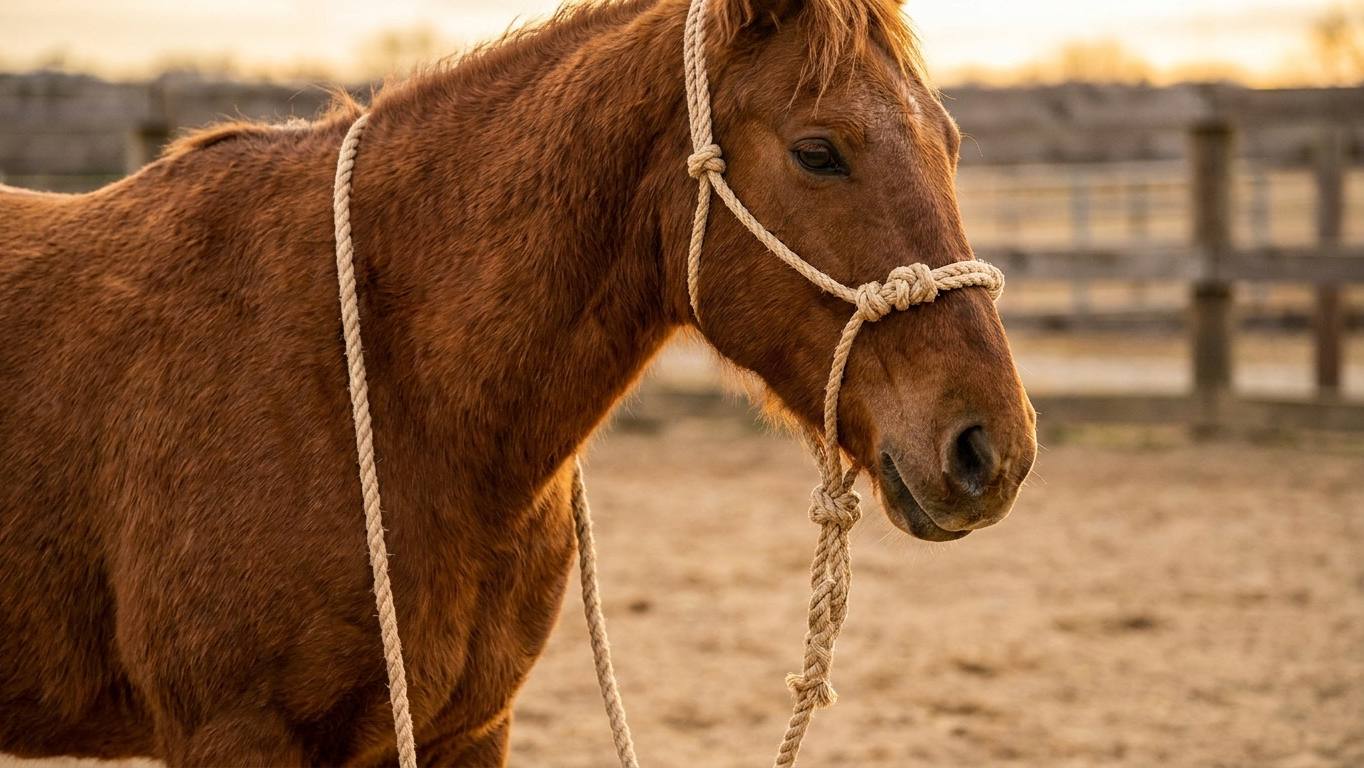
The French label “licol éthologique”, often translated as a natural horsemanship halter, does not guarantee gentleness. It generally describes a knotted rope halter used for activities such as groundwork. Its suitability depends on the horse, the fit and the handler. Before buying, agree on the exercise with your instructor and check that this tool is appropriate.
Start with intended use
A training halter does not automatically serve the same purposes as an everyday headcollar. Rope-halter maker Breizh Etho states that a horse must never be tied to a fixed point using this type of halter. We adopt that precaution for the use discussed here. The workshop’s instructions.
For tying up, transport or another everyday task, have suitable equipment selected and checked with your instructor. Remove the training halter after the session; do not leave it on an unattended horse in a field or stable.
If you are a beginner, first ask to use your instructor’s equipment under supervision. You can then describe what suits you instead of choosing a rope diameter solely on a promise of greater control.
Questions about size and rope
Shetland, pony, cob, full and draught labels provide an initial indication. When ordering, request the size guide for the exact model. Cheekpiece lengths, noseband dimensions and adjustments need to suit your horse’s head.
Do not transfer a measurement from a flat headcollar without checking the method. The maker should specify where to measure and whether the requested figure refers to the horse or the finished halter. On arrival, have the positioning checked and learn the intended fastening knot before your first session.
A 6 mm diameter describes a dimension, not a degree of gentleness. Also ask about material, flexibility, construction and any additional braiding. A rope that feels pleasant in your hand is not, by itself, evidence of comfort for the horse.
Two workshops represented in the shop
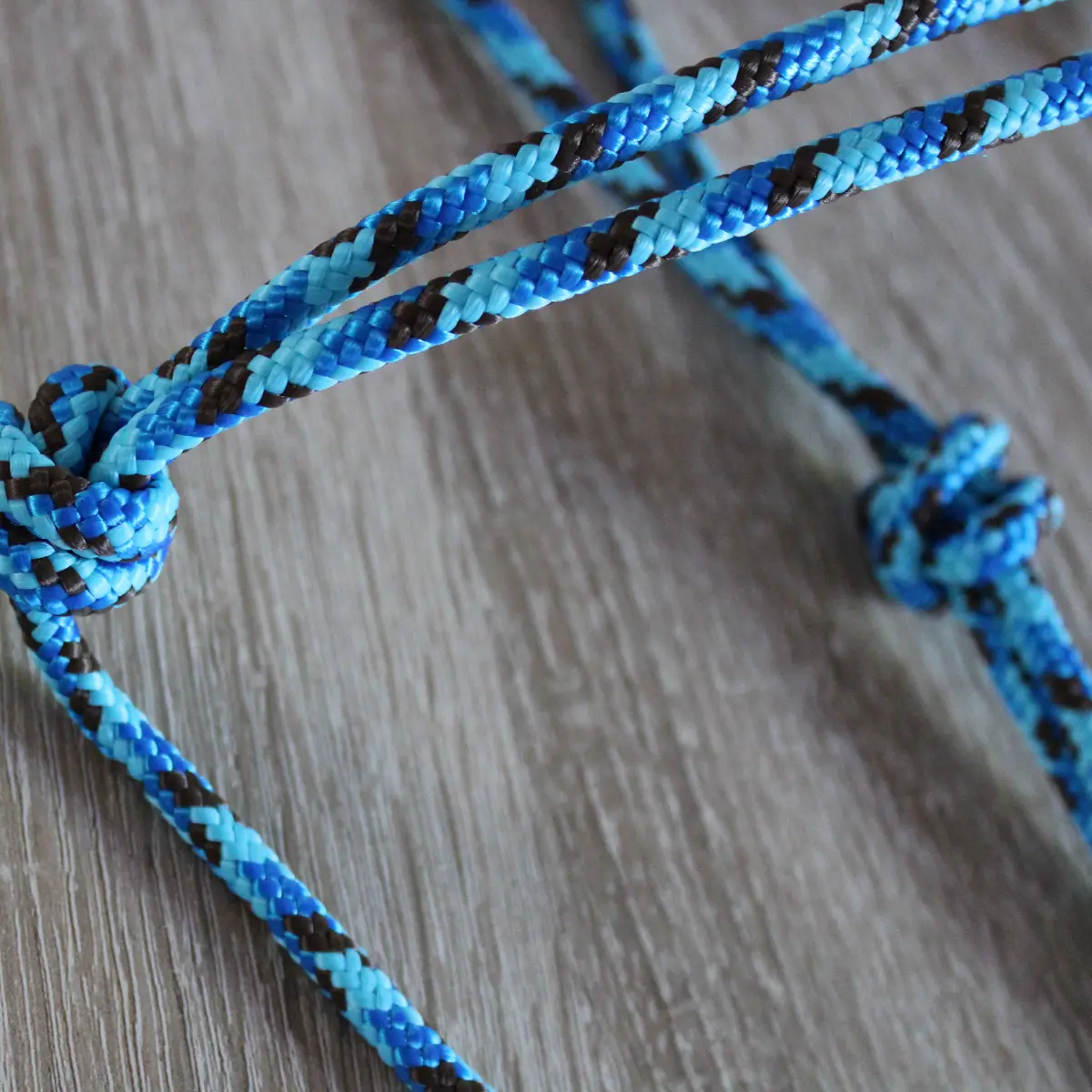
The Breizh Etho rope halter is listed as handmade in France from 6 mm braided polypropylene. The description identifies its material; if the necessary measurements are missing, contact the workshop before choosing a size.
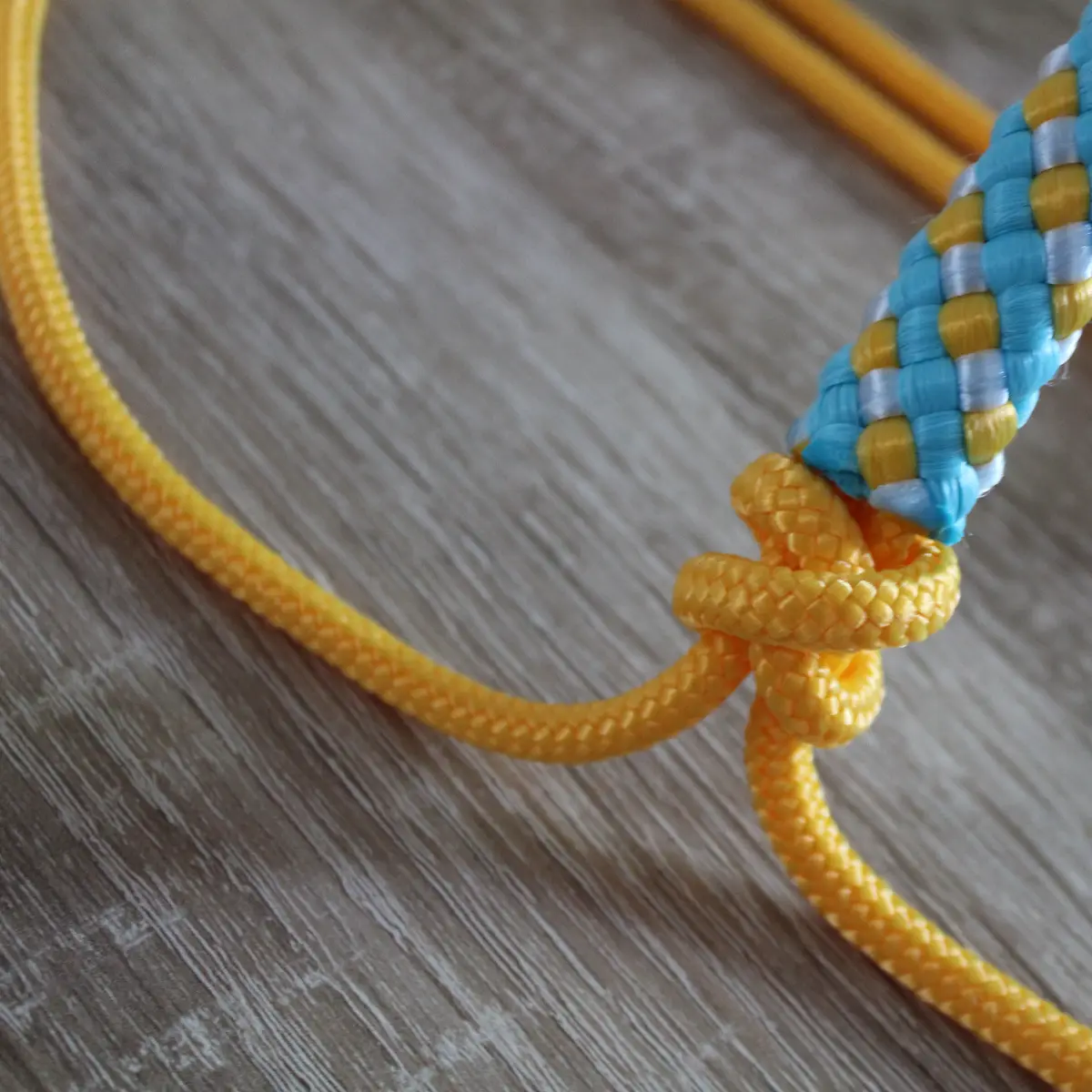
The Sapristouch Obsidienne braided halter offers sizes from Shetland to draught, a 6 mm rope base and several braiding colour options. Distinguish decorative customisation from changes to dimensions, and confirm each request separately.
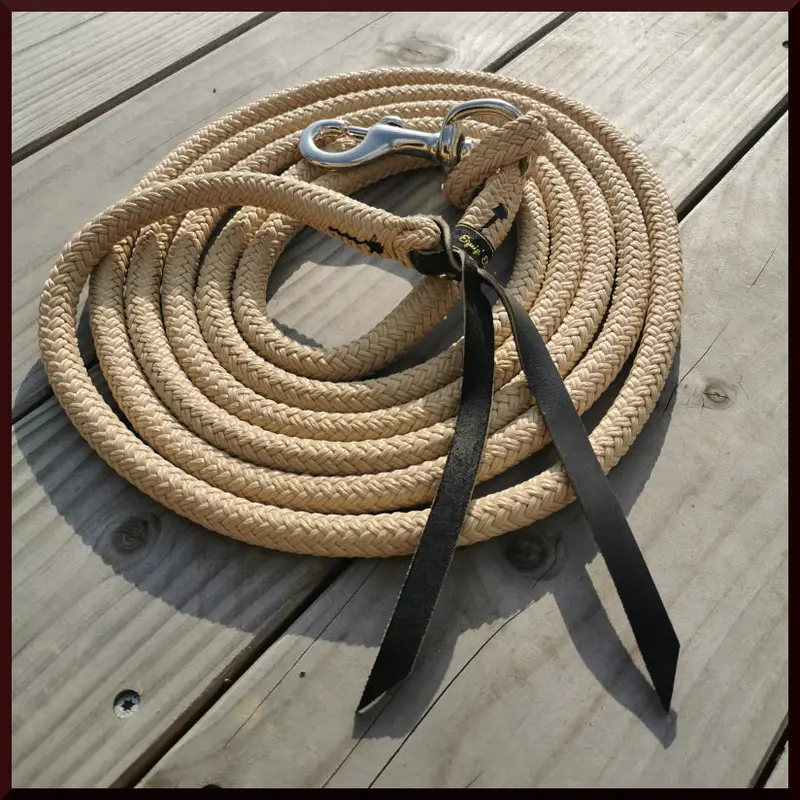
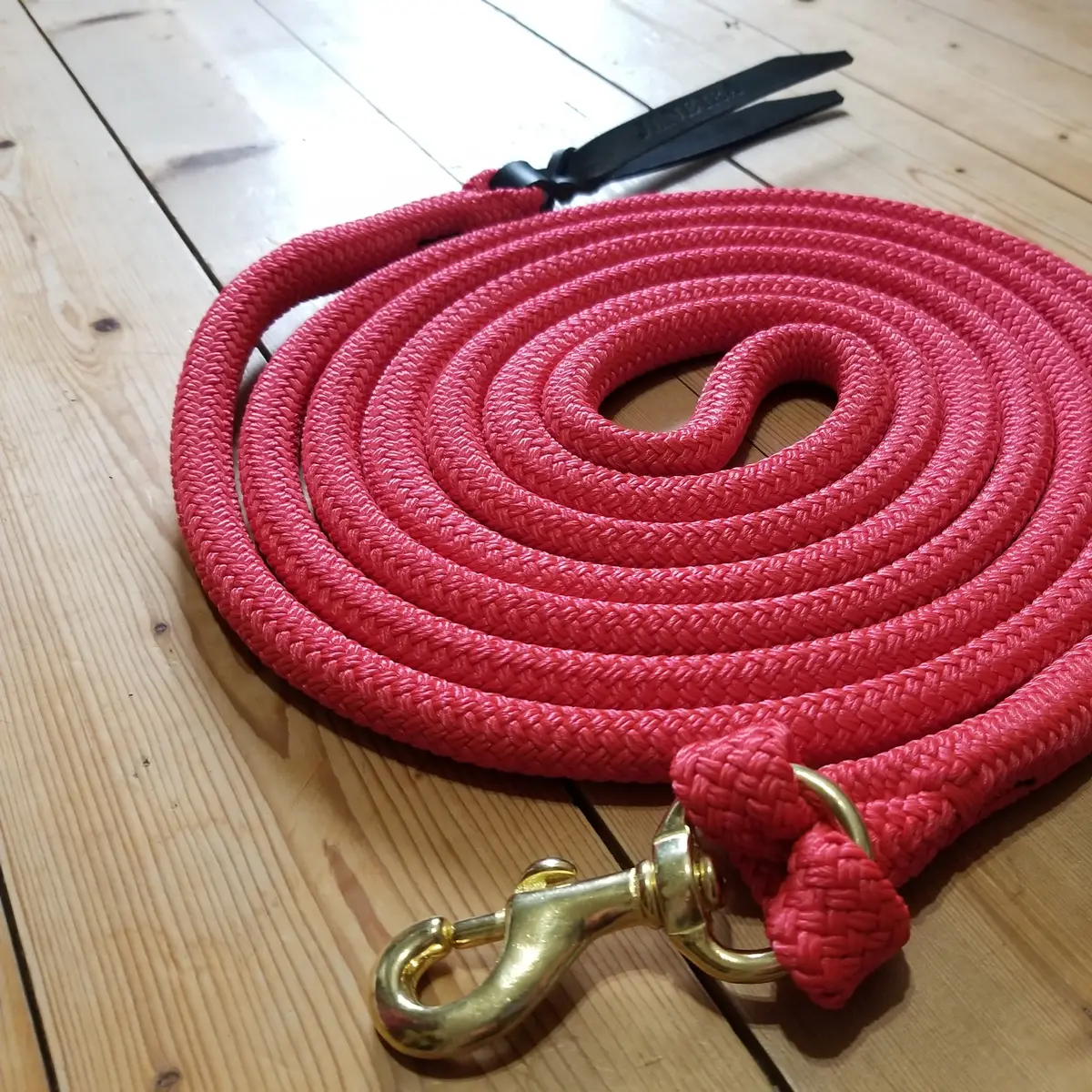
To compare two proposals, record size, material, braiding, the intended lead rope and production time together. Check what is included: a photograph of a matching set does not necessarily mean the lead rope is supplied with the halter.
Prepare for the first session
Ask your instructor to demonstrate adjustment, rope handling and how to release a request. Do not increase pressure to compensate for a misunderstanding. If your horse resists or appears uncomfortable, stop the exercise and have the situation assessed.
Never wrap the lead rope around your hand, a point highlighted in Equine Guelph’s handling material. A buying guide cannot replace practical instruction.
Follow care instructions for the exact construction
Ask for written instructions, particularly when the model combines rope, leather or decorations. Some constructions allow machine washing, while others need different treatment; one rule cannot cover the entire category.
Before reuse, inspect the rope, knots and worn areas. A displaced knot or damaged fibres warrant advice from the maker. Keep the model reference so the correct item can be repaired or replaced.
From the workshops
Pieces related to this guide
Also worth reading