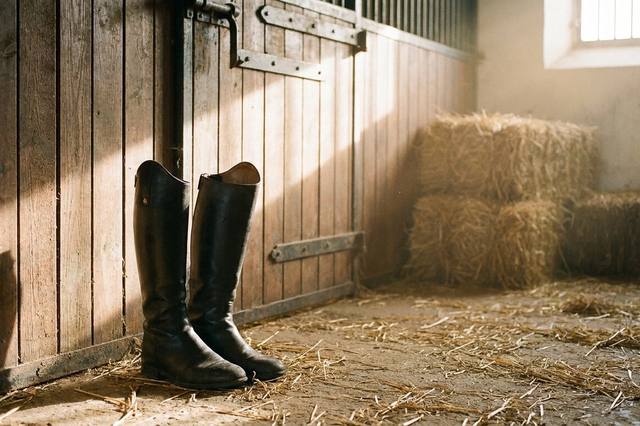
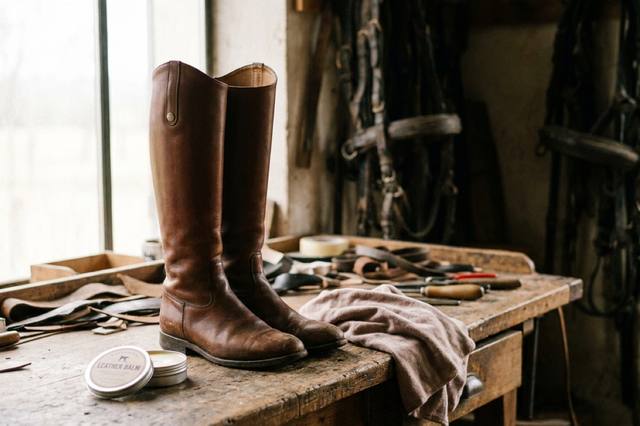
Short riding boots and half chaps: choosing a suitable combination
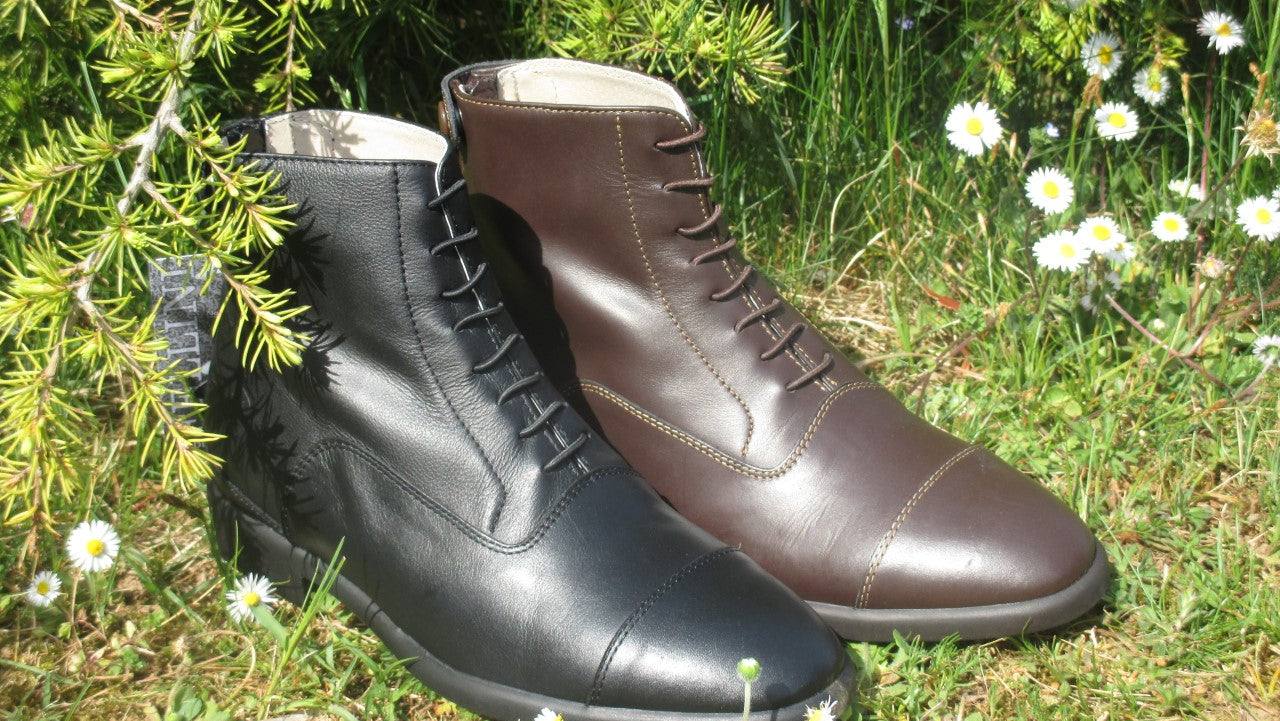
Start by distinguishing two activities: riding and working on foot around the yard. Footwear that is comfortable for walking around the stable may not be suitable for stirrups.
Then try the complete combination: boots, socks, trousers and half chaps. Your shoe size alone cannot determine the right calf measurement or height.
Choose footwear designed for riding
The British Horse Society recommends riding boots or jodhpurs">jodhpur boots with a small heel. It warns that the thick, heavy tread on some yard boots can catch in a stirrup. Ask your instructor to check the compatibility of your footwear and stirrups.
Tell the retailer how you intend to use the boots. If you also want them for stable jobs, ask explicitly whether the model is suitable for both activities.
Long boots or short boots with half chaps?
Half chaps complement short riding boots by covering the lower leg. They do not replace the need for suitable footwear. One practical advantage is being able to choose your shoe size separately from the dimensions around your calf.
To decide between the two arrangements, ask yourself a few simple questions. Would you prefer a single item? Do you already have suitable short boots? Can you find a height and calf combination that fits? Consider the opportunities to try the equipment and its care requirements too.
Two measurements for half chaps
Measure calf circumference and height according to the manufacturer’s instructions, then consult the specific model’s chart. Fouganza’s guide, in French, explains that an overly tall chap can interfere behind the knee, while one that is too short may cause pinching. S, M or L labels do not replace both measurements.
Ask the retailer to show you the measuring points. Record the values and the model you tried so you can compare alternatives without mixing their size charts.
Record your fitting observations
Try the equipment with your intended riding clothes and note the following:
| Area | Question to ask |
|---|---|
| Foot | Are the size and width suitable with these socks? |
| Boots and half chaps together | Do the two components combine correctly according to the manufacturer? |
| Fastening | Can I open and close it normally, without forcing it? |
| Bent leg | Does anything pinch or interfere around the knee or ankle? |
| Intended use | Does the retailer confirm that the equipment suits my activity? |
| Aftercare | Is there an option to repair a fastening or another component? |
Discomfort during fitting deserves a specific answer. Do not base a purchase on a vague promise that everything will necessarily improve with wear.
Wide calves: describe the measurements
A wide calf and a large shoe size are different measurements. Give a retailer or bootmaker your dimensions rather than just asking for “XXL”.
Ask about available combinations, the measuring method and possible alterations. If you are considering made-to-measure work, establish which dimensions will be changed and how fitting will be arranged. No size label alone guarantees a suitable fit.
Follow the care instructions for the material
Keep the instructions for the chosen pair: do not automatically apply a leather treatment to synthetic material. Ask which products to use and how to clean the fastenings. If a zip resists or stitching deteriorates, have it examined rather than continuing to force it.
For your first lessons, start with the school’s requirements and our beginner clothing guide. You can then choose boots and half chaps to meet a specific need without unnecessary purchases.
From the workshops
Pieces related to this guide
Also worth reading