Caring for leather riding boots: the habits that make them last
A well-kept pair of leather riding boots lasts ten years. A neglected pair cracks at the ankle fold within two winters. Between the two there is no miracle product and no workshop secret, just a handful of simple habits, done at the right time. Here is how a saddler goes about it, and how often.
After every ride: the mud, straight away
Soil, sand and the horse’s sweat are leather’s first enemies. Once dry they form an abrasive crust that wears the grain at every fold. The habit that matters most is therefore the shortest one: back from the arena, a soft brush over the legs and feet, then a slightly damp cloth on whatever mud remains. Two minutes, before anything dries.
A detail many overlook: the inside of the calf, where the boot rubs against the saddle flap. It is the area that gets dirtiest and shines fastest.
Every week: clean, then feed
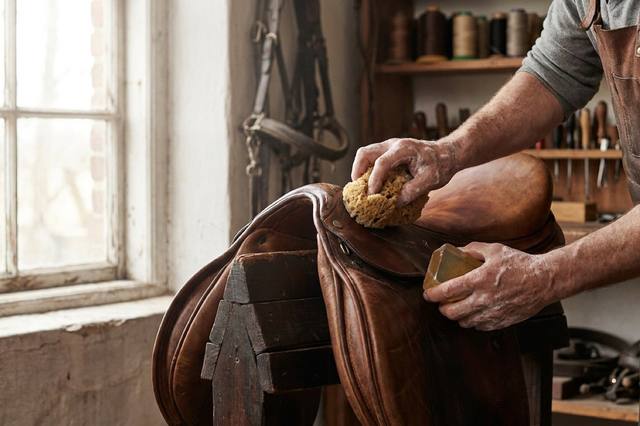
A full clean is done with glycerine saddle soap or a dedicated leather soap, on a barely damp sponge. Work in small areas without soaking: leather that drinks too much water loses its oils and hardens as it dries. Wipe, then let it breathe for an hour.
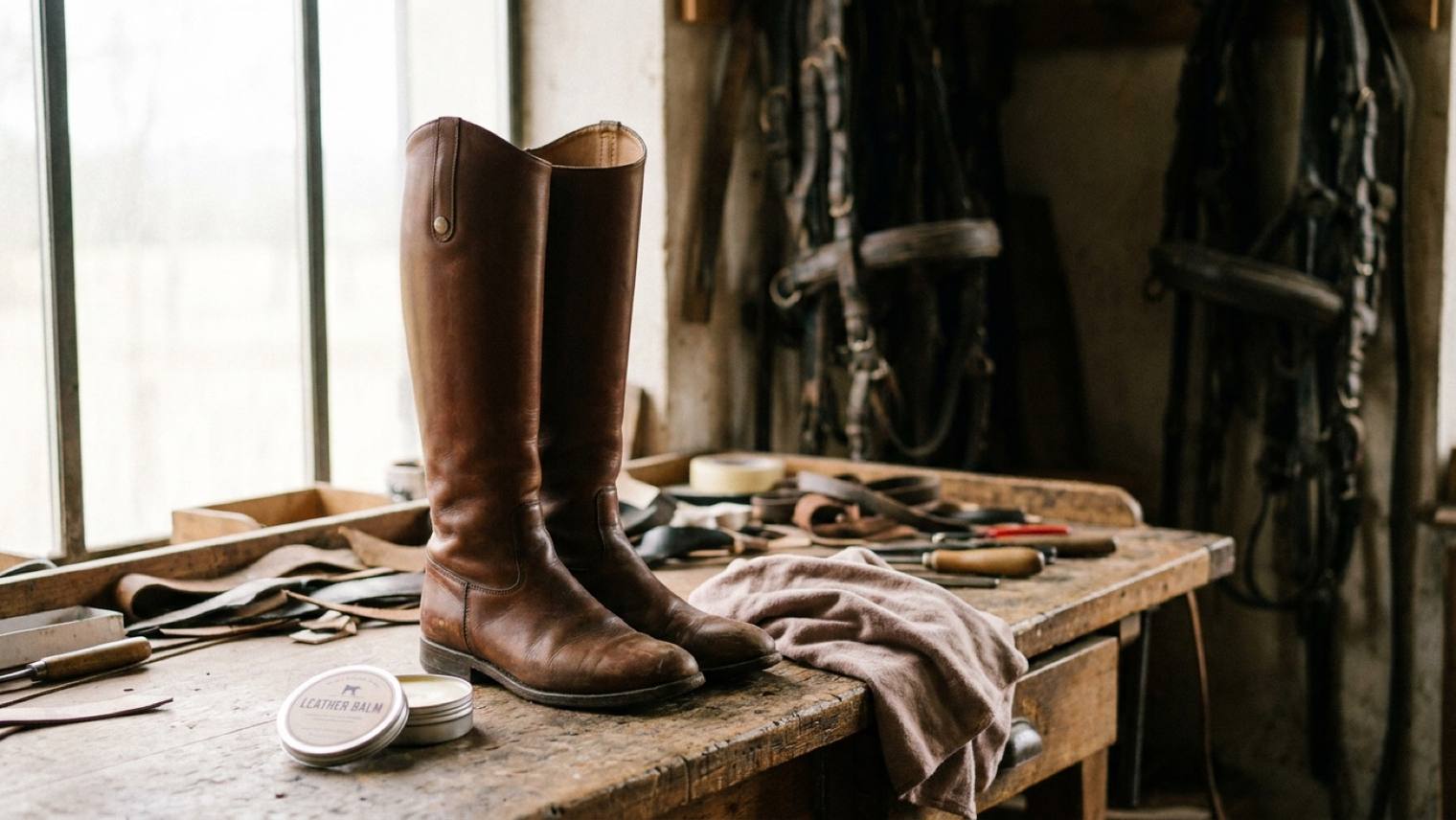
Then comes feeding. A leather cream or balm, in a thin layer, applied with a cloth in circular movements and buffed once absorbed. The leather should be supple, not greasy: too much grease clogs the pores, attracts dust and eventually softens the leg. On boots worn three times a week, a weekly feed is enough; in winter, when leather moves from damp cold to central heating, you can double it.
The care products our workshops make, balms and soaps included, are in the care section.
Drying: never near a heat source
This is the most common mistake, and the most expensive. Soaked boots leaned against a radiator or set before a stove dry too fast: the leather shrinks, stiffens like cardboard and cracks. Let them dry upright, at room temperature, away from any direct heat, with rolled newspaper in the foot to absorb moisture and hold the shape. Allow a whole night, sometimes two.
Store them with boot trees
A boot that slumps always folds in the same place, and that is where it will break. Boot trees, or failing that a roll of cardboard, keep the boot straight and let the inside air. Store in a dry, ventilated place, never in a closed plastic bag where moisture stagnates and mould sets in.
For transport, a boot bag or boot protectors prevent rubbing in the car boot and keep the leather clean between rides.
The signs that call for a saddler
- a zip that catches: clean and lubricate it before it breaks;
- a seam loosening at the ankle: it can be restitched in the workshop as long as the leather around it is sound;
- a heel worn at an angle: resoling is a cobbler’s job, before the wear reaches the leg;
- cracking: the sign of leather left too dry for too long. Intensive feeding softens it but does not erase it.
Before buying, the choice of size, calf and height matters as much as care: our guide Riding boots: choosing the size, calf and height details the measurements to take.
From the workshops
Pieces related to this guide

Also worth reading