The leather leg wrap for horses: what is it really for?
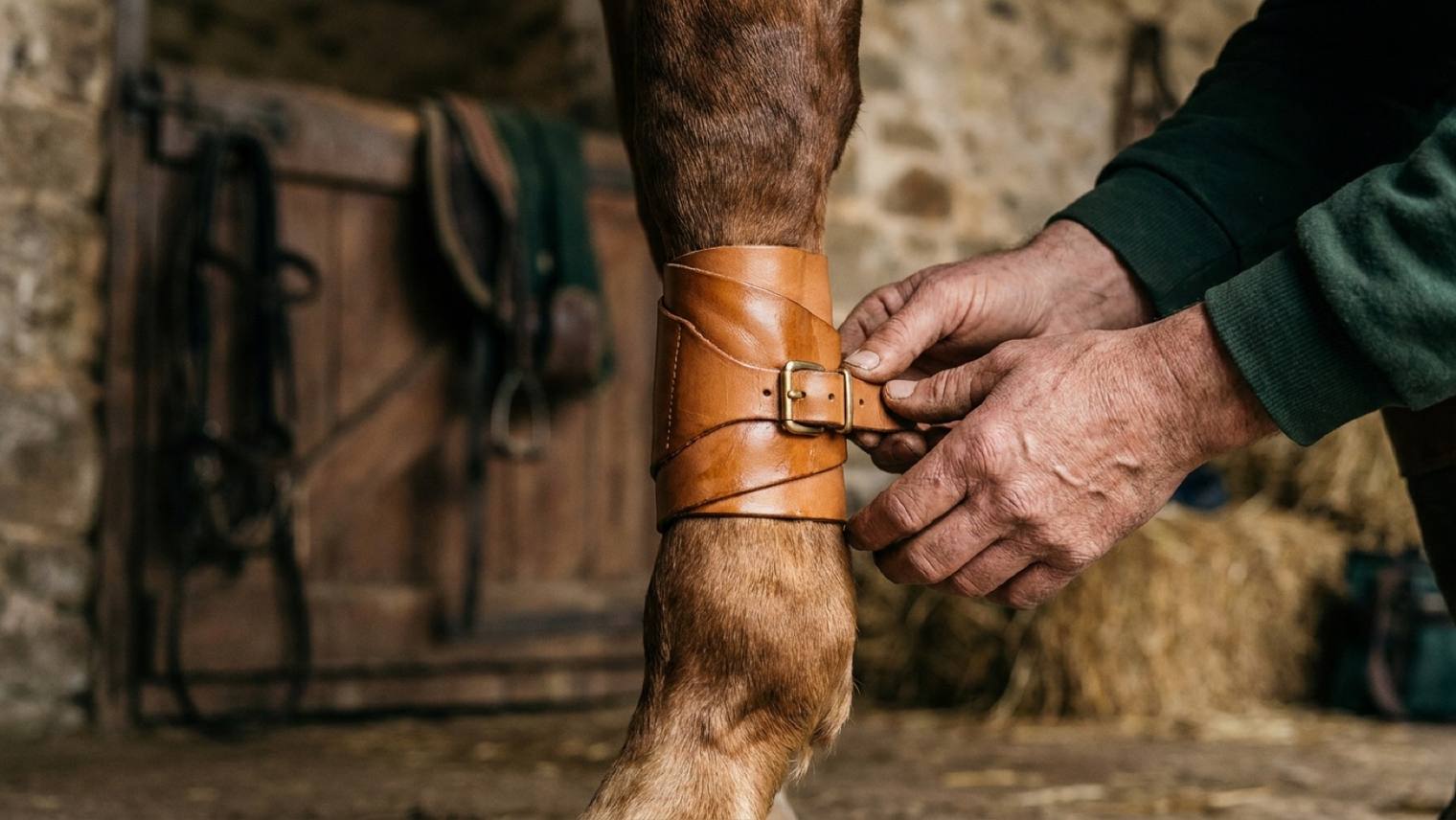
The word is confusing. For many riders a wrap is a polo bandage or a fabric stable bandage wound around the leg. The leather leg wrap is something else: a piece of supple leather cut to the shape of the cannon bone, lined and closed with buckles or straps. It belongs to the carriage-driving tradition, to in-hand work, and to some dressage riders who want protection that lasts.
What it protects
Like a brushing boot, the leather wrap protects the cannon and fetlock from knocks: a hind foot striking a foreleg, a blow against a pole, rubbing against a shaft. It does not support the tendons, any more than a fabric bandage genuinely does: nothing placed around a leg replaces progressive work and decent footing. Its role is mechanical, against knocks and rubbing.
Why leather rather than fabric
- It does not slip. Well-cut leather follows the shape of the cannon and stays put without being tight, where a bandage loosens or slackens as it dries.
- It does not hold water. A soaked fabric bandage weighs down the leg and chills it; fed leather sheds it.
- It goes on in seconds. Two buckles and the protection is in place, always at the same tension. No wrapping technique to master, no risk of a fold that rubs.
- It lasts. A leather wrap looked after like harness is handed down; a fabric bandage is replaced every season.
Its limits
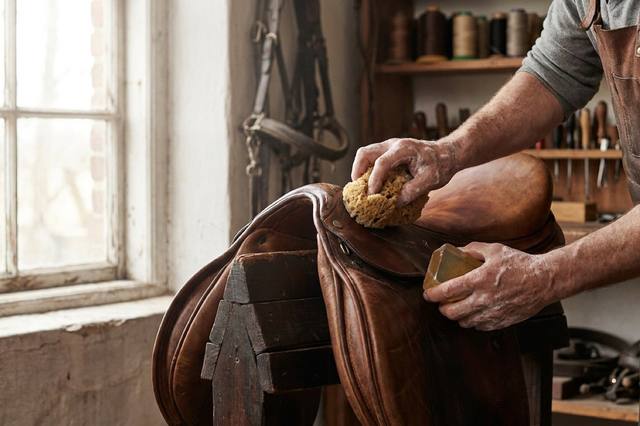
Leather is heavier and warmer than technical fabric. For hard work in strong heat, a ventilated brushing boot is more comfortable. It also needs regular care, like a bridle: a clean after every muddy outing and an occasional feed, with the same products as the rest of the tack. Our workshops offer them in the care section, and we describe the routine in our guide to caring for saddle leather, which applies to any leather piece.
How to choose one
A leather wrap is made to the horse’s measurements: circumference of the cannon below the knee and above the fetlock, and height of the cannon. A saddler will ask for these three measurements and the leg concerned, fore or hind, whose shapes differ. The leather should be supple from the start, lined with a soft material, sheepskin or oiled leather, and closed with tongue buckles rather than tied laces, which are more even in tension.
If it is a first made-to-measure order, our article preparing an order with an artisan saddler lists the useful information to give the workshop.
From the workshops
Pieces related to this guide
Also worth reading