Saddle pad and fly bonnet: choosing and matching the set
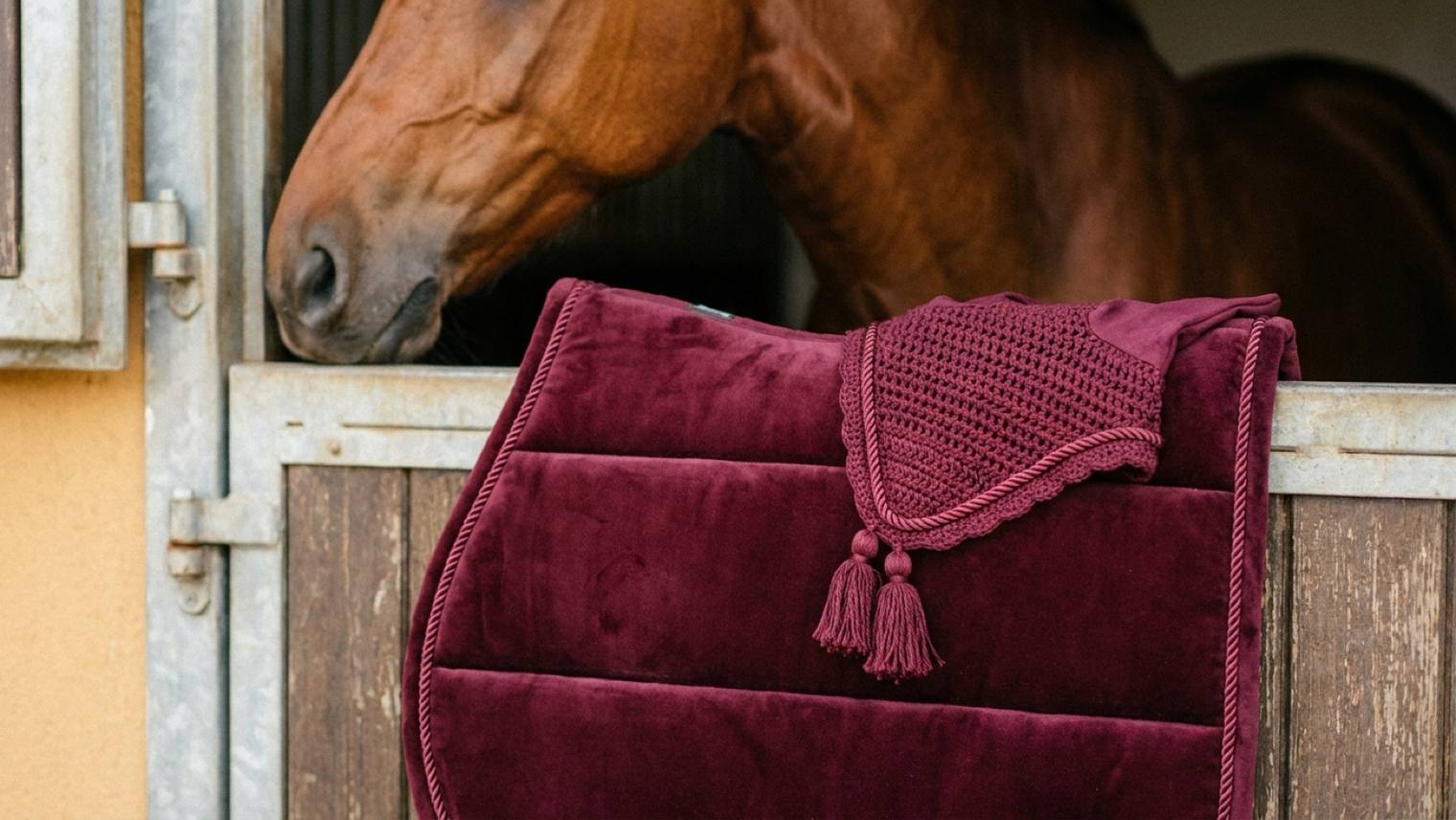
The matching saddle pad and fly bonnet has become the outfit for shows and for every day. But before being a set, they are two pieces that must each suit the horse: a pad cut for the saddle, a bonnet sized for the ears. Here is how to choose them, then how to match them.
The pad: the cut first, the colour after
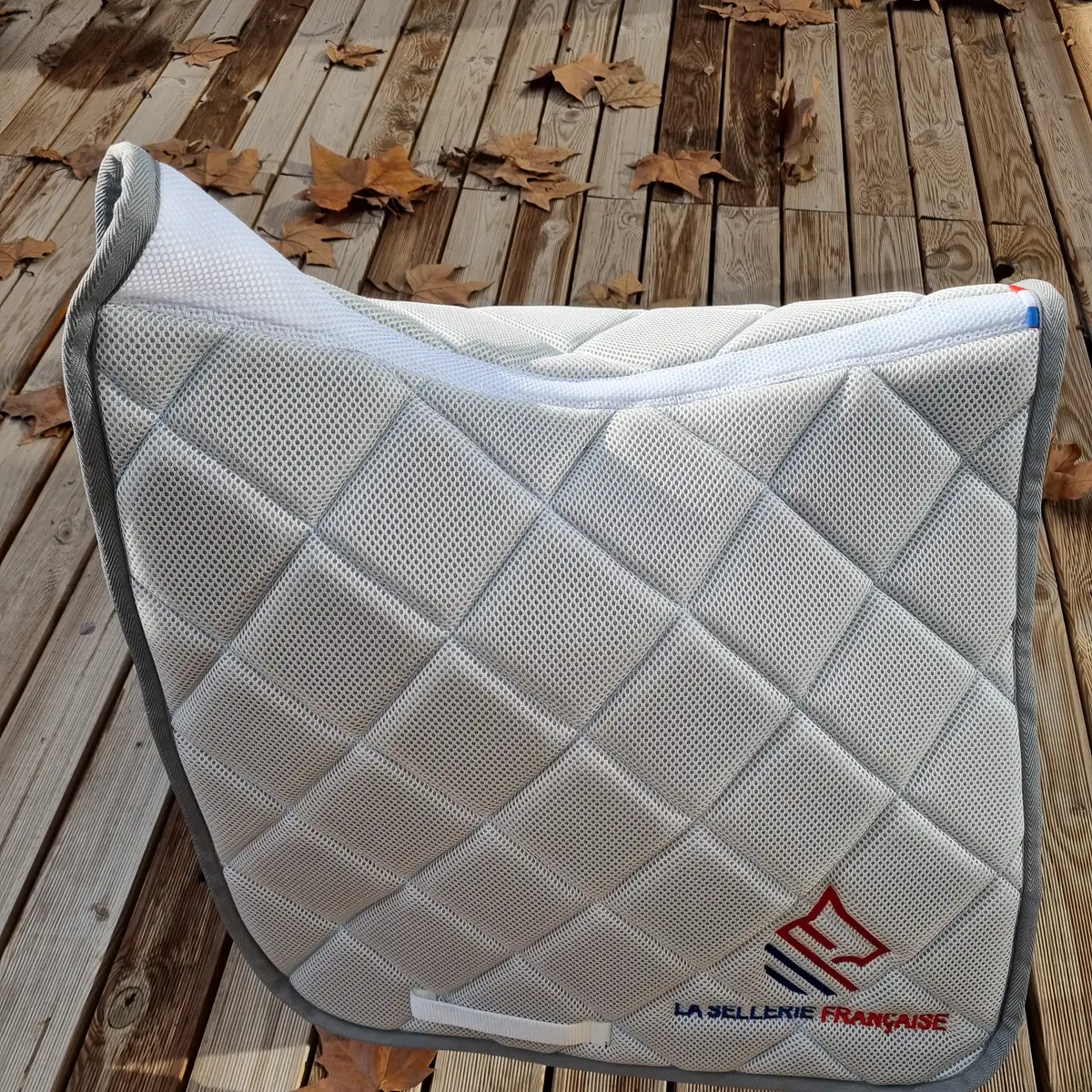
The shape of the pad follows the shape of the saddle. A dressage pad is straight and long to follow the flaps of a dressage saddle; a jumping or general-purpose pad is shorter and rounded towards the front. A dressage pad under a jumping saddle sticks out and folds; a jumping pad under a dressage saddle lets the flap rub the coat. Also check the wither clearance, which keeps the pad off the spine, and the thickness, which must not alter the balance of a well-fitting saddle. Our guide choosing a saddle pad: cut, thickness and details goes into these points.
As for material, cotton washes and dries fast, velvet and satin dress up the show ring but need more care, wool or sheepskin underneath absorb sweat. What shows, the colour and the piping, is chosen last.
The bonnet: ear size above all
The bonnet keeps flies off and softens noise; it is useless if it bothers the horse. The ears must sit freely in their sleeves, neither pulling at the base nor flapping at the tip. The usual sizes, pony, cob and full, are not always enough: a draught horse or a big-eared pony does better with a bonnet made to its measurements, ear height and circumference. The bonnet sits under the headpiece and must neither ride up under the browband nor slip over the eyes.
Crocheted cotton is the classic material: it breathes, hand-washes and takes piping to match the pad. Several of our workshops make them to measure, such as Sapristouch’s customisable bonnets, in short or long versions depending on whether you want to cover the forehead only or down to the nose.
Matching without getting it wrong
- start from the pad, the most visible piece, and take the bonnet in the same shade or in the colour of its piping;
- count the cords: a pad with two cords calls for a bonnet with two cords, in the same colour order;
- think of the horse’s coat: deep colours, burgundy, bottle green, navy, suit almost every coat; pastels stand out on a bay or black and fade on a grey;
- at shows, check the discipline’s rules, which may restrict colours or logos.
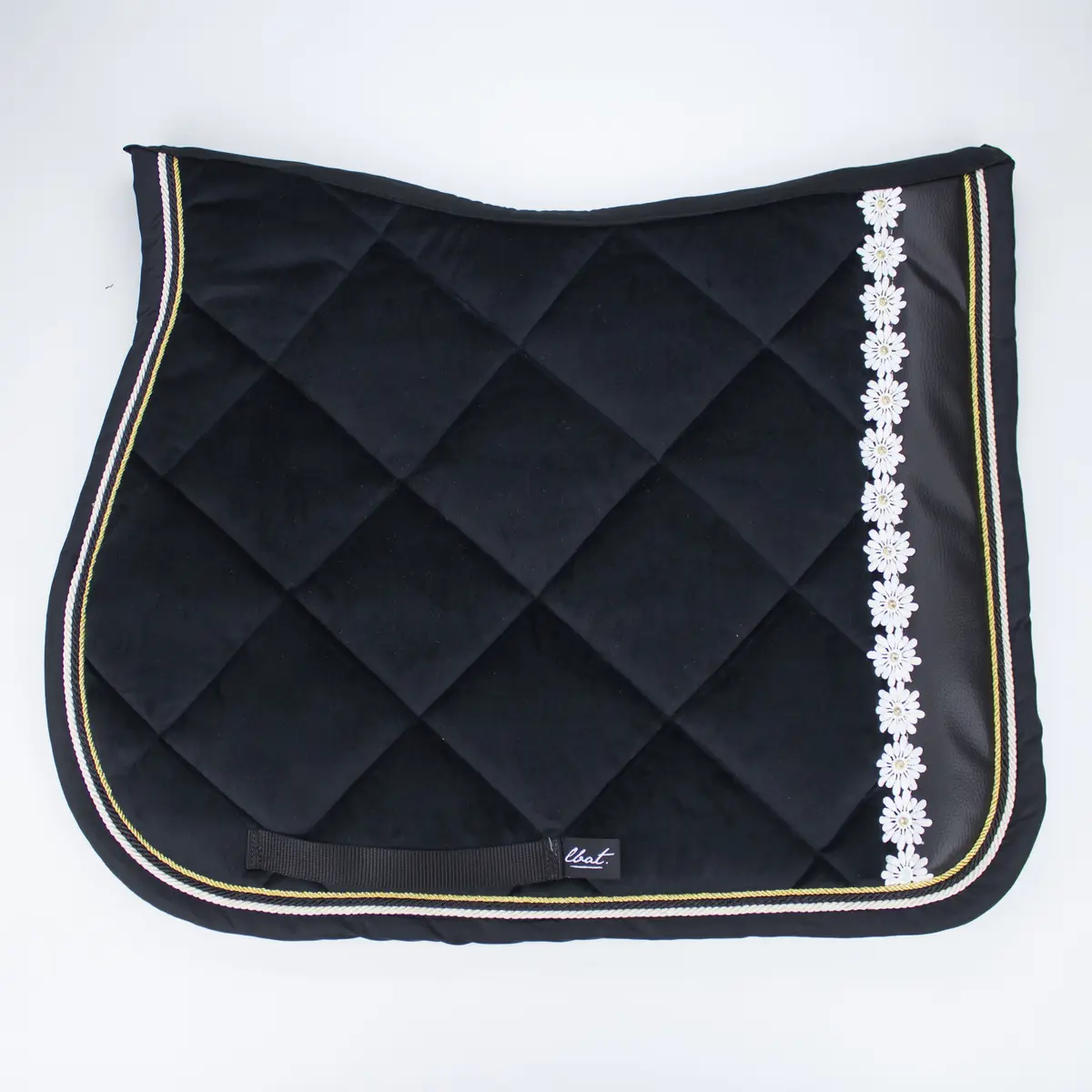
The saddle pads and fly veils section gathers our workshops’ sets, including Couleur Poney’s velvet pad, and the bonnets section lets you complete a pad you already own.
Caring for the set
The pad machine-washes cold, without softener, which clogs the fabric and makes the pad slide under the saddle; velvet is washed inside out on a delicate cycle. The bonnet is hand-washed and dried flat so the crochet keeps its shape. A pad washed often lasts better than a pad washed hard.
From the workshops
Pieces related to this guide
Also worth reading