Leather half pads for horses: which to choose, and do you really need one?
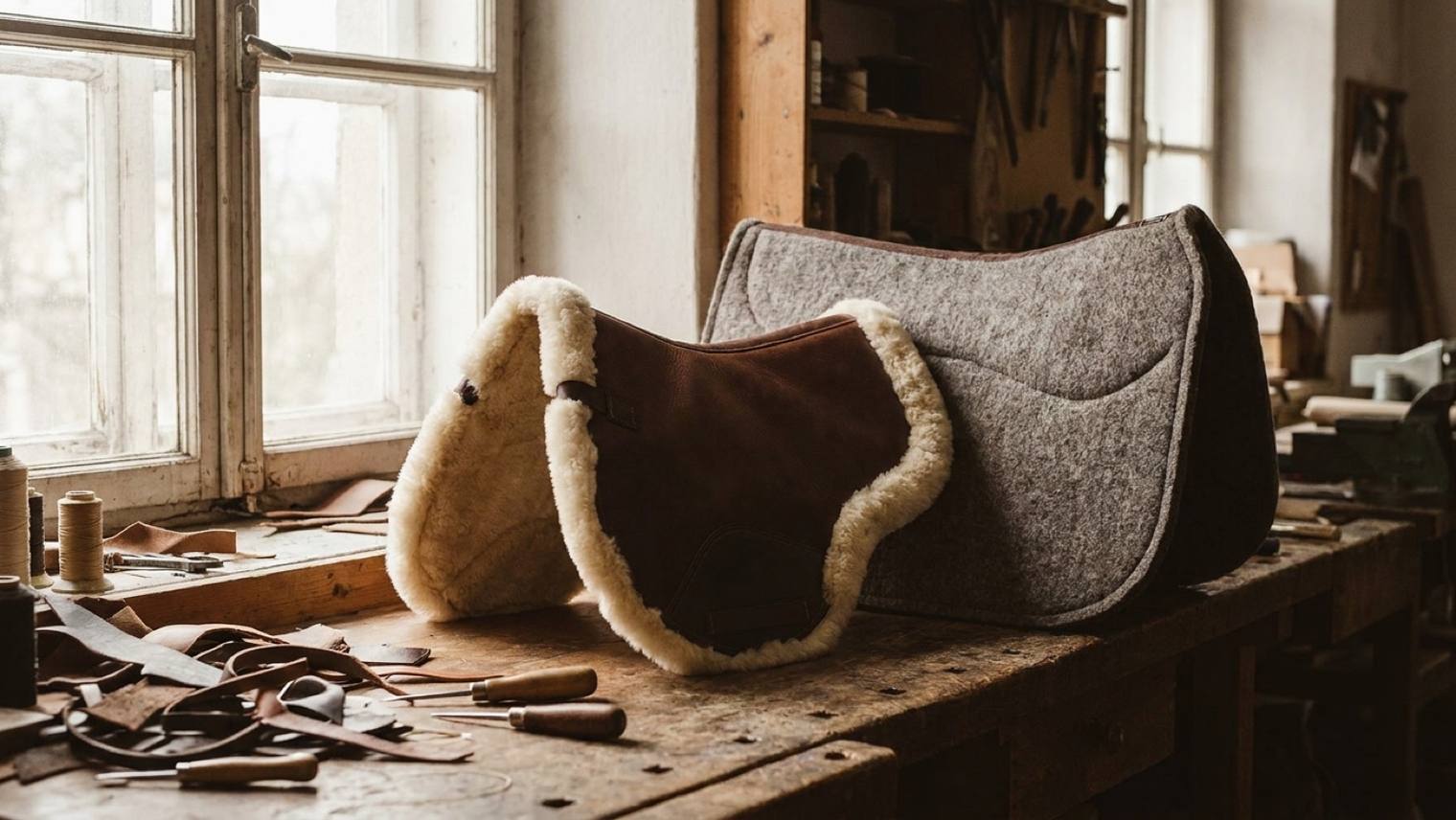
The half pad is the most bought and least understood accessory. It is put on “to protect the horse’s back”, without always knowing from what. A saddler starts with a question: does the saddle fit? If it does not, no half pad will correct its tree. If it does, the half pad can add comfort, stability, or temporary compensation. Here is what each material really does, leather included, and when to do without.
What a half pad can and cannot do
It can absorb part of the shock on landing from a jump, spread pressure over a larger area, compensate for a horse that has lost condition and whose saddle now rocks, or steady a saddle that moves a little. It cannot correct a saddle that is too narrow, which it tightens further, nor one that is too wide, which it fills only in appearance. Our guides does my saddle fit my horse? and positioning the saddle correctly allow that diagnosis before any purchase.
Leather and sheepskin: the saddlers’ material
The leather half pad, almost always lined with real sheepskin on the horse’s side, is the one saddlery workshops make. The leather gives structure and shape, with a worked wither clearance; the sheepskin absorbs sweat, breathes, and cushions through the density of its fibres, with no memory foam to flatten. It is the most durable half pad: cared for like a saddle, it lasts for years, and the sheepskin can be replaced. Its drawbacks are its price, its weight, and more demanding care than a fabric one: the leather is fed, the sheepskin brushed and hand-washed, cold, with a suitable soap.
It suits riders looking for constant comfort under a well-fitting saddle, and horses with sensitive skin that synthetic materials overheat.
The other materials, in brief
- wool felt: dense and breathable, it spreads pressure well and works as a shim; it flattens with time and is hard to wash;
- gel: it absorbs sharp shocks, over fences in particular, but does not breathe and can slide on a synthetic pad;
- memory foam: light and easy to wash, it moulds to the back but loses its thickness within months;
- shimmable half pads: they compensate for asymmetry or front-to-back imbalance, temporarily and on the advice of a saddler or saddle fitter.
When a saddler advises against it
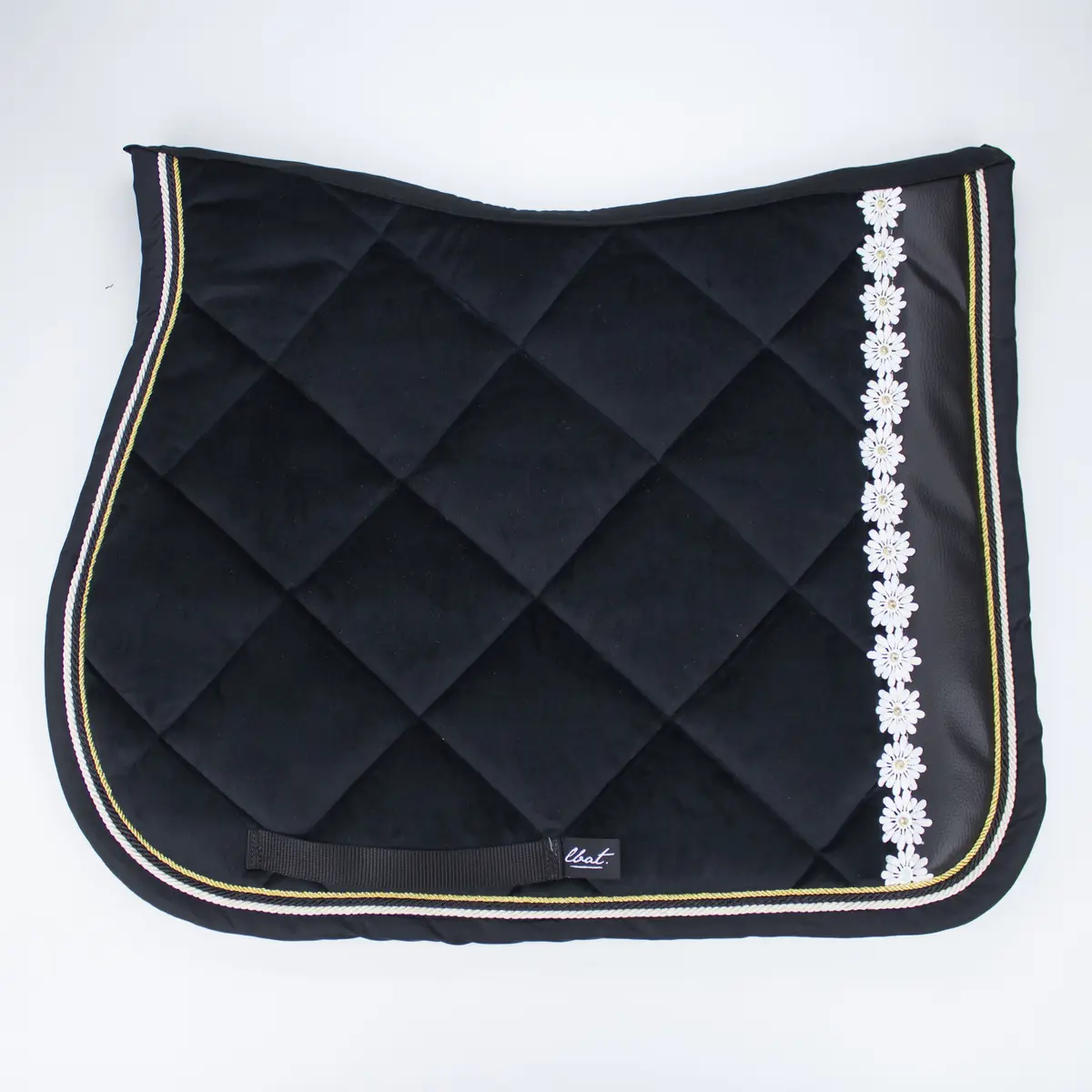
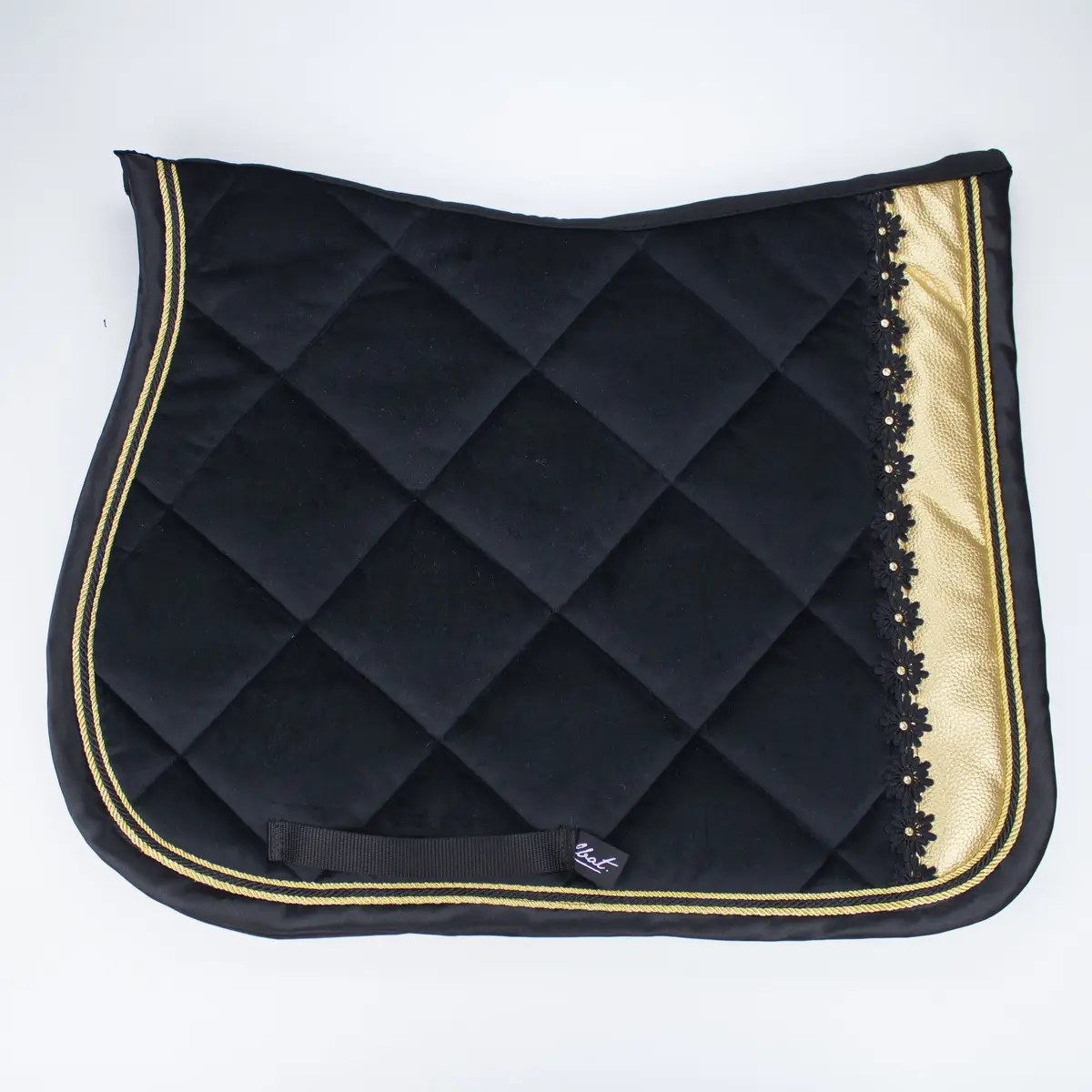
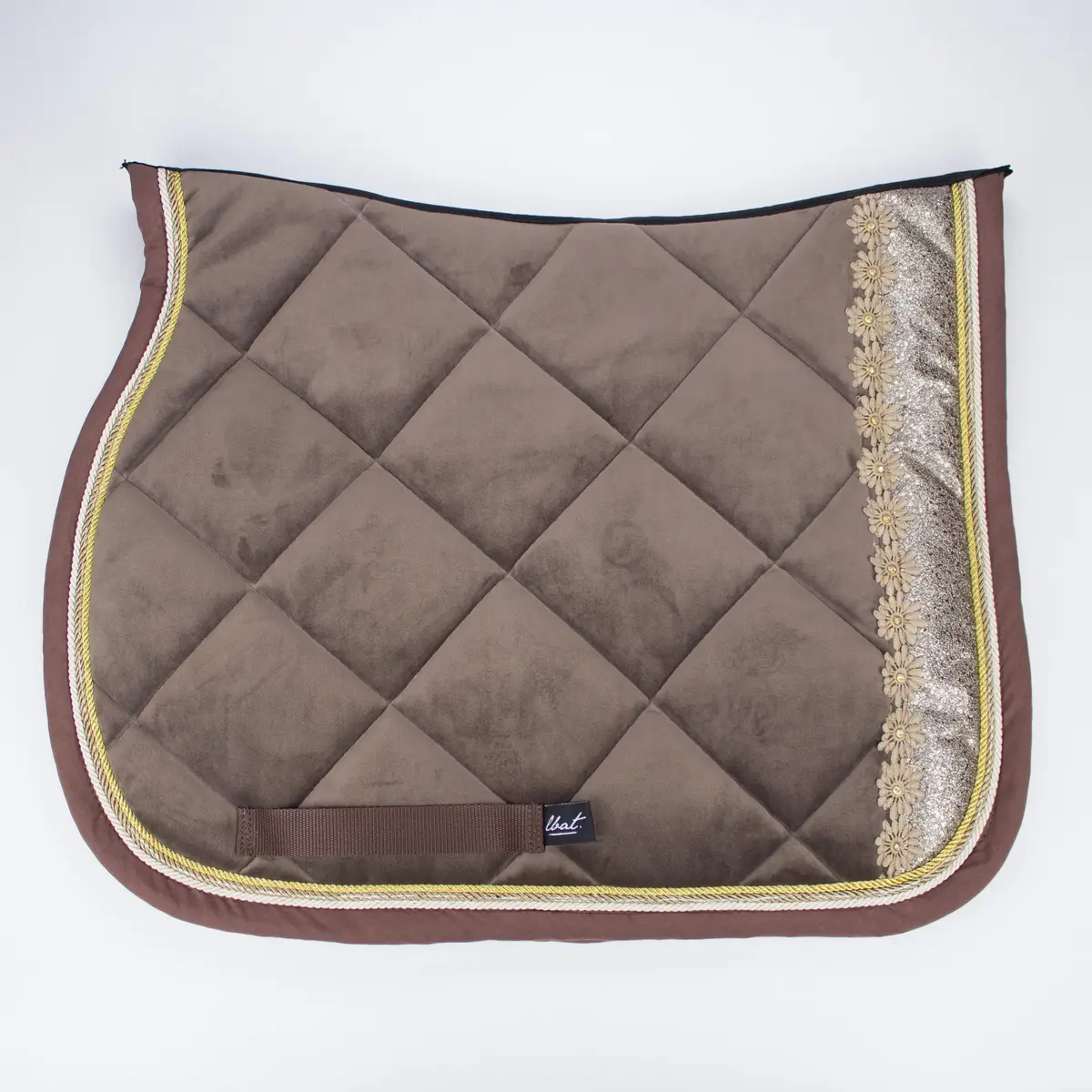
Under a saddle that fits a horse in good condition, a thick half pad raises the saddle, destabilises it and brings the panels closer to the withers. In that case a well-cut pad is enough; the saddle pads section of our workshops offers them, and the guide choosing a saddle pad helps sort them. A half pad is justified when there is something to absorb, compensate or steady, and for as long as that lasts.
Check once in place
With half pad and saddle pad on, the saddle must keep its balance, pommel and cantle level, with two or three fingers of clearance at the withers, and the panels must not rest on the spine. After a ride, the sweat mark should be even on both sides: a dry patch signals a pressure point, and it is then the saddle to look at, not the half pad. Caring for the leather follows the same steps as for a saddle: our care routine applies as it stands.
From the workshops
Pieces related to this guide
Also worth reading